Will Ferrell and Harper Steele make warm, funny company, and their frank conversations give this documentary its worth. The carefully managed journey limits what it can tell us about life without a famous companion.
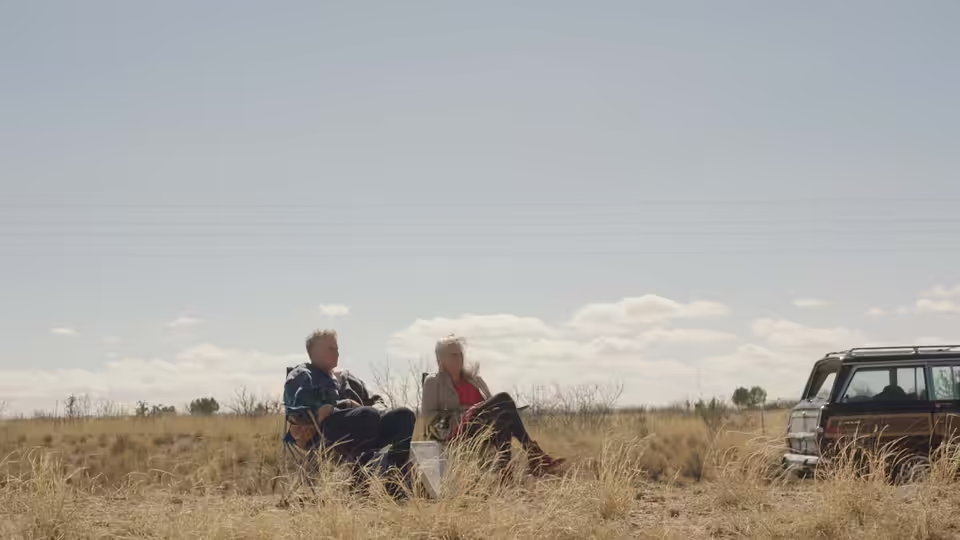
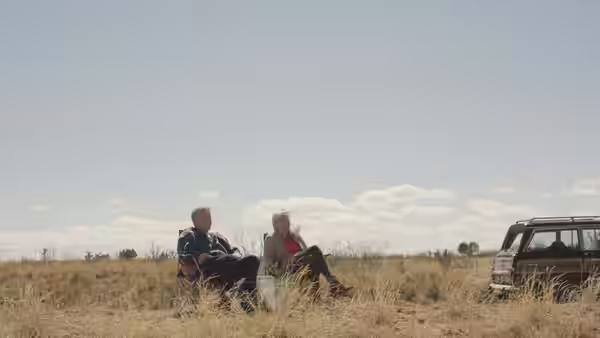
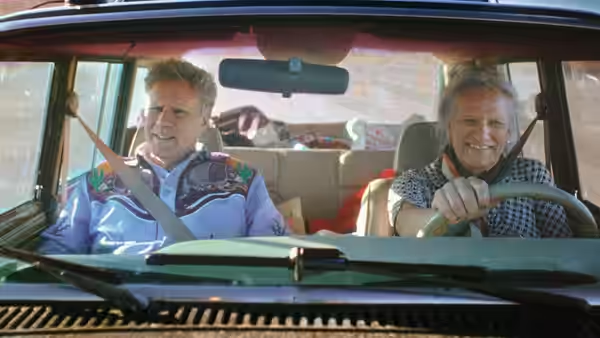
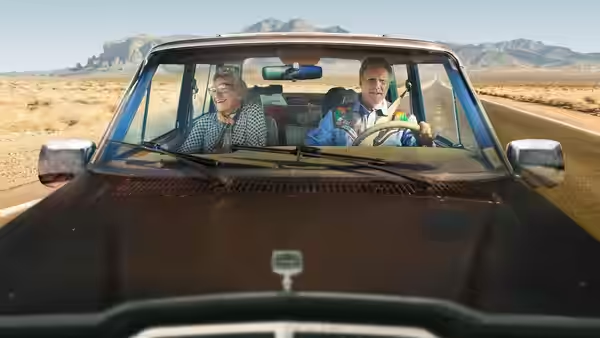
Josh Greenbaum’s Will & Harper is a warm, funny documentary that makes good use of two friends’ willingness to talk, then fusses too much over the trip around them. Will Ferrell accompanies Harper Steele on a cross-country road trip after her transition, with their friendship supplying both the comedy and the difficult questions. The film wants to make those questions approachable without treating Steele as a problem to be solved. It earns our recommendation, with a reservation about how carefully the encounters seem to have been arranged.
Steele is good company because she is candid without surrendering her sense of humour. We were moved by her account of coming to terms with her identity, particularly the uncertainty about whether she would still be loved. That is a large fear to bring into a conversation between friends, and her openness gives the film weight without requiring a solemn change of tone. Greenbaum allows humour and apprehension into the same exchanges, so Steele never becomes merely the subject of a lesson.
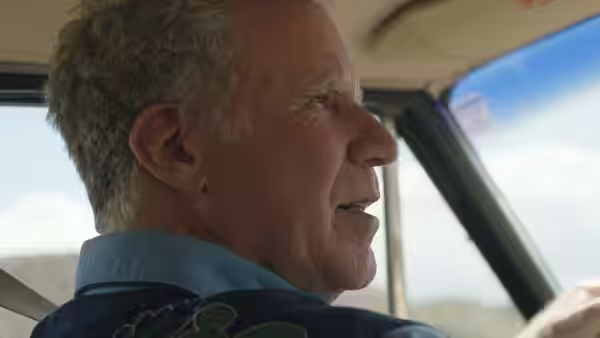
Ferrell helps by asking questions and listening, without assuming that he already understands what his friend needs. His support is persuasive because the friendship has room for uncertainty and playfulness. We do not need every question to be elegantly phrased; an immaculate conversation would make the whole exercise less useful. Their exchanges suggest how a friend might begin, without pretending that there is a set of approved sentences that will make everything simple.
Zoë White keeps the cinematography unobtrusive during the conversations, giving their humour and unease room to register. Monique Zavistovski’s editing gives those exchanges an easy rhythm, and the comedy benefits from the lack of fuss. The journey between them feels more tidily organised than we would like, with encounters arriving as if each had a useful point to deliver. Nathan Halpern’s music adds warmth, though the two friends scarcely need assistance on that front.
Ferrell’s fame creates the larger problem. A welcome offered in his presence cannot tell us much about what Steele might face without him, however sincere the people involved may be. Ferrell is also a producer, and the polished presentation sometimes leaves us too aware of the people organising the trip. The appearances by other celebrities strengthen that impression, making the support feel carefully assembled. There is still pleasure in seeing strangers respond kindly.
A road documentary often promises to tell us something about the country it crosses. At 114 minutes, this one has time to make its carefully managed stops feel repetitive, and we would have preferred more acknowledgement of how unusual its travelling arrangements are. The open conversations offer practical encouragement to anyone worried about saying the wrong thing to a friend. Watch it with someone prepared to ask a clumsy question and stay for the answer.