Hiroshi Teshigahara’s film about an insect collector trapped in a sand pit with a widow is slow, close and physically unpleasant in the way it means to be. It runs longer than its story needs, and we have not shaken it off.
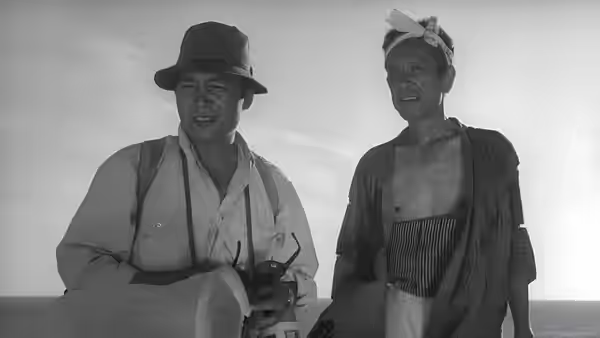
Niki Jumpei (Eiji Okada) has a few days off and has spent them on the dunes, sifting sand for a beetle nobody has catalogued, hoping to get his name into a textbook. He misses the last bus. The Village Elder (Kōji Mitsui) offers a bed, and the bed turns out to be at the bottom of a pit, in a wooden house kept by a widow (Kyôko Kishida) who shovels sand all night while men above haul it up in baskets. In the morning the rope ladder is gone. Hiroshi Teshigahara’s film, written by Kōbō Abe from his own novel, stays down there for most of its 147 minutes, and we recommend it, with the warning that the plot fits in one sentence and the film is in no hurry to tell it.
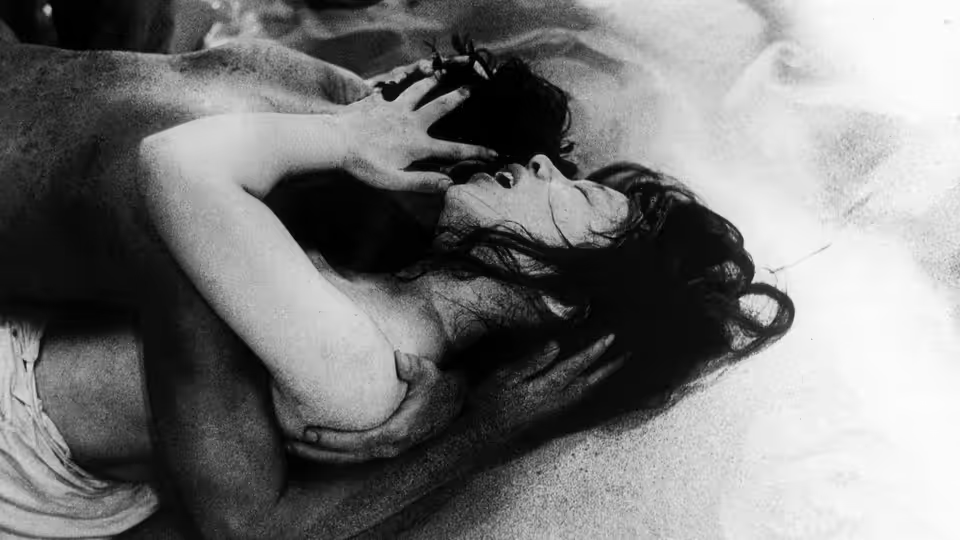
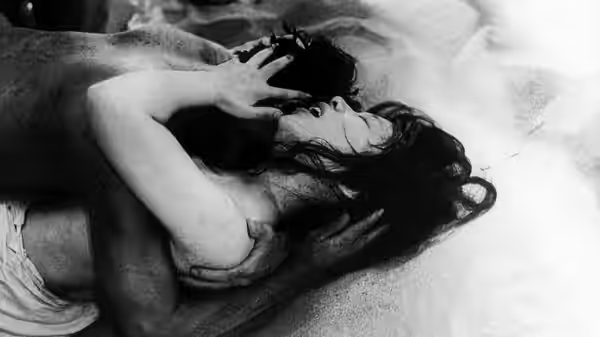
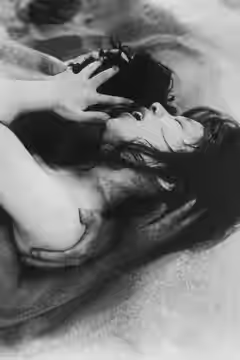
What Teshigahara wants is for you to feel the sand rather than look at it. Hiroshi Segawa shoots the dunes from above so the ridges look like skin under a magnifying glass, then shoots skin so close it looks like dunes. A stream of sand runs off a roof beam onto a sleeping face; sweat on Okada’s forehead collects a crust that he wipes away and immediately collects again. Kishida, asleep, is covered in a film of it so fine she looks like a statue nobody has dusted. We came out wanting a shower, and we mean that as a report on how well it works.
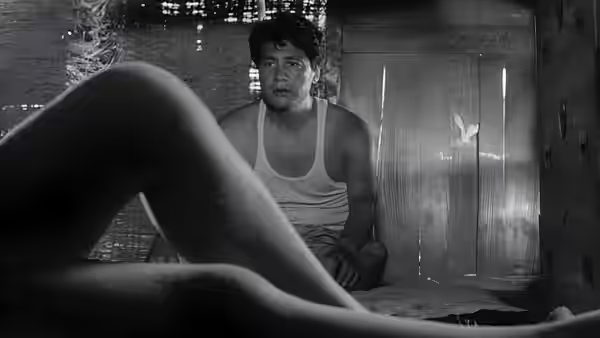
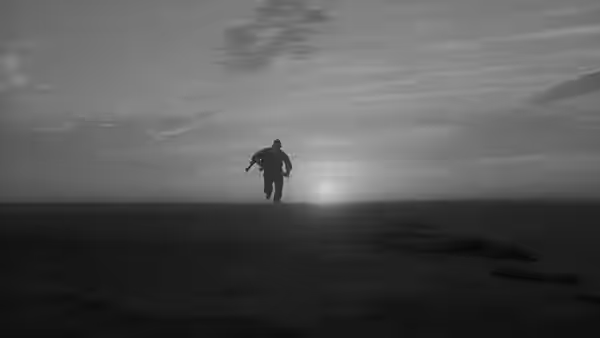
Tōru Takemitsu’s score is nothing you could whistle. Strings are scraped rather than bowed, a drum is struck once and left, and the whole thing drops into silence when the film wants to frighten you, which it does by showing an empty patch of wall where a ladder was. Fusako Shuzui cuts the shovelling to a rhythm, spade, basket, rope, spade, until the work has the beat of a machine, then holds a wide shot of the pit at dawn long enough for you to see that the man is inside the machine. Tōtetsu Hirakawa and Masao Yamazaki build the house from warped boards and hang a paper umbrella over the bed to keep the sand off the sleepers’ faces. It looks like it has been sinking for years.
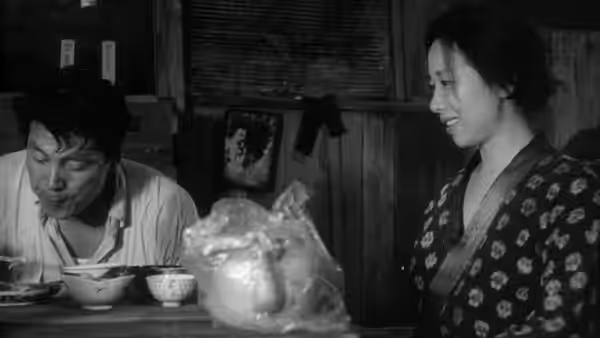
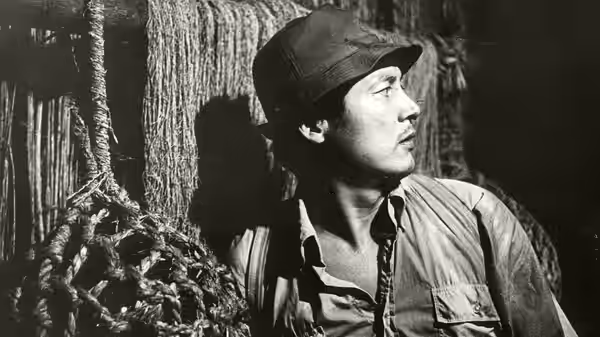
Okada plays Jumpei as a vain man, quick to lecture the woman about the world above, and for the first half hour we found him tiresome. By the time he is bargaining with the villagers we were on his side, and a little ashamed of how easily the film had got us there. Kishida is quieter and better. She laughs at his plans without unkindness, and she talks about the sand the way farmers talk about weather.
The two of them together are what the tagline means by “erotic”, and the film earns the word. She washes the sand from his back in a tin basin; he watches her sleep; the camera stays on skin rather than faces. It is not romantic, and Teshigahara does not pretend it is. What passes between them changes as the weeks pass, and we were never told what to think about it, which is rarer than it should be.
Not everything holds. Abe’s parable is plain enough without the speeches, and Jumpei gets several, about identity papers and being nobody in particular. Hiroko Itō appears in fragments as the wife he left behind, and the cuts back to the city tell us nothing the pit has not. The middle hour slackens: he plots, fails, plots again, and the film goes round with him. We think that is deliberate and we still felt the length. Later the film takes a turn we will not describe, except to say that the village gathers at the rim of the pit to watch, and it is the hardest scene to sit through.
Okada had been the lover in Resnais’s Hiroshima mon amour five years earlier, and some of that stillness is here. Teshigahara treats him less as a person than as a specimen, and the film’s one dry joke is that the man who came to pin an insect ends up in the jar.
Watch it in one sitting, in the evening, with the sound up so the hiss on the roof is all around you. We checked the bedsheets for grit afterwards. There was none.