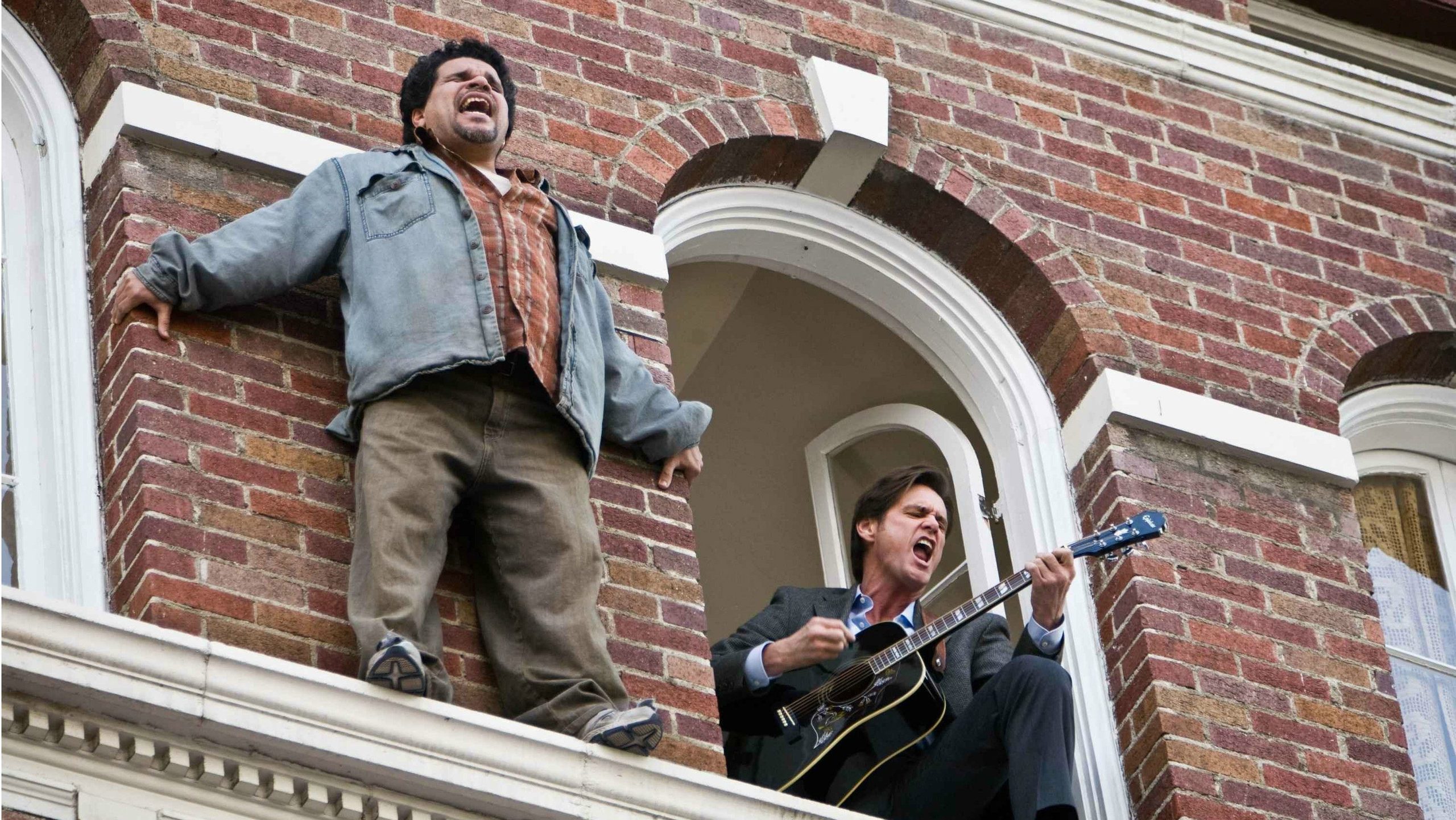
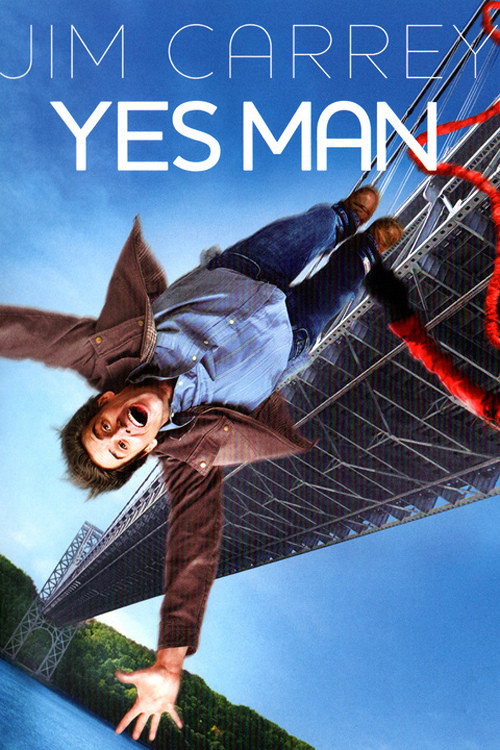
Jim Carrey says yes to everything and Peyton Reed’s comedy gets forty good minutes out of it before turning into the romantic comedy it was always going to be. Rhys Darby steals it; the rest is pleasant and hard to remember by the following morning.
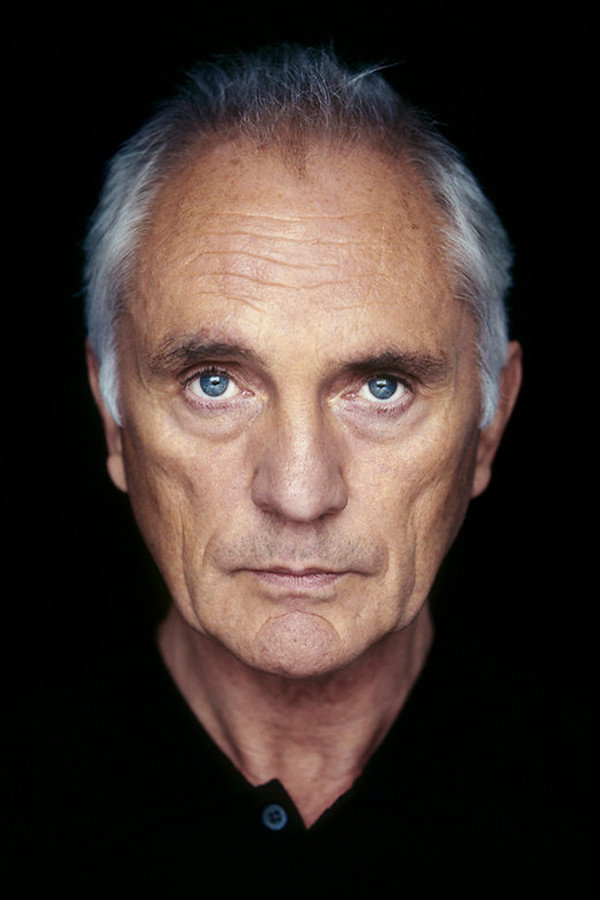
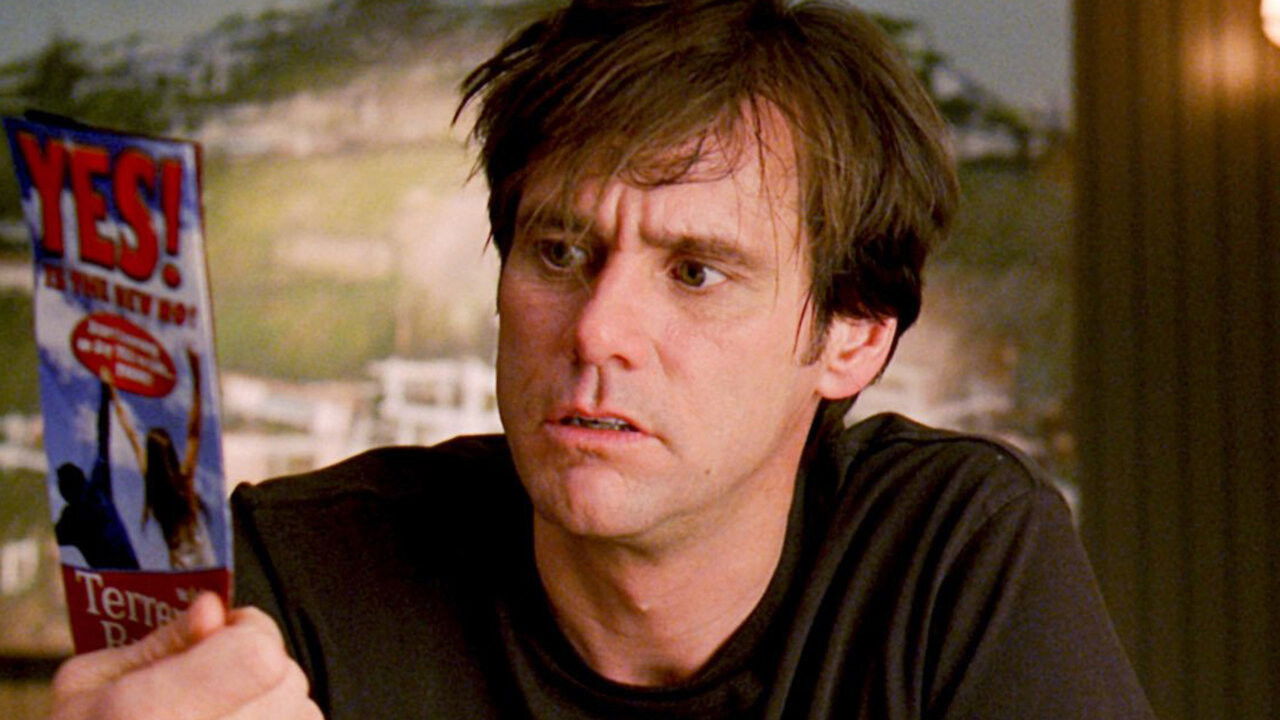
Carl Allen (Jim Carrey) works in a bank in Los Angeles, approving hardly any loans, and he has arranged his life so that nothing happens in it. He screens his calls, skips his friends’ nights out and goes home to a flat the colour of porridge. Then a seminar guru played by Terence Stamp makes him promise to say yes to everything, and Yes Man gets about forty minutes of good comedy out of that promise. After that it becomes a romantic comedy with a gimmick attached, and the gimmick runs out before the romance is ready to take the weight.
Carrey is quieter here than we expected, and greyer, and for a while that suits the film. The early yeses are small ones and he plays them with a nod and a wince, a man agreeing to things through his teeth. It is a decent piece of underplaying. The trouble arrives when the script asks him for the old rubber-limbed stuff, and he does it like a man performing an impression of himself at thirty. In Liar Liar the joke was that he could not do the thing he most wanted to do, and the strain was the comedy. Here yes is easy and the results are mostly pleasant, so there is nothing to push against.
The pushing is left to Rhys Darby, who plays Carl’s boss Norman as a man so eager to be liked that he cannot hear how it sounds. We laughed, properly and without much dignity, every time he appeared. Darby does not mug. He beams, and waits, and Craig Alpert has the sense to hold the shot on him rather than cut to the reaction. It is the best sustained comedy in the film and it is not the star’s. John Michael Higgins, as the colleague who starts all this, does something similar with less screen time.
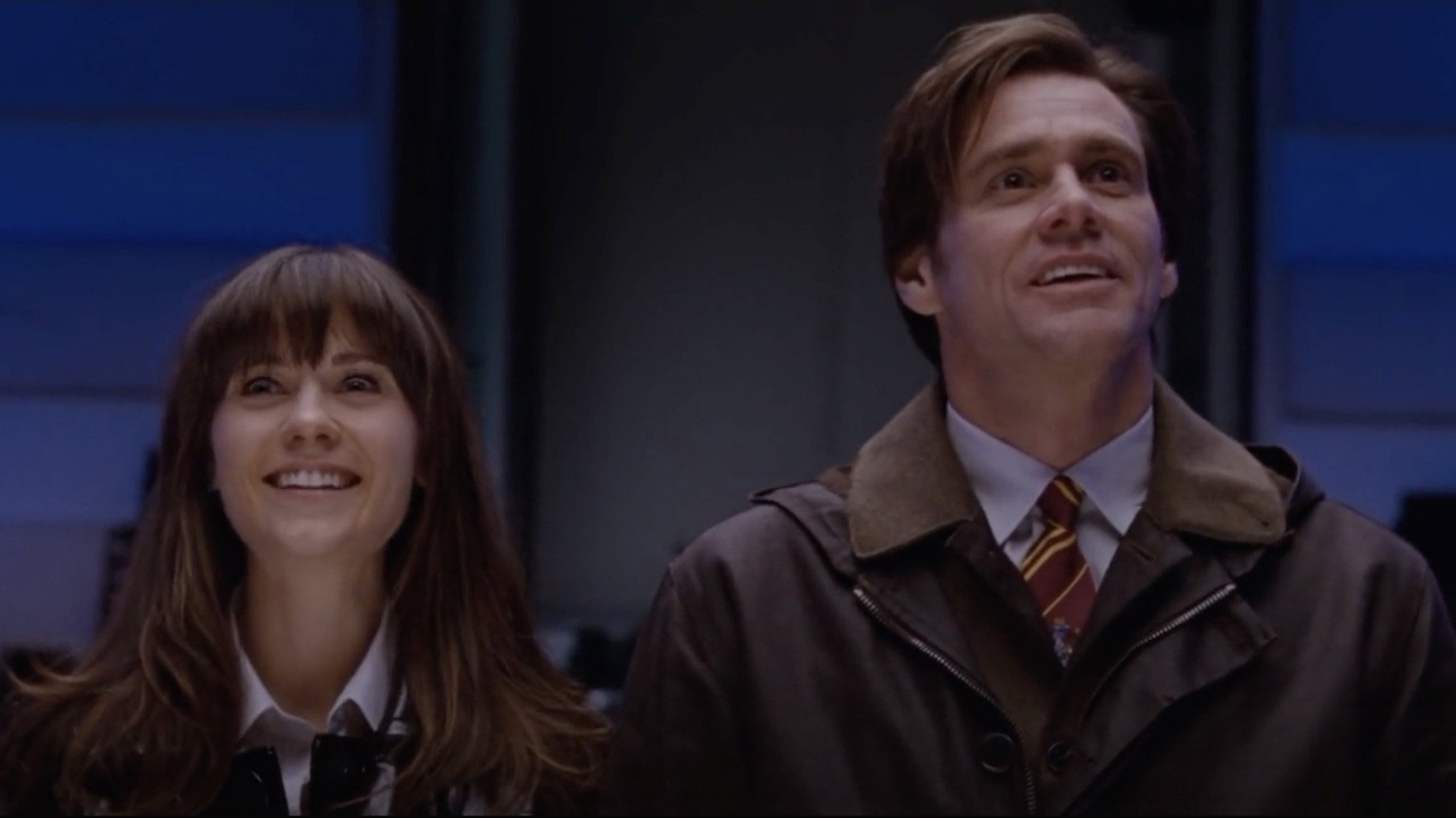
Zooey Deschanel is better than the part. Renee is a bundle of quirks by design, and Deschanel plays her as if none of it were remarkable, which is the only way it could work. The scenes where she and Carrey simply sit and talk are the film’s calmest and its most convincing. Robert D. Yeoman shoots Los Angeles in flat, clean daylight with hardly any of the usual haze, and Mark Bridges puts Renee in colours the bank has never seen, so that when she walks into Carl’s world you can tell at a glance she is not from it.
The structure is the problem, and it is a script problem. Andrew Mogel, Jarrad Paul and Nicholas Stoller build the middle as a list: one new pastime after another, one more montage. Alpert cuts these fast and the songs by Mark Oliver Everett and Lyle Workman lend them a melancholy the images have not earned, so that a man in a montage sounds sadder than he looks. Somewhere in the second hour the yeses stop being funny and start being plot, complications arrive that we will not describe, and the film heads for a lesson about moderation that we had guessed in the first reel. We sat through the last half hour waiting, without much hope, for the film to be about something other than getting its couple back into a room.
Peyton Reed directs it dutifully. The frame is tidy, the jokes land where they are placed, and nothing in it seems to have surprised anyone who made it. Andrew Laws gives Carl a bank and a flat that are convincingly beige and then has nowhere to go once the yeses arrive, because the film keeps returning to those same beige rooms. Set against other studio romantic comedies of its kind, it is neater than most and takes the same route home.
The reviews so far have settled on a shrug, and we are not going to argue with them. It is a 104-minute film that is never unpleasant and only occasionally alive, and the occasions belong to the supporting cast. Watch it for Darby, stay for Deschanel, and do not expect the second half to remember what the first half was for.