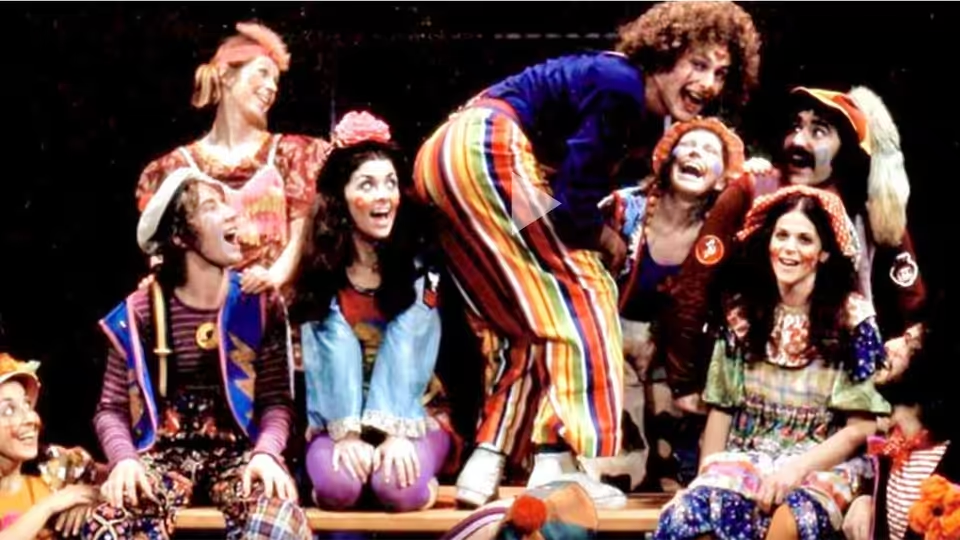
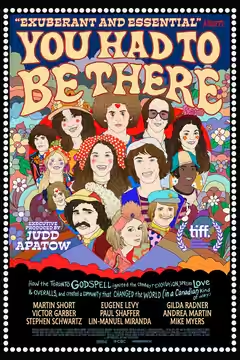
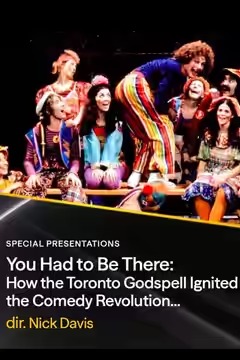
Nick Davis makes warm, funny company of the Toronto Godspell cast, using animation and surviving audio to compensate for missing footage. The friendships matter more than the famous names, though the film does not always seem convinced of that.
Nick Davis has made a good, companionable documentary about the Toronto production of Godspell, with a weakness for letting its guests stay too long. The title promises to explain a comedy revolution, a large task for a film happiest listening to performers remember working together. We recommend it chiefly for those memories, which are funny and sometimes unexpectedly painful. Anyone drawn to theatre friendships will find plenty here, though the attention paid to later fame narrows the story.
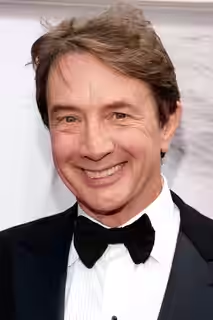
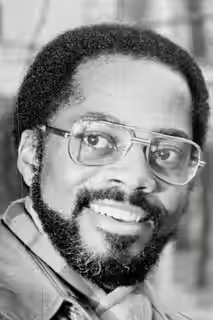
Martin Short, Eugene Levy and Andrea Martin appear as themselves, alongside Victor Garber and other members of the company. The performers’ camaraderie gives the interviews a pleasure that does not depend entirely on recognising the faces. There is enough amusement in the recollections to understand why the film keeps returning to them. The difficulty comes when the famous names begin to determine whose experiences receive the most attention, leaving the less celebrated members of the company with less room.
The shortage of footage could have made this a long illustrated conversation. Instead, animation and surviving audio give Nick Davis ways to evoke a performance the camera cannot adequately recover. The animated passages work well, giving the recollections a visual accompaniment without pretending to be a complete record. Wolfgang Held’s cinematography shares the task of telling the story with these reconstructions. That combination keeps the interviews from having to do all the work.
We were moved by the cast’s recollections of friendship and disappointment. The film allows those disappointments to complicate the pleasure of hearing from people who enjoyed working together. It understands how much a shared production can mean to its participants, without assuming that everyone gets the same thing from it. For viewers with no attachment to Godspell, these recollections offer a reason to care about the people beyond their names. Their willingness to acknowledge hurt prevents the affection from becoming merely congratulatory.
Doug Abel’s editing has a harder time judging when the pleasure has run its course. The reunion is allowed to linger, and affection for the company begins to take the place of another reason to keep watching. At 98 minutes, this is hardly an exhausting film, but a shorter version of that sequence would have preserved more of its charm. The music, credited to Stephen Schwartz, Brian Jones and Timo Elliston, suits the affectionate tone without doing much to disguise the slackening pace.
As a backstage documentary, it understands the appeal of people remembering a shared undertaking. Jane Mendelsohn and Nick Davis, both credited as writers, are less successful at explaining precisely how this company changed comedy. The later careers provide an obvious way to organise the story, but that emphasis also repeats a familiar habit of measuring a company by its celebrities. The quieter disappointments suggest a fuller account that the film only partly pursues.
We would choose it for an evening with someone who has put on a show and still talks about the company. There is enough warmth here to make those memories welcome, and enough honesty about disappointment to start a worthwhile conversation afterwards. Allow a little patience for the reunion.