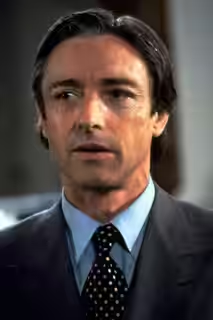
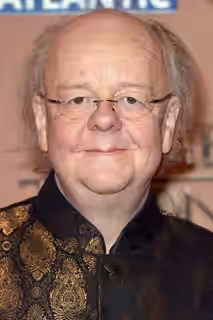
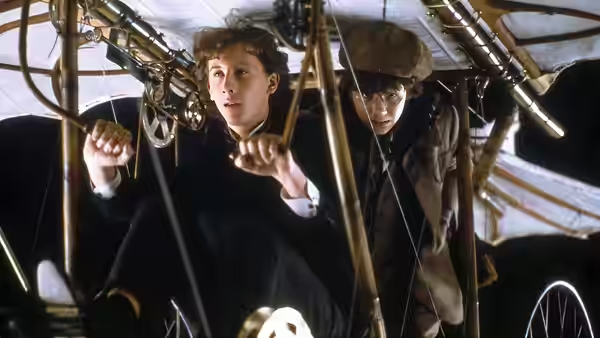
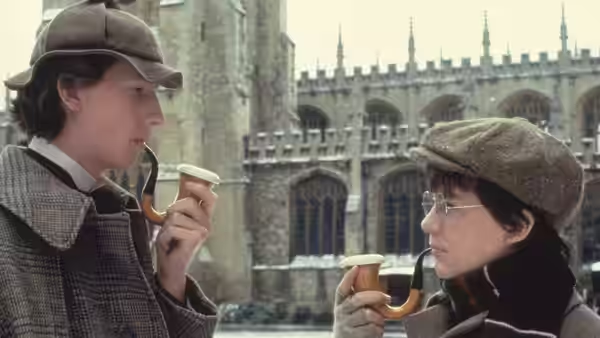
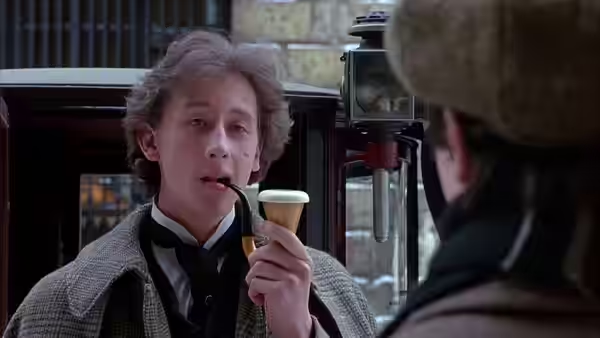
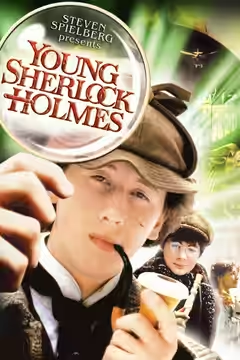
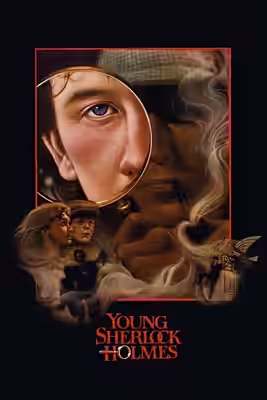
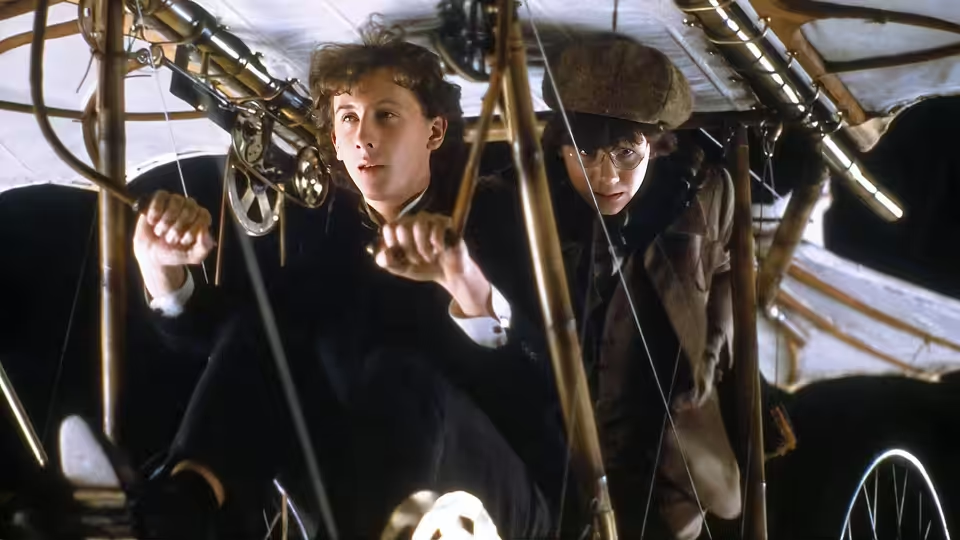
Sherlock Holmes (Nicholas Rowe) and John Watson (Alan Cox) crouch among ropes inside a wooden contraption
Film review

Young Sherlock Holmes

1985 · Directed by Barry Levinson · 1h 49m

In a sentenceHolmes and Watson are good company; the special effects could learn to wait their turn

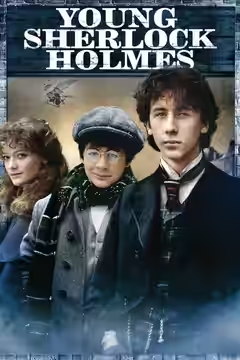
Before they become a familiar detective partnership, Sherlock Holmes (Nicholas Rowe) and John Watson (Alan Cox) encounter one another as young men. Their acquaintance develops through an adventure involving mystery and frightening hallucinations, while Holmes also experiences first love. Elizabeth Hardy (Sophie Ward), Professor Rathe (Anthony Higgins) and Rupert T. Waxflatter (Nigel Stock) belong to this early chapter of his life. The young Holmes has to find his way through the dangers with Watson, whose place beside him is only beginning to take shape.

Plays from YouTube when you press play; nothing loads from them until then.

Fi1m review

An appealing central partnership keeps Young Sherlock Holmes entertaining, even as the mystery gives way to effects and action. Barry Levinson’s adventure is worth a look for its young leads and its willingness to frighten.

The attraction of Young Sherlock Holmes is the chance to watch its famous partnership taking shape. Barry Levinson makes an entertaining, uneven adventure from that prospect, though the detective work deserves more attention than it receives. Chris Columbus’s screenplay wants friendship, first love, mystery and effects-led excitement, and it does not quite keep them in balance. The people are engaging enough that we notice when the spectacle takes over, and begin to wish the film would spend longer with them.

Nicholas Rowe gives Sherlock Holmes the assurance the part needs without making him impossible company. Alan Cox’s John Watson matters just as much, giving the pairing an ease that makes Holmes’s confidence tolerable. Their exchanges make the prospect of another adventure together attractive before this one has finished establishing itself. We warmed to them more quickly than we expected, because they seem interested in one another even when the plot is demanding our attention.

The handling of first love is similarly restrained, and welcome in a film otherwise inclined to add another attraction. The young Holmes is allowed feelings without the film insisting that we stop and admire his sensitivity. Chris Columbus is more persuasive here than when loading another demand onto the adventure. These quieter passages offer a chance to know the boy, although the film does not stay with them for long.

Stephen Goldblatt’s cinematography keeps the hallucinatory images clear enough for us to take in their disturbing details. Norman Reynolds’s production design makes the settings feel substantial enough to contain these impossible sights, which helps the fantasy considerably. Yet the pleasure of looking can overwhelm the pleasure of working things out, especially when a visual effect becomes a scene’s chief attraction. We begin watching for what the film will show us next rather than what Holmes will notice.

Bruce Broughton’s gothic score is more successful at sustaining unease than the action is at sustaining interest. It gives the fantasy a seriousness that suits the darker material, without requiring the young cast to behave as though fun has been abolished. We were unsettled by the hallucinatory passages, which make a character’s fear visible and threatening. That willingness to frighten is a virtue, although it calls for some caution with younger viewers.

Stu Linder’s editing has the difficult job of keeping those different kinds of film moving together. Once the action dominates, the pace feels less assured, and Barry Levinson cannot quite make excitement compensate for the reduced interest in the characters. The effects keep arriving after we have begun to miss the company of the two leads. A detective adventure needs to give us some pleasure in following the investigation, and too often this one hurries towards another visual attraction.

There is enough charm here to make those shortcomings frustrating, particularly when the young leads have made the central friendship so easy to enjoy. The mystery leaves less satisfaction than their company does, and the action cannot quite make up the difference. We would recommend it chiefly to those curious about a darker sort of family adventure, with modest expectations of the detecting. For younger children, the frightening images deserve more consideration than the reassuring PG.

Critical consensus AI synthesised

64
Positive
2
Mixed
5
Negative
1

The reviews lean towards qualified approval, with praise clustering around the young leads and the film’s atmosphere. Nicholas Rowe’s Holmes and the Holmes–Watson pairing earn favourable notices, while the production design helps sell this imagined early adventure. The more enthusiastic responses value its affection for the Holmes stories and its willingness to make a family adventure dark. Eye for Film particularly praises Bruce Broughton’s gothic score and argues that the film deserves greater recognition.

Reservations concern familiarity, uneven action direction and how far the spectacle pulls the film away from traditional Holmes territory. Empire enjoys the hallucinatory effects but finds the direction less assured once the action begins. Variety offers the sharpest dissent, praising the young performers while finding that visual effects take priority over artistry. The spread is wide, though three entries lack accessible verdicts, limiting how confidently their positions can be described.

Slant Magazine
3 December 2003 · ★★★/4 · Josh Vasquez
75

Vasquez finds the film an affectionate, largely successful attempt to honor the Sherlock Holmes legend. He praises Nicholas Rowe’s performance and the restrained handling of young Holmes’s first love, while noting the film borrows from Indiana Jones.

Read the full review →
Empire
2 March 2006 · Olly Richards
65*

Richards finds it entertaining but familiar, with direction that falters once the action begins. He praises the young leads’ pairing and the dazzling effects that bring the hallucinatory scenes to life.

Read the full review →
The New York Times
4 December 1985 · Janet Maslin
65*

The page content is inaccessible, so the critic’s verdict and specific praise or criticism cannot be verified. The available page information identifies a New York Times film article about the matching 1985 title.

Read the full review →
RogerEbert.com
· Roger Ebert
64*

The review text was inaccessible, so its verdict cannot be established. No specific praise or complaint could be verified.

Read the full review →
Time Out
· RR
64*

The available metadata identifies this as a review but does not reveal the critic’s verdict. Its standfirst frames Holmes’s apocryphal early life as the peg for an adventure, but cuts off before offering specific praise or complaint.

Read the full review →
Radio Times
★★★ · Tom Hutchinson
60

Hutchinson finds the young Holmes-and-Watson origin story commendable, though some Holmes aficionados may miss the traditional atmosphere. He praises the production design as fabulous.

Read the full review →

Straight answers AI written, from our review

Is Young Sherlock Holmes worth watching?
Young Sherlock Holmes is worth a look for its appealing leads and darker family adventure, though the uneven balance of mystery and spectacle keeps our score at 68. We recommend it chiefly for Holmes and Watson’s developing friendship; anyone hoping for sustained detective work may tire of the effects and action taking over.
How long is Young Sherlock Holmes, and what is it rated?
Young Sherlock Holmes runs 1h 49m. It is a mystery and adventure film.
Where can I watch Young Sherlock Holmes in Mexico?
Young Sherlock Holmes is available to rent from Amazon Prime Video from MX$29.00. Availability is checked daily; the links above go straight to each service.
How violent or frightening is Young Sherlock Holmes, and is it suitable for children?
Young Sherlock Holmes has a UK PG certificate, but its frightening hallucinations call for caution with younger children. We found these passages unsettling because they make a character’s fear visible and threatening, with clear, disturbing detail. The reassuring certificate deserves less weight than a child’s tolerance for frightening fantasy.
How does Young Sherlock Holmes compare to The City of Lost Children?
Young Sherlock Holmes offers an appealing detective partnership, but we favour The City of Lost Children for its stranger machinery, darker childhood fears and more rewarding fantasy. Both risk letting their surroundings crowd out their characters; the latter better rewards patience with crowded storytelling, while the former suits those chiefly interested in Holmes and Watson’s friendship.

Cast

Awards

Academy Awards, 1986

Nominated
Best Visual Effects

If you liked this, try…

  1. The Great Mouse Detective (1986) · not reviewed yetA smaller detective, a brisker mystery, and darkness beneath the family entertainment.

  2. The Amazing Mr Blunden (1972) · not reviewed yetA patient British ghost story that takes children’s fears and loyalties seriously.

  3. The City of Lost Children (1995, Fi1m 78)For stranger machinery, darker childhood fears and a world worth examining closely.

  4. Detective Dee and the Mystery of the Phantom Flame (2010) · not reviewed yetA detective adventure where extravagant spectacle gives the investigator plenty to unravel.

  5. The Kid Detective (2020) · not reviewed yetFor adults who wonder what becomes of a precociously gifted young sleuth.

Free account

Know what to watch tonight

Two lists that know where things are streaming, collections you can share, your own score beside ours, and Discover that remembers what you have seen.

  • Want to see, sorted by what is streaming now
  • Seen, with your score out of ten
  • No adverts, ever