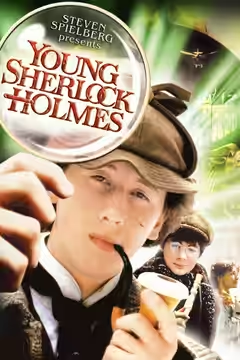
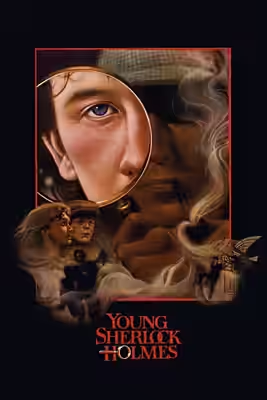
An appealing central partnership keeps Young Sherlock Holmes entertaining, even as the mystery gives way to effects and action. Barry Levinson’s adventure is worth a look for its young leads and its willingness to frighten.
The attraction of Young Sherlock Holmes is the chance to watch its famous partnership taking shape. Barry Levinson makes an entertaining, uneven adventure from that prospect, though the detective work deserves more attention than it receives. Chris Columbus’s screenplay wants friendship, first love, mystery and effects-led excitement, and it does not quite keep them in balance. The people are engaging enough that we notice when the spectacle takes over, and begin to wish the film would spend longer with them.
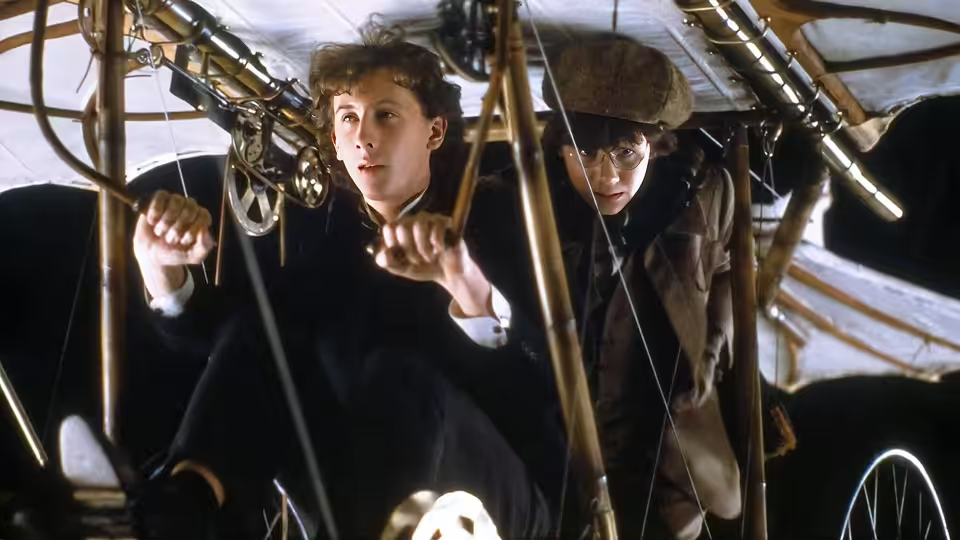
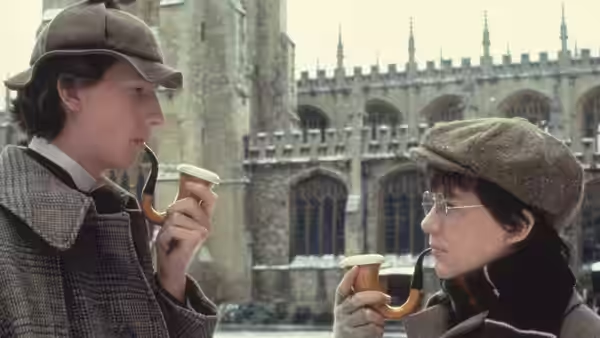
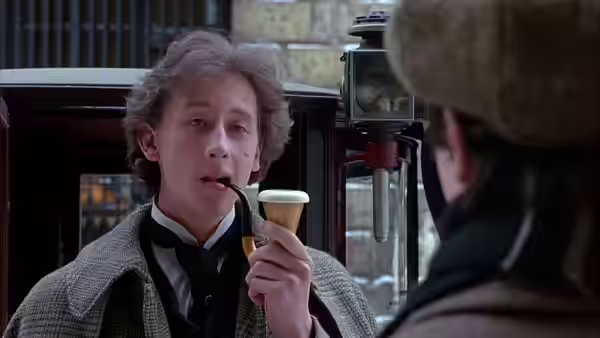
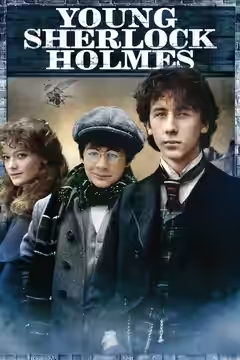
Nicholas Rowe gives Sherlock Holmes the assurance the part needs without making him impossible company. Alan Cox’s John Watson matters just as much, giving the pairing an ease that makes Holmes’s confidence tolerable. Their exchanges make the prospect of another adventure together attractive before this one has finished establishing itself. We warmed to them more quickly than we expected, because they seem interested in one another even when the plot is demanding our attention.
The handling of first love is similarly restrained, and welcome in a film otherwise inclined to add another attraction. The young Holmes is allowed feelings without the film insisting that we stop and admire his sensitivity. Chris Columbus is more persuasive here than when loading another demand onto the adventure. These quieter passages offer a chance to know the boy, although the film does not stay with them for long.
Stephen Goldblatt’s cinematography keeps the hallucinatory images clear enough for us to take in their disturbing details. Norman Reynolds’s production design makes the settings feel substantial enough to contain these impossible sights, which helps the fantasy considerably. Yet the pleasure of looking can overwhelm the pleasure of working things out, especially when a visual effect becomes a scene’s chief attraction. We begin watching for what the film will show us next rather than what Holmes will notice.
Bruce Broughton’s gothic score is more successful at sustaining unease than the action is at sustaining interest. It gives the fantasy a seriousness that suits the darker material, without requiring the young cast to behave as though fun has been abolished. We were unsettled by the hallucinatory passages, which make a character’s fear visible and threatening. That willingness to frighten is a virtue, although it calls for some caution with younger viewers.
Stu Linder’s editing has the difficult job of keeping those different kinds of film moving together. Once the action dominates, the pace feels less assured, and Barry Levinson cannot quite make excitement compensate for the reduced interest in the characters. The effects keep arriving after we have begun to miss the company of the two leads. A detective adventure needs to give us some pleasure in following the investigation, and too often this one hurries towards another visual attraction.
There is enough charm here to make those shortcomings frustrating, particularly when the young leads have made the central friendship so easy to enjoy. The mystery leaves less satisfaction than their company does, and the action cannot quite make up the difference. We would recommend it chiefly to those curious about a darker sort of family adventure, with modest expectations of the detecting. For younger children, the frightening images deserve more consideration than the reassuring PG.