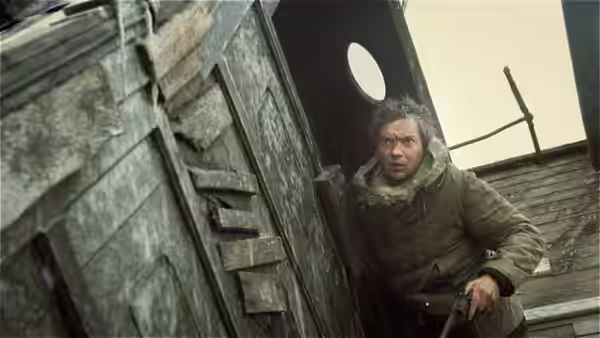
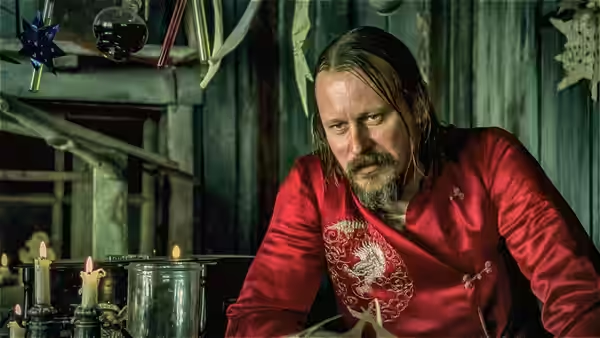
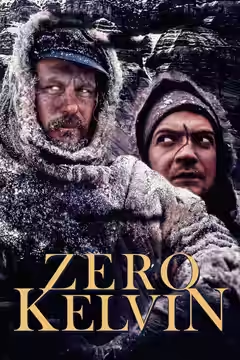
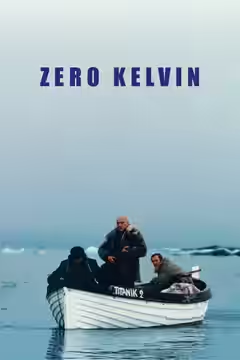
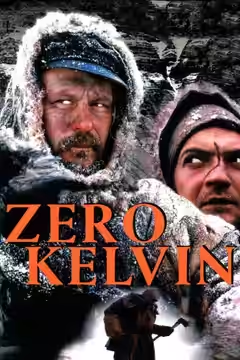
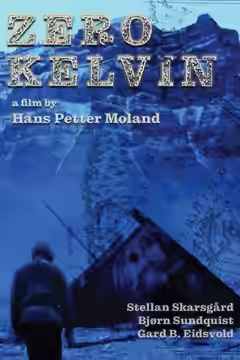
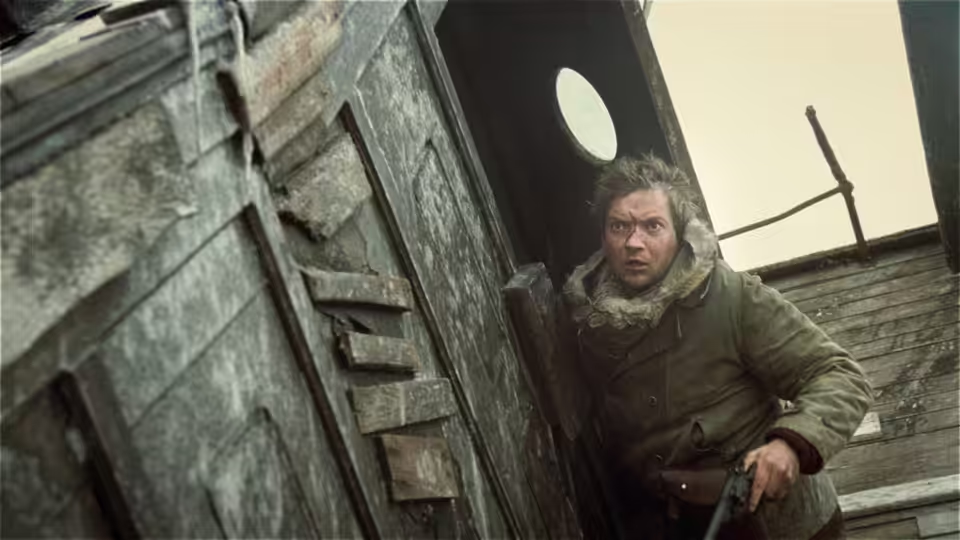
A bundled man crouches in the doorway of a weathered hut, holding a rifle
Film review

Zero Kelvin

1995 · Directed by Hans Petter Moland · 1h 58m

In a sentenceThe Arctic is cold enough without taking these men along

In the Arctic, Randbæk (Stellan Skarsgård), Henrik Larsen (Gard B. Eidsvold) and Jakob Holm (Bjørn Sundquist) face the cold and a conflict among themselves. Their differences bring questions of intelligence and strength into surroundings that offer little comfort. Each man’s response to the others becomes part of the difficulty of being there. The icy landscape gives them little opportunity to put their disagreements aside, and the demands of the place become bound up with the antagonism within the group. Their immediate problem is how to contend with both.

Fi1m review

A tense, patiently made Arctic thriller, carried by Stellan Skarsgård and a landscape that offers nobody much comfort. Its unrelenting antagonism can feel narrow, but Hans Petter Moland keeps the human conflict involving.

Zero Kelvin is a tense, well-made thriller whose chief limitation is how little relief it allows from its central conflict. Hans Petter Moland uses the Arctic setting to make the differences between his characters increasingly oppressive. The cold matters, but human company is the more immediate problem. We recommend it for the way the performances and the landscape make that problem felt. Anyone hoping for an adventure sustained by fresh discoveries should expect something narrower and less comfortable.

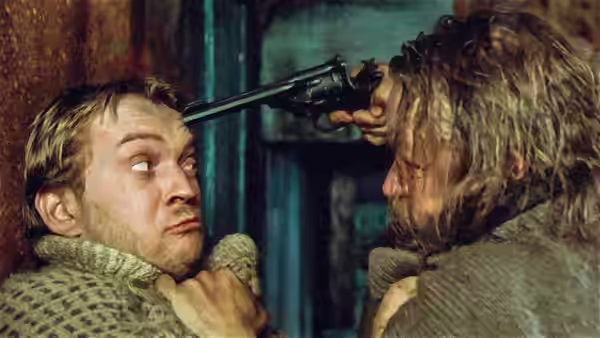
Stellan Skarsgård gives Randbæk a force that helps explain why the conflict cannot simply be talked away. Gard B. Eidsvold, as Henrik Larsen, and Bjørn Sundquist, as Jakob Holm, keep the exchanges from becoming a one-man performance. Their differences matter more than an easy division into the clever man and the strong man. That is a considerable virtue in a film so concentrated on its central struggle. The acting keeps the men interesting even when their company becomes wearing.

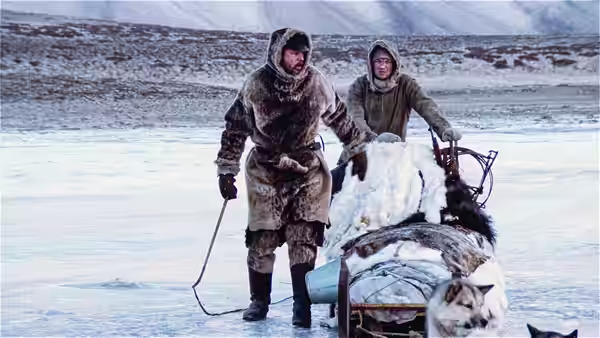
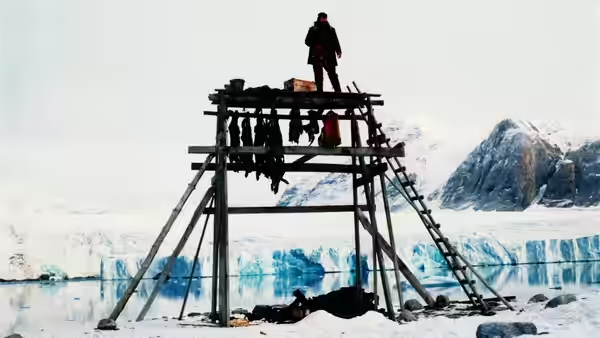
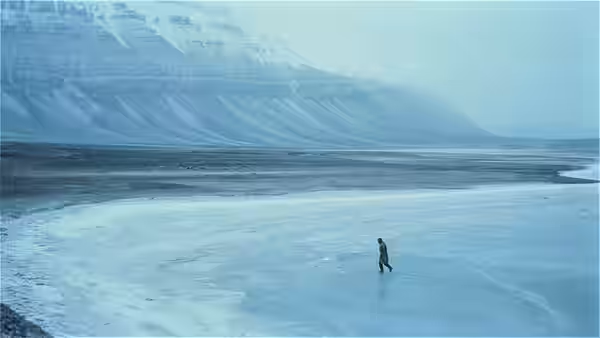
Philip Øgaard’s cinematography makes the Arctic’s scale unsettling. There is enough space to dwarf the men, and little in it that promises comfort. We felt hemmed in by those cold expanses; the distance around the characters made their conflict seem harder to escape. The images earn that reaction without needing an explanation of what the ice is supposed to mean. Moland lets the hostile landscape affect our sense of the people within it.

Einar Egeland’s editing gives the antagonism time to develop, and the pacing is one of the film’s strengths. At 118 minutes, it has room for friction to become something more serious without making every exchange carry an immediate threat. Terje Rypdal’s spare score helps by leaving the conflict room to trouble us. There is no need for the music to explain that this is an unhappy place. Its restraint suits the film’s patient accumulation of tension.

Janusz Sosnowski’s production design is less conspicuous than the landscape, which seems the right choice. The physical setting needs to make this company difficult to bear, and it does, without distracting us from the actors. Together, the design and photography avoid making the hardship look attractive. The surroundings remain unpleasant enough that the men’s efforts to assert themselves never acquire the easy glamour that adventure films sometimes give to stubbornness.

Lars Bill Lundholm’s screenplay avoids reducing the conflict to a simple contest between brains and strength. The struggle remains involving because those categories never adequately explain the men. Yet the film’s concentration on masculine antagonism can feel restrictive, and we wanted more variation in what the encounters asked of us. The grimness begins to repeat its effect even while the performances hold our attention. A less insistent stretch would have helped.

For a psychological thriller, though, the sustained discomfort is a substantial achievement. The film gives the landscape and the actors time to work, and its patience is largely rewarded. Its appeal depends on finding these difficult men worth staying with. Choose it for a night when an icy view and an argument sound more inviting than reassurance.
Critical consensus AI synthesised

76
Positive
3
Mixed
1
Negative
0
The AV Club
29 March 2002 · John Krewson
90*

Krewson calls the film a truly great psychological thriller. He praises its pacing and cinematography, especially how the Arctic’s cold and desolation heighten the characters’ conflict.

Read the full review →
Los Angeles Times
7 March 1997 · KEVIN THOMAS
80*

Thomas gives the film a strongly positive verdict, praising how its writing, direction, and acting keep the central conflict fresh and involving. He also singles out the icy setting and spare score for deepening its journey into an anguished soul.

Read the full review →
Variety
2 October 1995 · festival review · Leonardo Garcia Tsao
70*

The critic finds the film an engaging, thoughtful adventure that avoids a stale brain-versus-brawn conflict. They praise how the bleak Arctic setting heightens the dramatic tension.

Read the full review →
The New York Times
27 November 1996
64*

The page could not be accessed, so the critic’s verdict cannot be established. No praise or complaint can be verified from the available text.

Read the full review →

Straight answers AI written, from our review

Is Zero Kelvin worth watching?
Zero Kelvin is worth watching for its patient psychological tension, strong performances and oppressive Arctic setting; we score it 80 out of 100. We recommend it to viewers who enjoy difficult characters under pressure, though its unrelenting antagonism grows repetitive and leaves little room for the discoveries of a broader adventure.
How long is Zero Kelvin, and what is it rated?
Zero Kelvin runs 1h 58m. It is a drama and thriller film.
Where can I watch Zero Kelvin in Indonesia?
Zero Kelvin is not on any streaming or rental service in Indonesia at the moment. Availability is checked daily.
How violent or frightening is Zero Kelvin, and is it suitable for children?
Zero Kelvin has no UK certificate supplied and is rated NR in the US, so neither provides an age-suitability guide. We would steer children away from its sustained psychological discomfort and oppressive conflict between men; we cannot give a specific warning about graphic violence from the information available.
How does Zero Kelvin compare to The Ascent?
Zero Kelvin shares the snow, exhaustion and moral pressure of The Ascent, but concentrates on antagonism between men rather than conscience under interrogation. We would favour The Ascent for its more exacting treatment of moral choices, while Zero Kelvin suits viewers drawn to a patiently developed psychological thriller. Neither offers much comfort.
Is Zero Kelvin based on a true story or a book?
Zero Kelvin is based on a novel, rather than presented as a true story. We cannot assess its faithfulness to the book, but the film’s central conflict is clear on its own, with no need for prior reading to follow the men’s struggle.
What should I watch after Zero Kelvin?
After Zero Kelvin, try The Ascent (1977, Fi1m 88): Snow, exhaustion and moral pressure, with little patience for comforting heroics. Then The Lighthouse (2019, Fi1m 82): Two men discover how much worse isolation becomes with the wrong companion; and The Treasure of the Sierra Madre (1948, Fi1m 88): A harsh expedition turns differences of character into an increasingly dangerous problem.

Cast

Awards

Amanda Award for Best Film, 1996

Won
Amanda Award for Best Film

If you liked this, try…

  1. The Flight of the Eagle (1982) · not on Fi1m yetAnother Arctic ordeal, attentive to the stubbornness that makes hardship worse.

  2. The Ascent (1977, Fi1m 88)Snow, exhaustion and moral pressure, with little patience for comforting heroics.

  3. The Lighthouse (2019, Fi1m 82)Two men discover how much worse isolation becomes with the wrong companion.

  4. The Treasure of the Sierra Madre (1948, Fi1m 88)A harsh expedition turns differences of character into an increasingly dangerous problem.

  5. The White Reindeer (1952) · not on Fi1m yetA snowbound folk horror that gives the northern landscape a different menace.