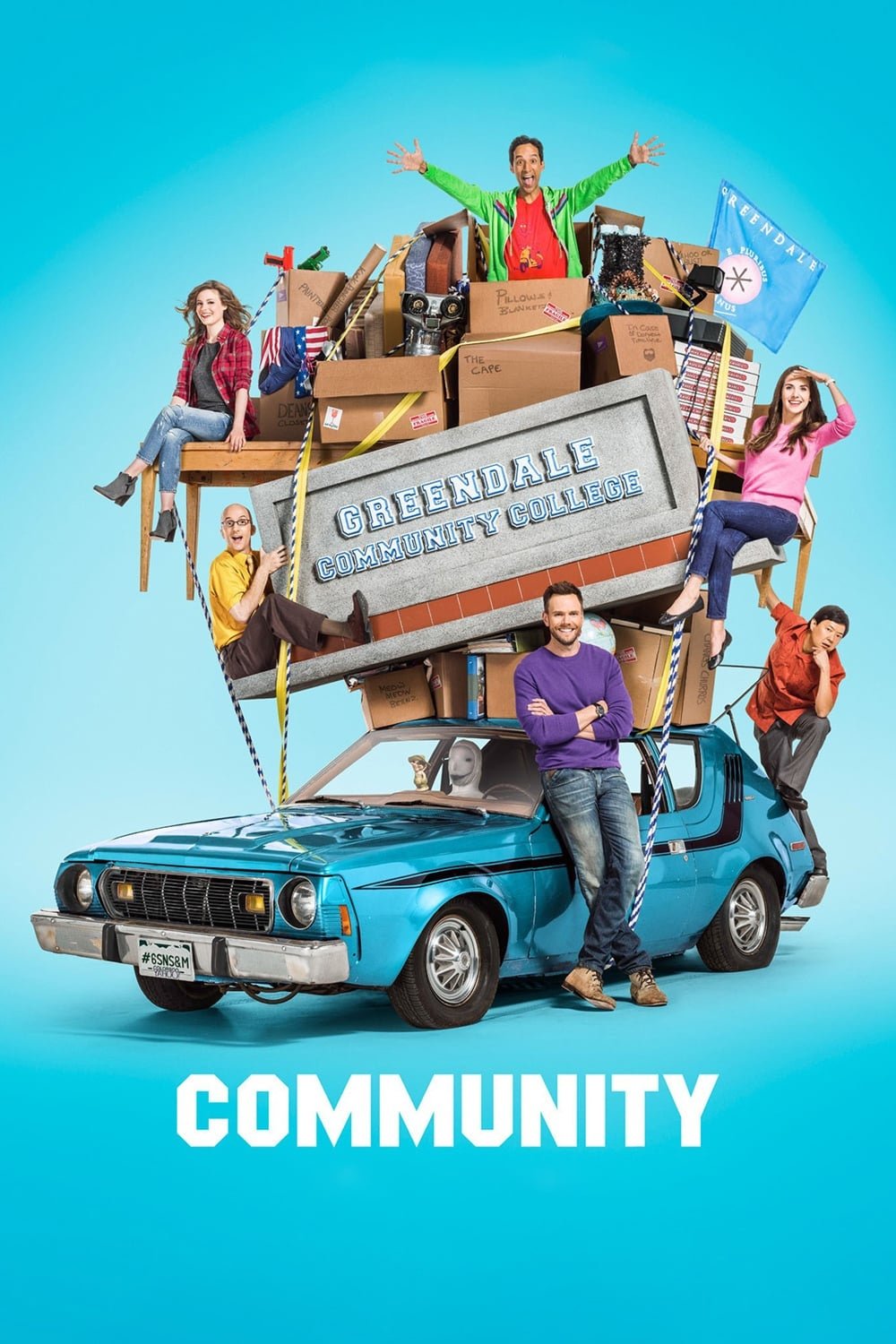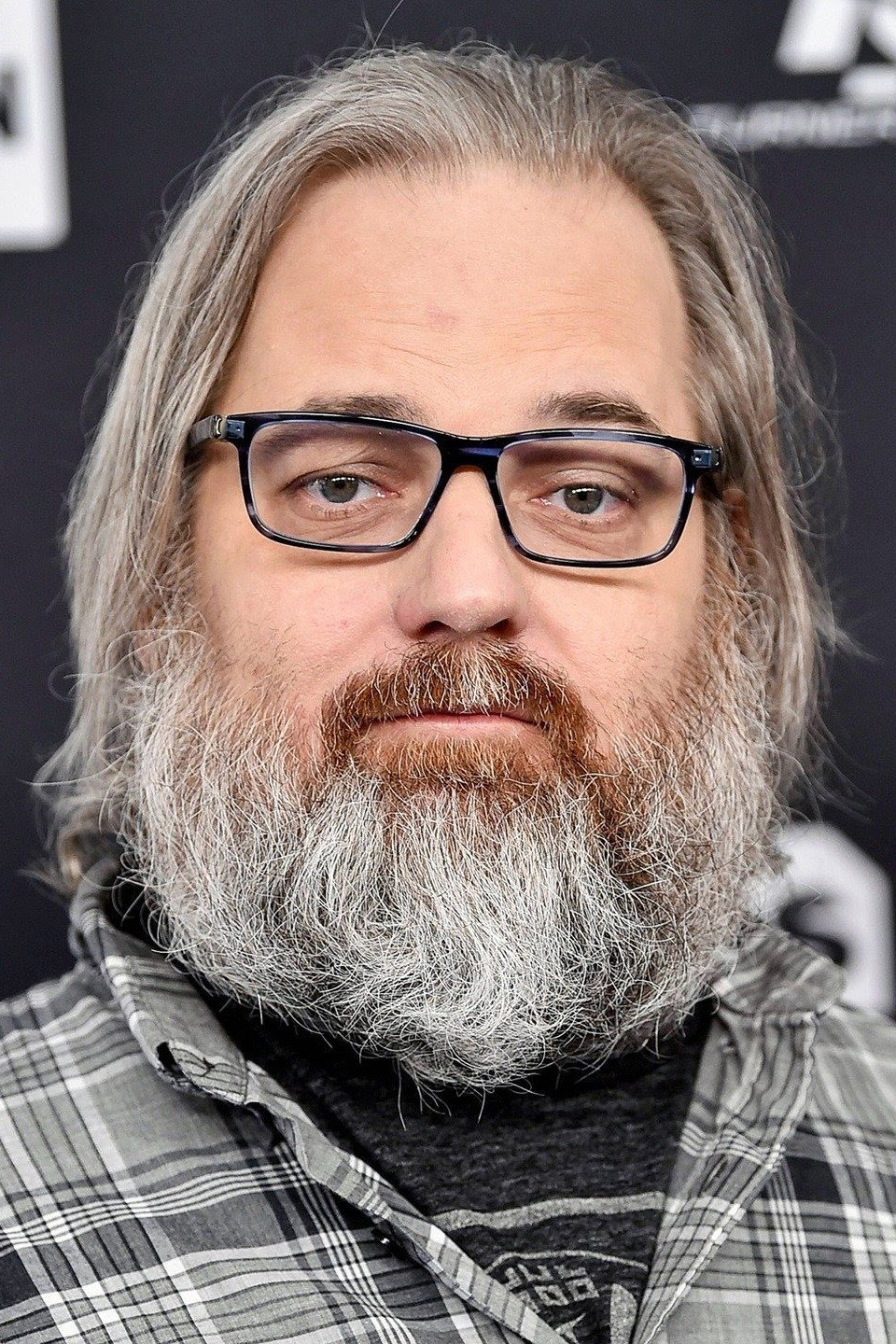
Dan Harmon builds comedies on a drawn circle and then dares the format to break them. In Community it turned a study room into every genre on television without losing the people at the table, and that is the trick everything since has repeated.
Fi1m perspective
Somewhere in the first season of Community (2009), a study group at a bad college stops being a study group and becomes the cast of a heist film. Then a war film, a documentary, a zombie picture, a Western. The study table does not move and the people around it do not change. What changes is the kind of television being made around them, and Dan Harmon's trick, the one that runs through everything he has done, is that the people keep mattering while the format flips. We gave the programme 83, and most of what we admired in it is what we admire in him.
He came to network television the long way round: Milwaukee improv and sketch in the mid-1990s, then Channel 101, the short-film network he co-founded with Rob Schrab, then writing on The Sarah Silverman Program and co-writing the animated Monster House (2006) with Schrab. Community college was his own experience before it was his premise, which is why the college in Community feels lived in rather than researched. He ran the programme, was removed from it in 2012, and came back the following year with Chris McKenna as co-showrunner. The fourth season, made without him, is the useful control experiment. Our review found it had the tone right and the jokes wrong, an imitation of his habits without the reasons behind them.
The reason is structure. Harmon has spent his career applying an eight-step circle, his own compression of the hero's journey, to every episode and season he touches. "I can't not see that circle," he has said. "It's tattooed on my brain." It sounds mechanical, and in weaker hands it would be. In his, it is what lets a half hour dress up as a Western and still land as a story about six lonely people. The same method sits under Rick and Morty (2013), the animated series he made with Justin Roiland and later ran alone, and Krapopolis (2023), where a high-concept premise rests on a family that cannot get along. We have not reviewed either, so we will say only that the habit is recognisably his.
What he cannot always do is solve the person at the centre. Joel McHale's Jeff is a fine giver of speeches and a thin man to hang a series on, and Harmon's answer, making the speeches a joke about speeches, is clever rather than a fix. Chevy Chase's Pierce, a bigot the programme could neither punish nor pity, is the one character the circle never closed. And yet. We laughed at the heists and the zombies, and then the sixth season sat us down at an emptier table and we were sadder than a comedy about a bad college had any right to make us. The shape did that; the feeling came out of the structure.
He has lately been working in animation, where a room can become anything without a set-builder. Whether the people still matter as the formats flip is the only question worth asking of him, and his best work has answered it every time.
Biography
Dan Harmon is an American television writer, producer and actor. He created, wrote for and produced the NBC sitcom Community (2009–2015).
He co-created the Adult Swim series Rick and Morty (2013–present) with Justin Roiland and created the Fox animated series Krapopolis (2023–present). Harmon co-founded the alternative television network Channel 101 with Rob Schrab and hosted the podcast Harmontown (2012–2019). He also wrote the screenplay for the animated film Monster House (2006).