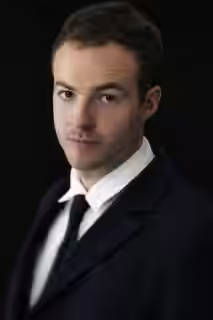
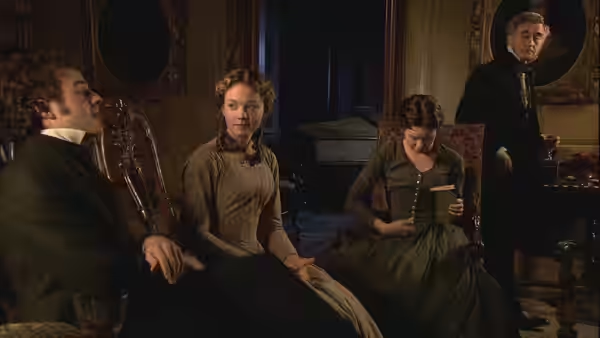
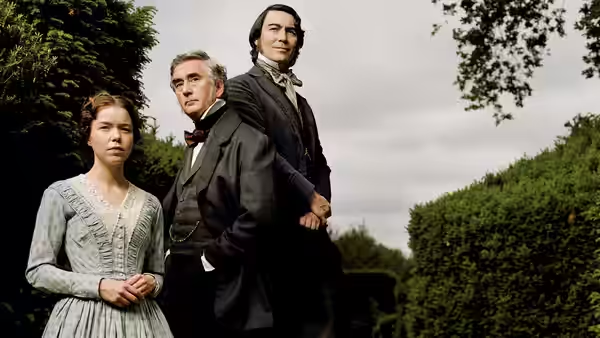
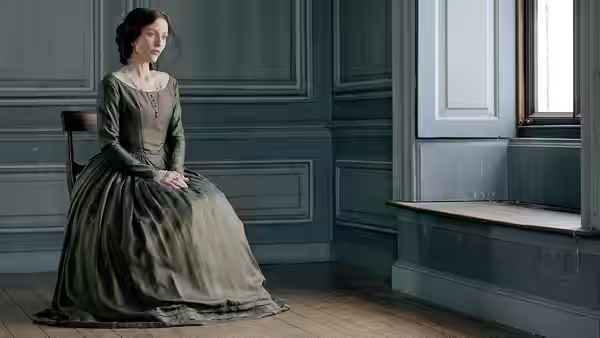
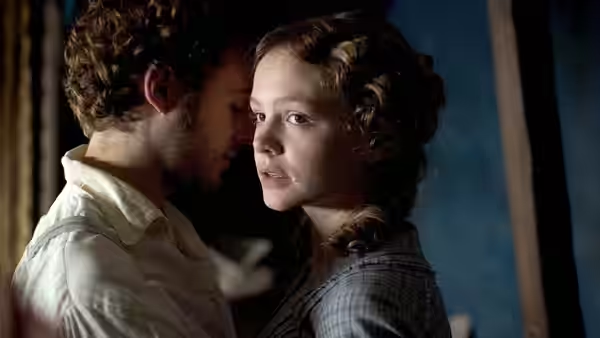
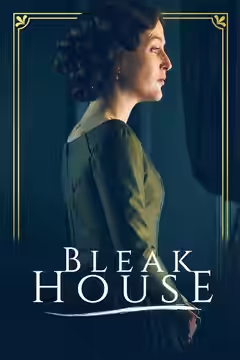
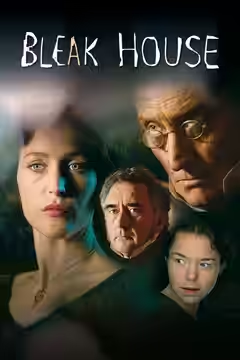
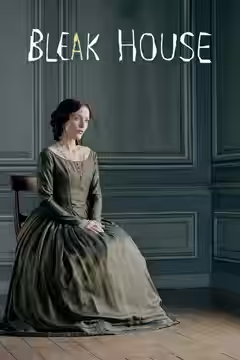
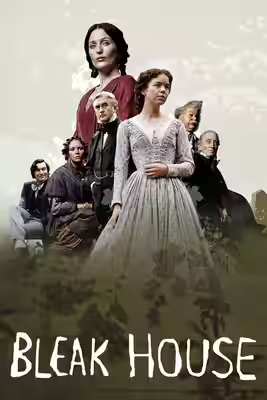
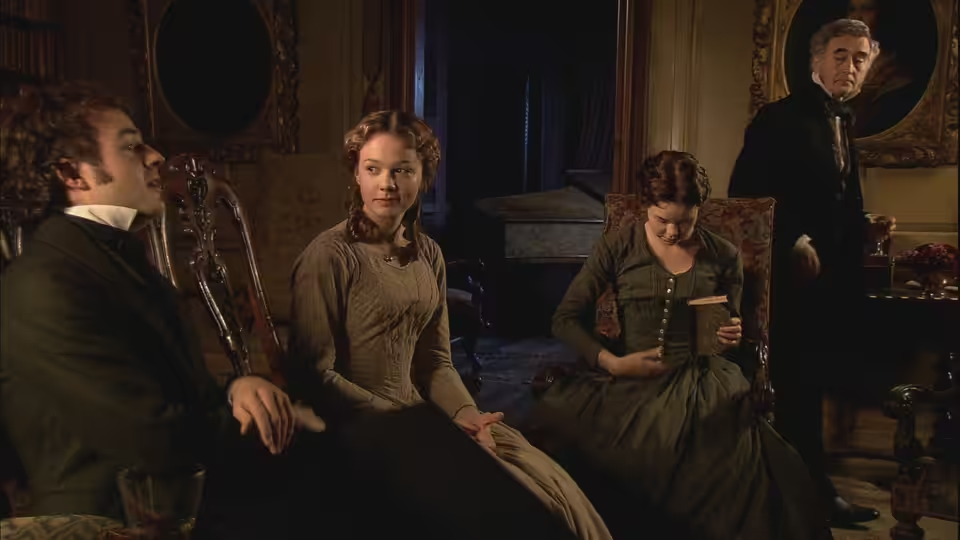
Richard Carstone (Patrick Kennedy) reclines near Ada Clare and Esther Summerson
Series review

Bleak House

2005 · Created by Andrew Davies · Series · 55m

In a sentenceGillian Anderson looks haunted while the rest of Dickens’s guest list competes for our attention

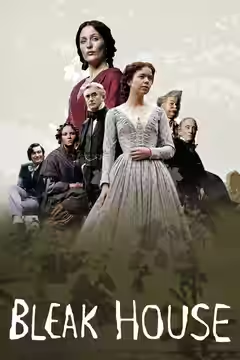
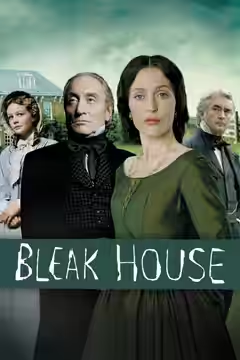
Andrew Davies adapts Charles Dickens’s Bleak House as a fifteen-episode drama directed by Susanna White and Justin Chadwick. Anna Maxwell Martin plays Esther Summerson, with Denis Lawson as John Jarndyce and Carey Mulligan as Ada Clare. Gillian Anderson appears as Lady Dedlock and Charles Dance as Mr Tulkinghorn, while Patrick Kennedy plays Richard Carstone and Burn Gorman plays William Guppy. The ensemble also includes Richard Harrington as Allan Woodcourt, Natalie Press as Caddy Jellyby and Liza Tarbuck as Mrs Jellyby, alongside Catherine Tate as Mrs Chadband and Joanna David as Mrs Badger.

Fi1m review

Andrew Davies’s Bleak House is a decent Dickens adaptation with two compelling reasons to stay: Gillian Anderson and Burn Gorman. The gothic treatment supplies plenty of comedy, but the exaggerated characters too often make the serious drama difficult to believe.

Andrew Davies’s adaptation of Charles Dickens’s Bleak House is decent ensemble television, though we would recommend it chiefly to viewers with an appetite for exaggerated character acting. Across fifteen episodes, directors Susanna White and Justin Chadwick favour pace and a crowded, gothic atmosphere. There is little danger of the production becoming timid about its source material. The difficulty is that so many characters arrive making a strong impression that we sometimes wish the direction would stop emphasising their eccentricities.

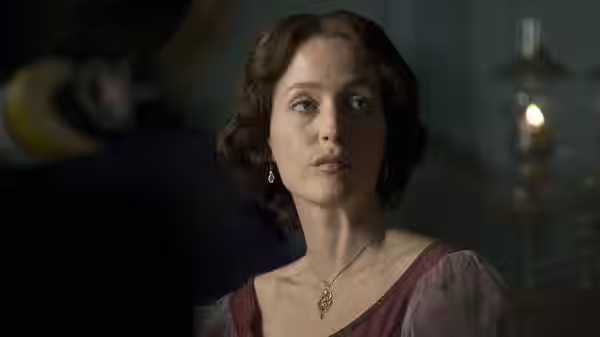
Gillian Anderson’s Lady Dedlock is the strongest reason to stay, because her haunted reserve gives the bustle something to stop for. Anderson makes the character’s unhappiness felt without pushing for our sympathy. We were unsettled by that haunted composure; the sadness seems to require an effort to contain, and Anderson makes the effort matter. Her performance gives the drama a seriousness that the more emphatic characterisations around her cannot always sustain.

Burn Gorman’s William Guppy makes a persuasive case for the exaggerated approach. His performance takes pleasure in the character’s oddness and seems entirely comfortable with the scale of the comedy. We laughed at Guppy, which complicates our objections to the surrounding grotesques: exaggeration plainly can work. Gorman makes it feel purposeful, and his assurance is a considerable pleasure in a production where the invitation to enjoy everyone’s peculiarities can become a little insistent.

Anna Maxwell Martin plays Esther Summerson, with Denis Lawson as John Jarndyce and Carey Mulligan as Ada Clare. They give the company a steadier centre, although the direction does not always seem patient enough with quieter acting. Charles Dance’s Mr Tulkinghorn fits readily into the more forceful company. With so many recognisable characters to accommodate, the adaptation is good at securing our immediate attention, but less consistent at letting us forget that we are watching a succession of carefully prepared performances.

Davies keeps the ensemble approachable, and the lack of solemnity is welcome. The social comedy is allowed to be funny; we are not asked to admire every eccentricity merely because Dickens invented it. Yet the writing and direction can seem too eager to establish what sort of person has entered the drama. Once that first impression has registered, we need room to revise it, and the production’s briskness can make the characters feel more settled than they ought to be.

The gothic art direction contributes to that difficulty, even as it gives the series an appealingly strange appearance. White and Chadwick maintain momentum, but the heightened surroundings and performances together can make the drama feel sealed off from ordinary human behaviour. Period television can accommodate theatricality, and this production has enough comic confidence to justify much of it. What we miss is the sense that the people might surprise the adaptation, rather than always arrive exactly as it has prepared us to receive them.

For viewers drawn to Dickens’s social comedy, the acting offers enough pleasure to make the unevenness tolerable. Anyone seeking sustained emotional intimacy may find the busy treatment wearing, despite Anderson’s restraint. Try it for the company, with some tolerance for actors being encouraged to announce themselves.
Critical consensus AI synthesised

74
Positive
3
Mixed
1
Negative
0
The Guardian
30 October 2005 · Kathryn Flett
90*

The BBC adaptation is a masterpiece that improves on the novel with magnificent casting, gothic art direction, and pacey direction. Gillian Anderson's Lady Dedlock is singled out for particular praise as bewitchingly haunted.

Read the full review →
Variety
18 January 2006
70*

The critic notes that wading through the slow first half is rewarded by the engrossing conclusion of this sumptuously produced Masterpiece Theatre adaptation. It praises the sprawling cast including Gillian Anderson and the dark flair brought to Dickens' tale.

Read the full review →
The Times
30 October 2005 · AA Gill
50*

The production is no better or worse than previous adaptations, offering a fairy-tale Victoriana that leans into social comedy and grotesque characters rather than believable drama. Burn Gorman as Guppy is highlighted as the best performance.

Read the full review →
Collider
15 August 2025 · Kelcie Mattson
90*

The critic hails the 2005 BBC miniseries as the best historical miniseries ever, praising its innovative 30-minute episodic format modeled on soap operas, high-definition cinematography with handheld techniques, and strong ensemble performances led by Gillian Anderson as Lady Dedlock.

Read the full review →

Straight answers AI written, from our review

Is Bleak House worth watching?
Bleak House is worth watching for viewers who enjoy Dickens's social comedy and broad character acting, and we scored it 65. Gillian Anderson's haunted Lady Dedlock and Burn Gorman's William Guppy are the two strongest reasons to stay across fifteen episodes. Anyone wanting quieter emotional intimacy may find the crowded, exaggerated treatment wearing.
How long is Bleak House, and what is it rated?
Bleak House has episodes of about 55m. It is a drama series.
Where can I watch Bleak House in Poland?
Bleak House is not on any streaming or rental service in Poland at the moment. It is available in 4 other countries; change your country at the top of the page to see where. Availability is checked daily.
How violent or frightening is Bleak House, and is it suitable for children?
Bleak House carries a UK 15 certificate and is a period drama rather than a violent or frightening one. The gothic atmosphere and grotesque characterisations are played largely for comedy, and our review notes nothing graphic. It is not made for young children, but older teenagers with a taste for Dickens should find little here to alarm them.
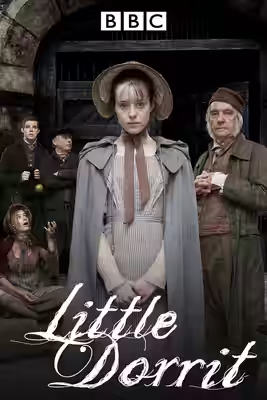
How does Bleak House compare to Little Dorrit?
Bleak House is the busier and more emphatic of the two Andrew Davies adaptations, while Little Dorrit is the more absorbing, with more room for private distress. Bleak House secures attention quickly but rarely lets its characters surprise us; Little Dorrit opens slowly and ends in a hurry. Choose Bleak House for comic company, Little Dorrit for feeling.
Is Bleak House based on a true story or a book?
Bleak House is based on Charles Dickens's novel of the same name, not on a true story. Andrew Davies's adaptation keeps the novel's large cast and social comedy, with the gothic elements heightened for pace and atmosphere. No knowledge of the book is needed, since the production works hard to establish every character on arrival.
What should I watch after Bleak House?
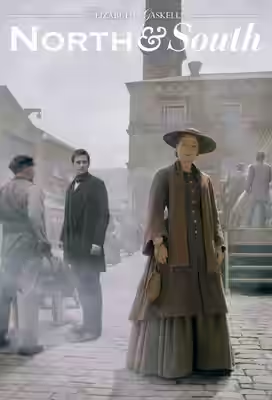
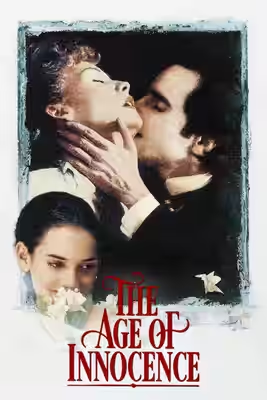
After Bleak House, try Little Dorrit (2008, Fi1m 76): Another Dickens ensemble, with room for both social absurdity and private distress. Then North & South (2004, Fi1m 83): A period drama that gives social divisions a force beyond the furnishings; and The Age of Innocence (1993, Fi1m 86): More restrained manners, with serious consequences for anyone who breaks them.

Cast

If you liked this, try…

  1. Little Dorrit (2008, Fi1m 76)Another Dickens ensemble, with room for both social absurdity and private distress.

  2. North & South (2004, Fi1m 83)A period drama that gives social divisions a force beyond the furnishings.

  3. The Age of Innocence (1993, Fi1m 86)More restrained manners, with serious consequences for anyone who breaks them.

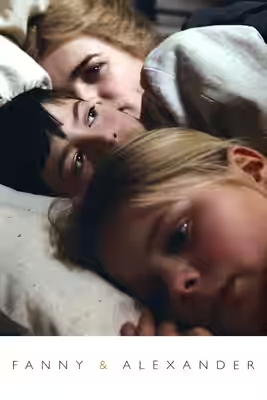
  4. Fanny and Alexander (1982, Fi1m 92)A crowded household, theatrical personalities and rooms that can feel quietly threatening.

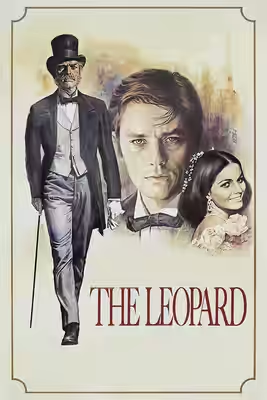
  5. The Leopard (1963, Fi1m 88)Another large cast negotiating a society that takes rank far too seriously.

Free account

Know what to watch tonight

Two lists that know where things are streaming, collections you can share, your own score beside ours, and Discover that remembers what you have seen.

  • Want to see, sorted by what is streaming now
  • Seen, with your score out of ten
  • No adverts, ever