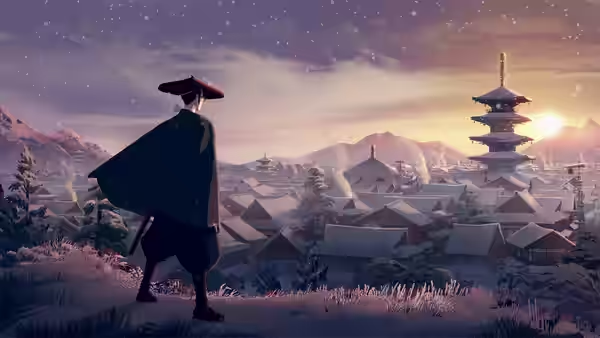
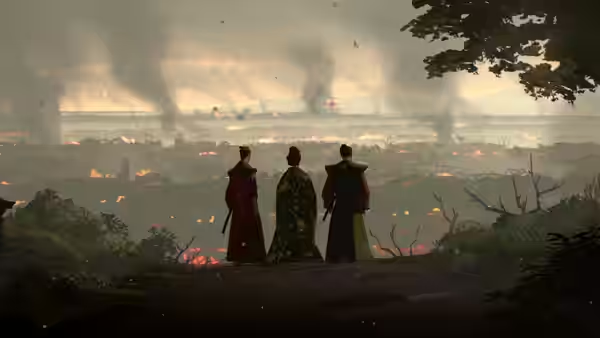
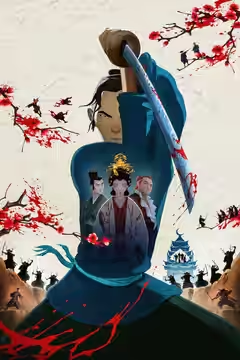
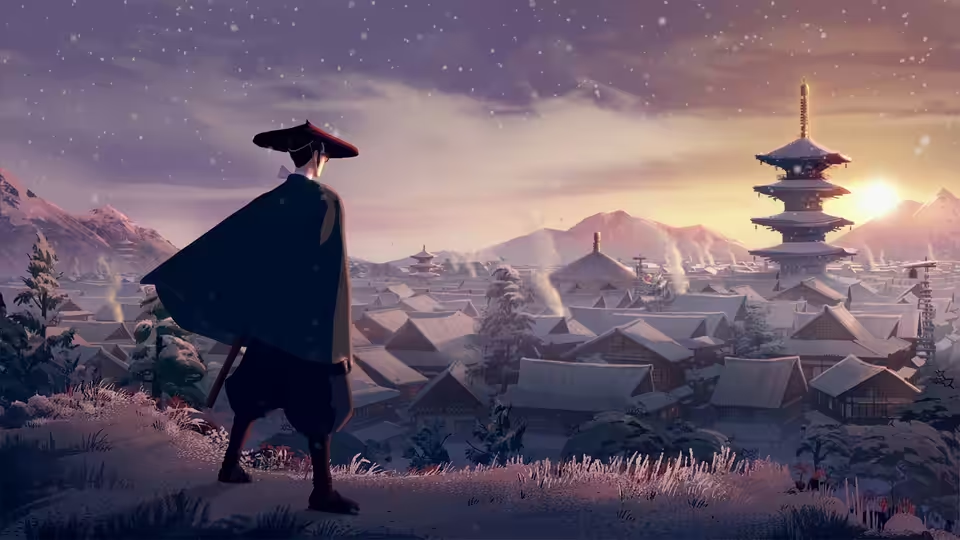
A cloaked swordswoman surveys a snow-covered town from a hillside at sunset
Series review

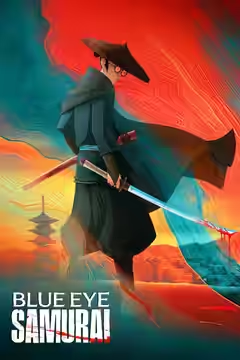
BLUE EYE SAMURAI

2023 · Created by Amber Noizumi, Michael Green · Series

In a sentenceA revenge story in which the snow stays white for about four seconds at a time

Edo-period Japan. Mizu (Maya Erskine) is a swordfighter with blue eyes, which in this country mark her as the child of a foreigner, so she keeps them hidden and travels as a man. She has a list of men she means to kill, and the series is the road towards them. On the way she is joined by Ringo (Masi Oka), who attaches himself to her and will not be shaken off, and she makes an enemy of Taigen (Darren Barnet), a swordsman with a reputation to protect. Elsewhere Akemi (Brenda Song) and Seki (George Takei) have their own reasons to follow her progress. At the far end of the road wait Heiji Shindo (Randall Park) and Abijah Fowler (Kenneth Branagh), whose name alone tells you he is not from here.

Plays from YouTube when you press play; nothing loads from them until then.

Fi1m review

The sword fights are the best animated action we have seen in years, cut so you always know where the blade is and whose arm it belongs to. The talk between them is less sure. Worth your evening if revenge is your genre.

Amber Noizumi and Michael Green have made an animated revenge story set in Edo-period Japan, and given it a hero whose face is a crime. Mizu (Maya Erskine) has blue eyes, which in this country means one of her parents was a foreigner, which means she should not exist. She keeps them hidden, passes as a man, and carries a list of men she means to kill. Eight episodes, released on 3 November 2023, carrying a certificate 18 it has earned by the end of the first hour. The sword fights are the best animated action we have seen in years. The conversations between them are not as good, and that is the review in two sentences.

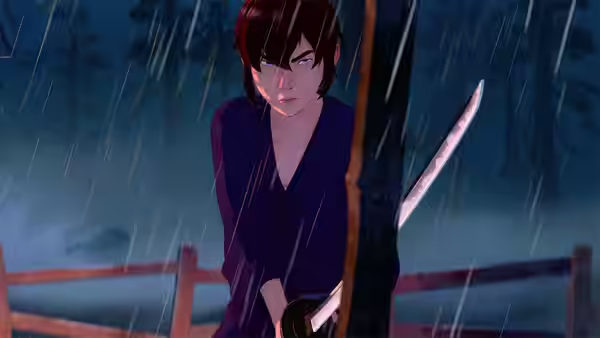
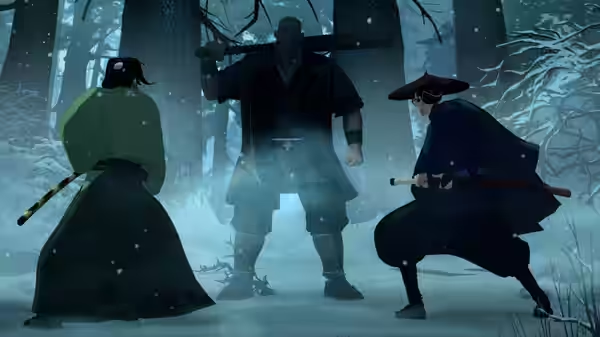
Start with the fights, because the series does. The animation builds its people as three-dimensional models and then draws over them so they look painted, and the result moves like a cartoon and bleeds like a film. Seven directors are credited, Green among them, and the style holds across all of them. Editors Yuka Shirasuna and Brad Lee Zimmerman cut the action so that you always know where the blade is and whose arm is attached to it. A fight in the first episode, Mizu against a crowd of swordsmen and then their best man, Taigen (Darren Barnet), is staged as one long problem she solves a step at a time, and by the end of it we knew where every body had fallen.

We flinched more than once, which we do not often do at a drawing. The series does it by treating a cut as something that happens to a person: the blade goes in, and the camera stays on the face a beat longer than is comfortable. Later, and to our surprise, we were moved. The series stops the road for most of an episode to show us where Mizu came from, with hardly any fighting in it, and the stillness made the story sadder than another fight would have. It is the best half-hour in the series.

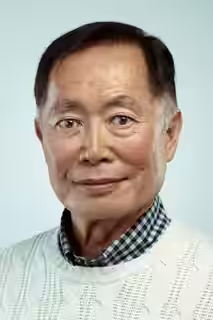
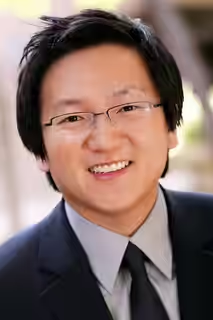
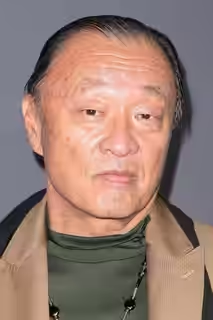
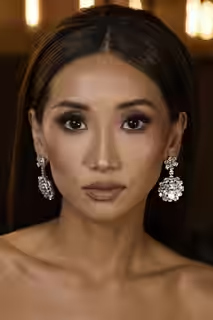
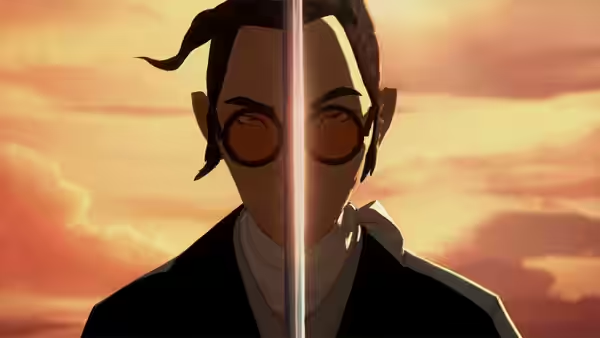
Erskine plays Mizu low and flat, a voice that decided long ago not to want anything it cannot cut its way to, and lets almost nothing through. Kenneth Branagh is Abijah Fowler, and the name tells you he is not from here; Branagh plays him with relish, a soft voice that makes threats sound like hospitality, and he is the only person in the series who seems to be enjoying himself. Masi Oka’s Ringo, who attaches himself to Mizu and will not be shaken off, is warm without tipping into mascot. George Takei, as Seki, is dry and lovely in a small part. Randall Park’s Heiji Shindo gets the laughs. Brenda Song’s Akemi has the hardest job, because her strand starts slowly and takes three episodes to find its reason to be there.

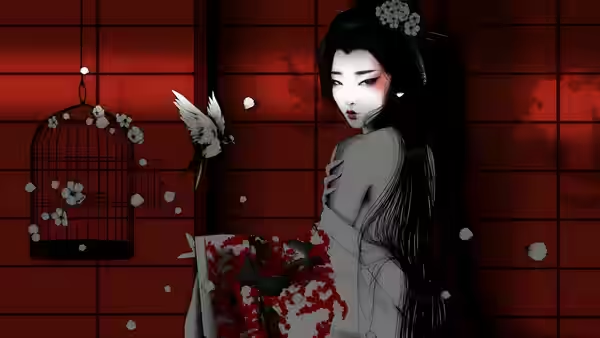
Toby Wilson and Jason William Scheier, the production designers, give the country snow that stays white for about four seconds, timber towns the colour of tea, and a brothel lit in red and gold that looks like the inside of a lacquer box. Suttirat Anne Larlarb’s costumes do a lot with one idea: Mizu’s hat and dark coat make a silhouette you could find in a crowd of a thousand, which is the point, because she is hiding in one. Amie Doherty’s music is mostly percussion and low strings and has the good sense to drop out when the swords come up.

The talk is the trouble. Noizumi, Green and Yana Bille-Chung write dialogue that is clear and often funny, but a good deal of it sounds like modern Americans in period costume, and once or twice a line landed so flat that we were pulled out of the century. The revenge plot is a list, and a list tells you what will happen next. Fowler is a pleasure to listen to, but he wants what villains want, and we never learned why. The men around Mizu, Taigen most of all, are drawn with less care than she is.

Set beside the films it owes a debt to, Lady Snowblood (1973) and the Kill Bill pictures, it stands up. Watch this one in the evening, with the lights down, and not while eating.
Critical consensus AI synthesised

83
Positive
5
Mixed
0
Negative
0
Empire
22 November 2023 · David Opie
90*

The critic finds the series a gorgeous, addictive thrill-ride that sustains its focus on Mizu. They praise its fluid, inventive fight scenes and painterly animation.

Read the full review →
The Guardian
3 November 2023 · ★★★★
80

The Guardian gives the series a positive review, calling it a fun, cinematic epic. It singles out the fight scenes as an absolute joy to watch.

Read the full review →
The Hollywood Reporter
23 October 2023 · Angie Han
70*

The critic finds the series engrossing and entertaining, though less profound or original than it could be. She especially praises its gorgeously stylized animation and spectacularly choreographed violence.

Read the full review →
Collider
23 October 2023 · 9/10 · Nate Richard
90

The critic enthusiastically recommends the series as a confident, ambitious animated revenge saga. They especially praise its distinctive animation and exceptionally choreographed action.

Read the full review →
/Film
11 November 2023 · BJ Colangelo
90*

The critic calls the series one of the best animated shows of 2023 and praises its compelling revenge story. They single out its striking animation, which combines 2D and 3D techniques while retaining a hand-drawn feel.

Read the full review →

Straight answers AI written, from our review

Is BLUE EYE SAMURAI worth watching?
Blue Eye Samurai is worth watching if revenge is your genre, and we scored it 79. The sword fights are the best animated action we have seen in years, cut so you always know where the blade is and whose arm it belongs to. The dialogue between fights is the weaker part, and often sounds like modern Americans in period costume.
Where can I watch BLUE EYE SAMURAI in Chile?
BLUE EYE SAMURAI is streaming on Netflix in Chile. Availability is checked daily; the links above go straight to each service.
How violent or frightening is BLUE EYE SAMURAI, and is it suitable for children?
Blue Eye Samurai carries a UK certificate 18 and is not suitable for children. The violence is frequent and treated seriously: the blade goes in and the camera stays on the face, and we flinched more than once at a drawing. There is also a brothel setting, so this is adult viewing for teenagers and the squeamish alike.
How does BLUE EYE SAMURAI compare to Harakiri?
Blue Eye Samurai and Harakiri are both Edo-period samurai stories, but the earlier film is the more serious and the more demanding of the two. Harakiri is a patient, harrowing drama about honour as a trap, with one devastating fight at the end; Blue Eye Samurai is an animated revenge story that fights often and talks less well. Choose Kobayashi for the argument and Noizumi and Green for the action.

Cast

If you liked this, try…

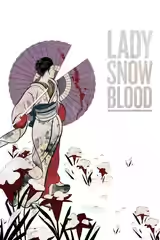
  1. Lady Snowblood (1973) · not on Fi1m yetThe vengeful swordswoman this series is descended from, with blood on snow to match.

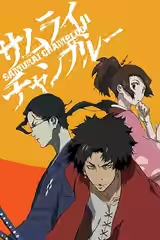
  2. Samurai Champloo (2004) · not on Fi1m yetEdo-period wandering with a hip-hop score; looser, funnier, and just as handsomely drawn.

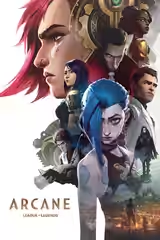
  3. Arcane (2021) · not on Fi1m yetThe other recent animated series that made adults sit up; painted light, grown-up grief.

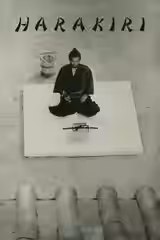
  4. Harakiri (1962, Fi1m 91)Kobayashi’s samurai film about honour as a trap, with one devastating fight at the end.

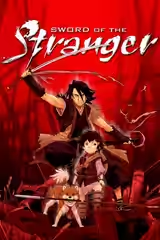
  5. Sword of the Stranger (2007) · not on Fi1m yetA ronin, a child, and some of the cleanest hand-drawn sword fighting ever animated.