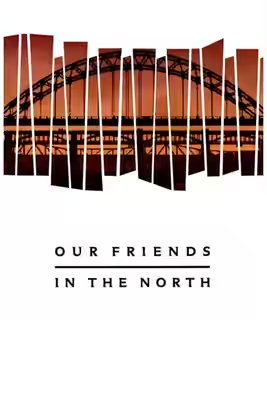
Paul Abbott’s series gives each worker at a Manchester textile factory an hour and a crisis, and the best of those hours are as good as British television drama gets. Stay for the later series and some of the faces that held it together go missing.
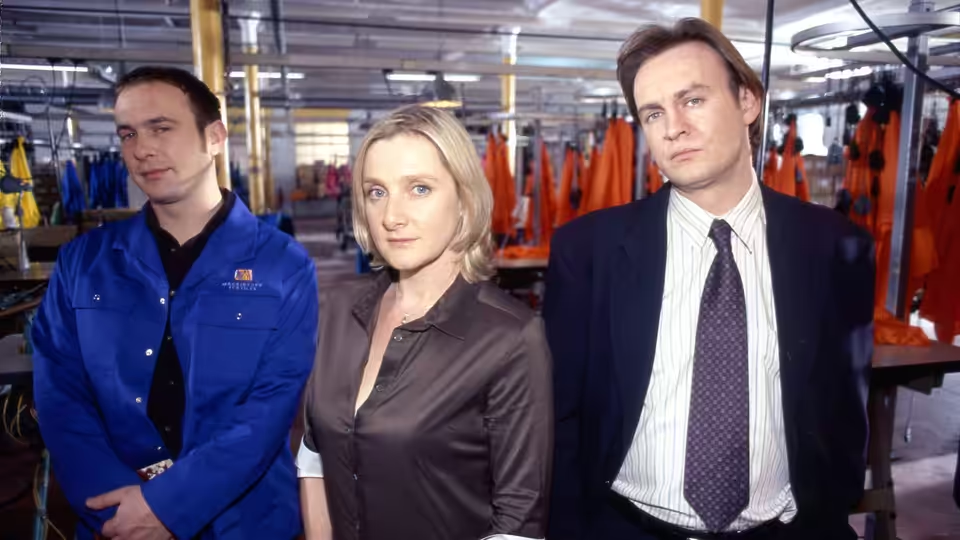
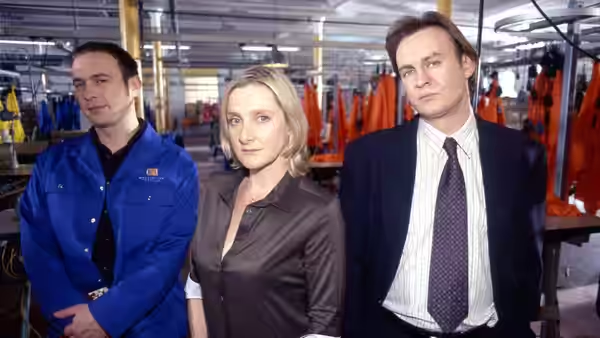
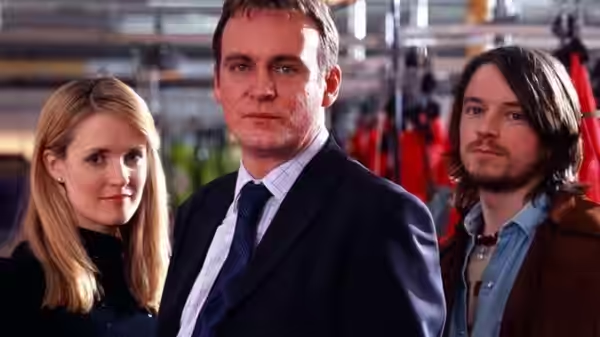
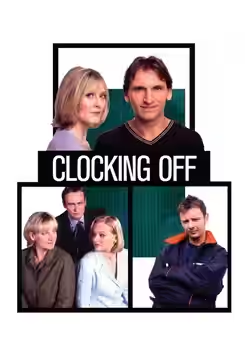
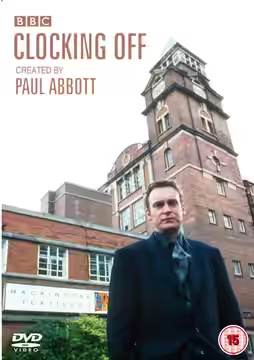
Paul Abbott’s series opens on the floor of a Manchester textile factory and then, every week, picks one worker and follows them home. That is the whole idea. The factory is the spine: James ‘Mack’ Mackintosh (Philip Glenister) owns it, the staff clock in and out, and the person who was a face at the next machine last week is this week’s lead. It began on 23 January 2000 and ran for four series, each episode 55 minutes, and across the first two of those it is some of the best drama British television has made.
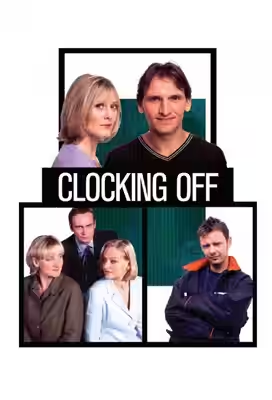
The pleasure is in the promotion. Yvonne Kolakowski (Sarah Lancashire), Julie O’Neill (Siobhan Finneran), Kev Leach (Jack Deam), Freda Wilson (Joan Kempson), Steve and Sylvia Robinson (Wil Johnson and Diane Parish) are all there in the background from the start, chatting, smoking, complaining about shifts. Then one of them gets the hour, and you realise how much the actor has been holding back. Lancashire’s episode is the one we would put in front of anyone. She plays a woman who has organised her whole life around not noticing something, and the performance is mostly in how long she keeps not noticing.
Abbott wrote some of the scripts himself and handed the rest to Richard Zajdlic, Peter Bowker, John Fay, Jan McVerry and Danny Brocklehurst, and the house style holds across all of them. People talk about one thing in order to avoid another. Nobody announces a theme. Each hour has the shape of a short story rather than a soap: a problem arrives in the first ten minutes, gets worse, and is dealt with, or not, by the time the shift bell goes. There is no filler, because there is no room for any.
We were caught out by how much the first series moved us, and it was not the big scenes that did it. It was the small domestic business around them: a kettle going on after a row, a child sent upstairs, a man sitting in a parked car outside his own house because he cannot face going in. The writers trust those moments to carry the weight, and they do. We also laughed more than we expected, usually at Kempson, whose Freda has a line in deflation that can end an argument in four words.
The directors, among them Geoffrey Sax, John Strickland, Brian Percival and John Duthie, shoot the factory as a place full of colour, bolts of cloth and overalls and strip light, and they shoot the terraced houses the same way, bright and fast. It is a long way from the grey northern realism this material usually gets, and it is the right choice. These are not people to be pitied from a distance. The camera stays close and moves quickly, and the cutting is brisk enough that an hour feels like forty minutes.
The format has a cost, and it is paid in full by the end. An anthology is only as good as its weakest hour, and some of the later ones lean on coincidence to get their crisis going. Series 3 stretched to eight episodes, and the strain shows: the factory starts to feel like a device for introducing strangers rather than a place where people we know go to work. By Series 4 several of the original faces have gone, and with them the pleasure of seeing someone familiar step forward. Glenister’s Mack is the one constant, and he is good, but a man at a desk cannot hold a series together on his own.
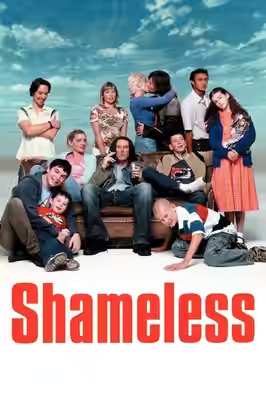
Against Abbott’s own later work it is the tidier achievement. Shameless, which he made four years afterwards, is louder and shaggier and more alive to its own jokes. This is the more disciplined thing: six or seven hours a year, each one a complete piece, each one about work and what people do when it stops.
Watch the first two series in order, so the faces have time to become familiar before they get their turn. It is a 15 certificate, and earns it mostly through language. The factory, as far as we can tell, never makes anything anyone could name.