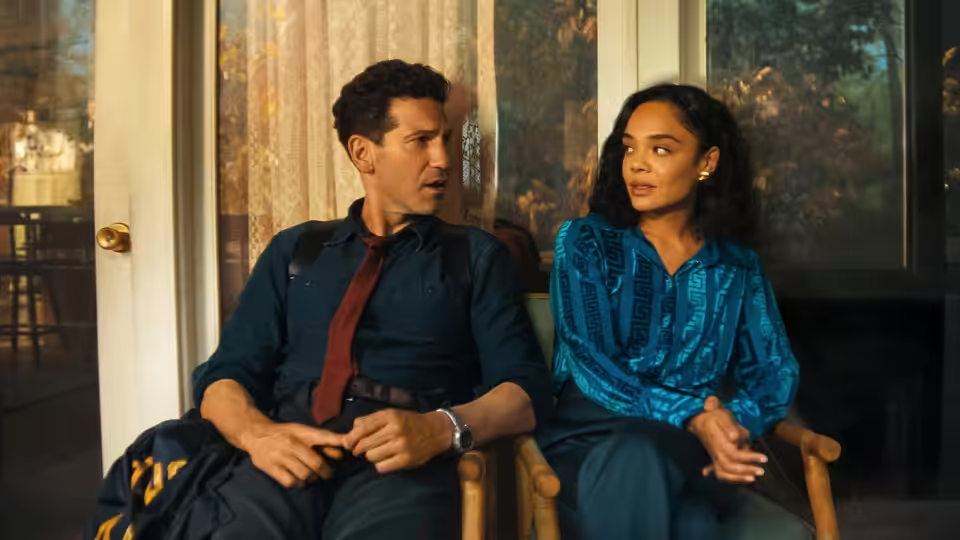
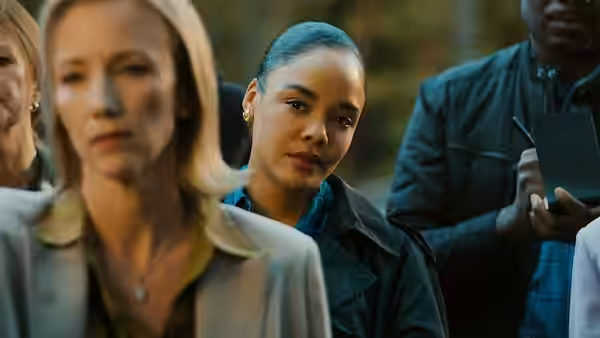
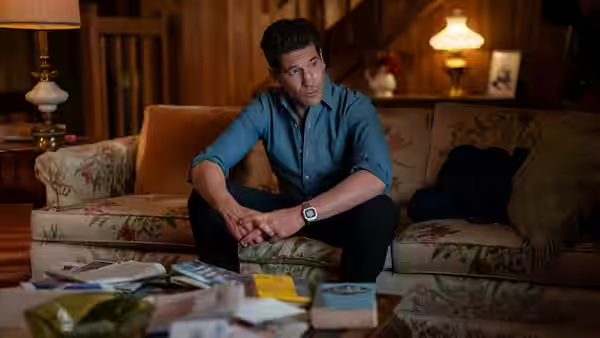
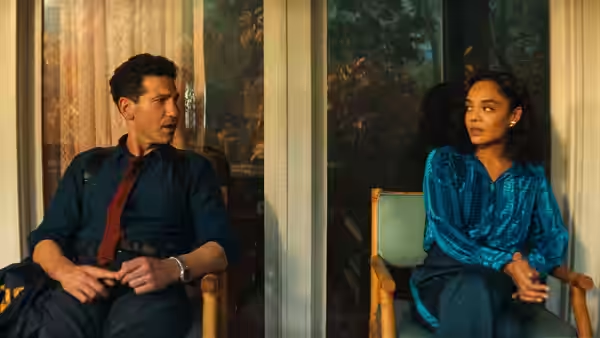
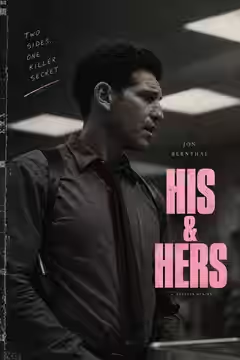
Tessa Thompson and Jon Bernthal make this six-part mystery watchable in stretches, but its repeated misdirections become tiresome. A polished production cannot make the characters’ decisions convincing.
HIS & HERS gives Tessa Thompson and Jon Bernthal a mystery that does not repay the attention they bring to it. This six-part series is watchable in stretches, but too much of its suspense depends on accepting behaviour that becomes less convincing the longer we consider it. Its two perspectives promise a reason to question what we are being told. Too often, they simply provide another opportunity to send suspicion in a different direction.
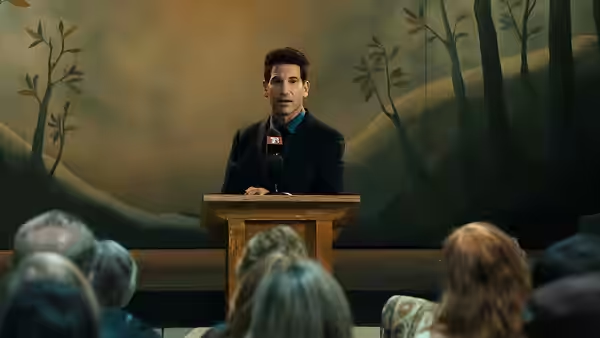
Thompson plays Anna Andrews and Bernthal is Detective Jack Harper, with an emotional history between them that ought to make the case more uncomfortable. Both actors give that history some force, and their performances provide a reason to stay with the programme when the clues cease to. Their shared complications give the series something to explore beyond the question of who committed the crime. The frustration is that the relationship receives too little room to develop while the mystery keeps finding another person to suspect.
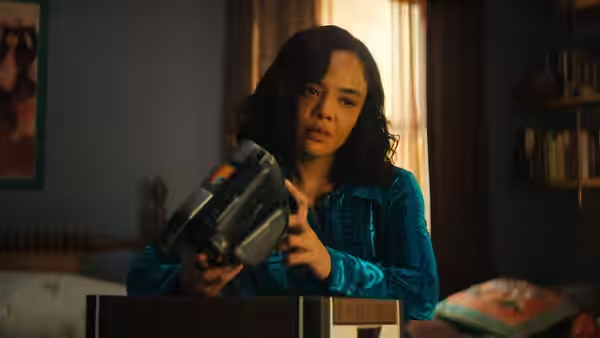
William Oldroyd and Anja Marquardt direct a polished-looking programme, and there is some pleasure in that. Doug Emmett and Ante Cheng’s cinematography gives the series its gloss, with Kelly McGehee’s production design contributing to the same carefully managed finish. The surroundings never become especially threatening, though, so little unease carries between the changes of suspect. The polished images are welcome, but the lack of atmosphere becomes a problem whenever the mystery slows down.
The editing, credited to William Henry, Daniel A. Valverde and Adam Epstein, does find some immediate appeal in the changes of direction. There are stretches when another question is enough to keep things moving, even if the answer will not withstand much thought. Mac Quayle’s music cannot make the characters’ decisions seem any less arbitrary. The editors can sustain curiosity for a while, but the effort becomes apparent when the series keeps asking us to reconsider what we have just accepted.
Those problems belong to scripts credited to William Oldroyd, Tori Sampson, Dee Johnson and Bill Dubuque. We were irritated by the repeated misdirections, because suspicion kept shifting without a corresponding reason to believe what the characters were doing. It is possible to enjoy an outrageous mystery, provided the people inside it seem to have lives beyond keeping the identity of the culprit from us. Here, too many decisions feel convenient for the next surprise, and the cast must supply the emotional credibility the writing has skipped. Another possible explanation soon becomes a fairly poor reward for paying attention.
There is an audience for this sort of freely implausible crime drama, and the favourable reviews are not difficult to understand. If each new suspect renews the fun, a great deal can be forgiven. We need a whodunit to make its people credible enough for the deception to matter. Anyone coming chiefly for Thompson and Bernthal should be prepared to do a good deal of forgiving.