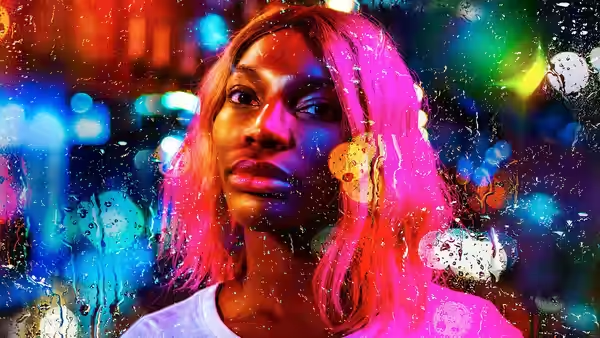
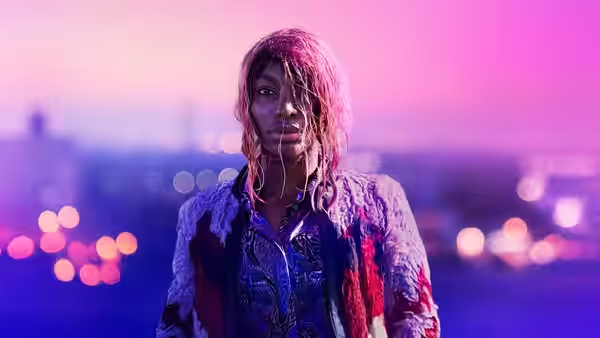
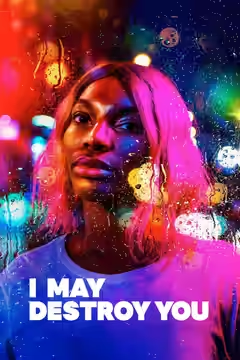
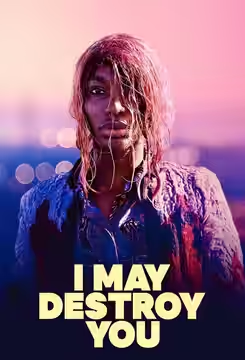
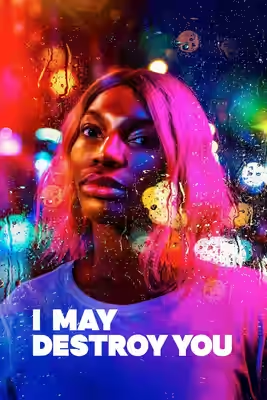
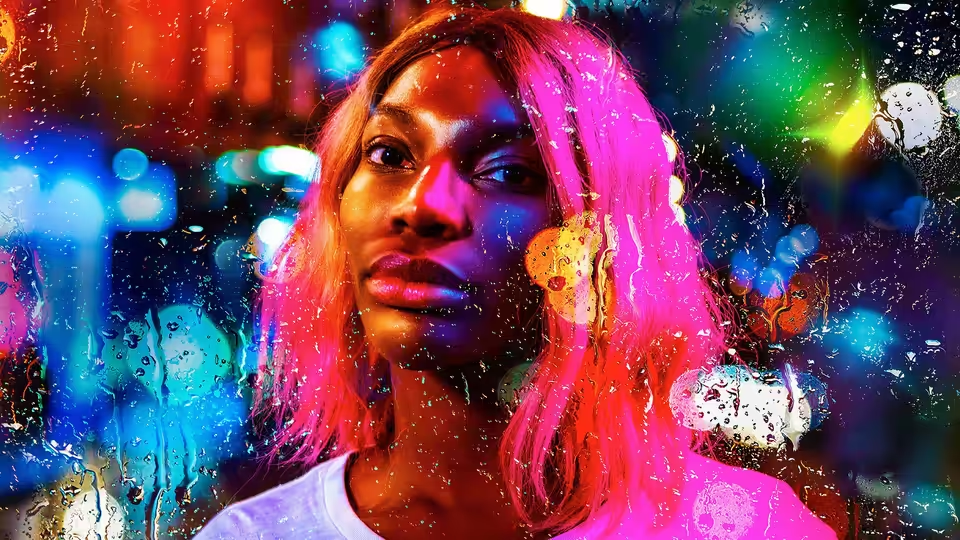
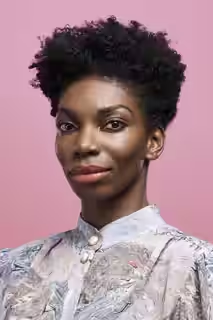
Arabella (Michaela Coel) with pink hair under colorful neon lights
Series review

I May Destroy You

2020 · Created by Michaela Coel · Series · ICAA 18

In a sentenceA cracked phone, a cut forehead, pink hair, and a whole city that would rather she didn’t ask

London, the present. Arabella Essiuedu (Michaela Coel), a writer whose first book grew out of her tweets, owes her publishers Julian (Adam James) and Francine (Natalie Walter) a draft of the second by morning. She has written almost nothing. She goes out for one drink with friends instead, and wakes at her desk with a cut on her forehead, a cracked phone and a flash of memory she cannot place: a toilet cubicle, a man’s face above her. With her closest friends Terry Pratchard (Weruche Opia) and Kwame Acheamong (Paapa Essiedu), she starts trying to recover the night.

Plays from YouTube when you press play; nothing loads from them until then.

Fi1m review

Michaela Coel writes, co-directs and stars in a drama about a London writer piecing together the night she was drugged and raped. It is as funny as it is frightening, and twelve episodes is two too many.

Arabella Essiuedu (Michaela Coel) is a London writer with pink hair, a first book that started life as tweets, and a second one she has not written. Her publishers, Julian (Adam James) and Francine (Natalie Walter), want a draft by morning. She goes out instead, for one drink with friends, and wakes at her desk with a cut over her eye, a smashed phone and a picture in her head that will not settle: a toilet cubicle, a man above her. Coel created and wrote I May Destroy You and directed it with Sam Miller, and all twelve episodes are Arabella trying to get that night back and deciding what to do with it.

That sounds like a grim evening, and often it is. It is also funnier than seems decent, because Coel will not let Arabella stop being Arabella. She is vain, generous, late for everything and quick with her mouth, and what happens to her does not turn her into a symbol. The first episode has been faulted for throwing too many people at us too fast, and it does; we lost track for a while of who was sleeping in whose flat. Then the club scene arrives, Adam Gillham’s camera starts to blur and drift with her, and the editors, five of them credited, Mike Phillips, Christian Sandino-Taylor, Lindsey Woodward, John Dwelly and Guy Bensley, drop a single frame of the cubicle into the morning after like a splinter. Our stomach dropped. We knew before she did.

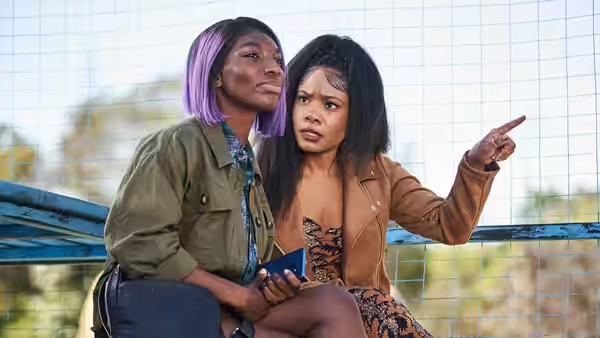
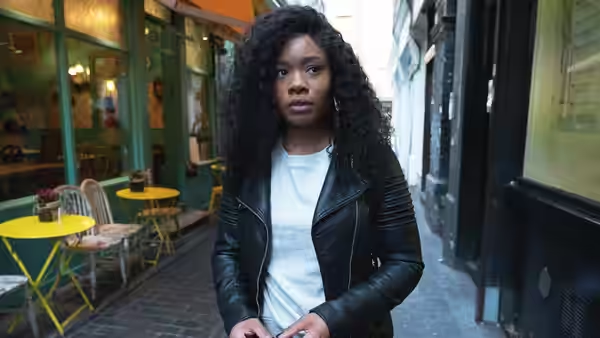
The series’ best decision is to give Arabella two friends written as fully as she is. Terry Pratchard (Weruche Opia) is an actor who pretends her auditions went well and loves Arabella with a fierceness she is not always thanked for. Kwame Acheamong (Paapa Essiedu) is a fitness instructor who runs his sex life through an app and keeps the rest of his life to himself. Opia does something hard: she plays a good friend who is also, in one or two specific ways, a coward, and lets us like her anyway. The three of them on a sofa arguing about nothing is what the whole series is protecting.

The scene that got at us most is not the assault. It is the police station, where two officers, Officer Beth (Mariah Gale) and Officer Funmi (Sarah Niles), take Arabella’s statement with a form and a great deal of patience and ask, gently, what she had drunk. Nobody is cruel. What made us angry was the sight of a woman being asked to turn a hole in her memory into evidence, and being kind to the people asking. Coel plays it half-present, still making jokes, and Gale and Niles let the jokes pass without answering them.

It looks like the London it is set in rather than the one television usually shows. Paul Cross’s flats are small, shared and full of other people’s washing. Maurizio Basile and Lynsey Moore dress Arabella in loud prints and bright coats, so that she is the most visible person on every street, and the series later has things to say about being looked at. Gillham shoots the nights in hot pink and green and the days in flat, tired grey.

Not all twelve episodes earn their keep. The middle stretch spends whole episodes away from Arabella’s night, and while each of them is defensible on its own, together they slow the series to a walk. Coel is arguing that a trauma does not arrive as a single lesson, and she is right, but ten episodes would have made the argument too.

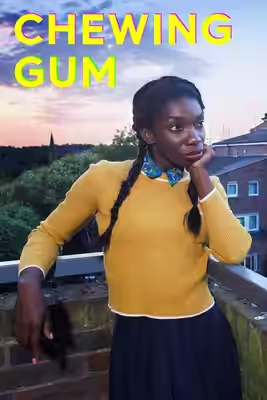
Set against Chewing Gum, the comedy Coel made before this, it is a bigger and harder thing. The speed is the same, and so is the taste for the excruciating, but the subject cannot be laughed off, and Coel knows exactly when to stop laughing. We were more shaken by it than we expected, and more entertained, often inside the same minute.

Watch it one episode at a time rather than in a run. It is built to be sat with, and the last episode, which we will not describe, needs you to have done the sitting.
Critical consensus AI synthesised

82
Positive
13
Mixed
1
Negative
0

The reviews are close to unanimous: thirteen of fourteen are positive, and most critics treat the series as a considerable achievement rather than a promising one. The praise gathers around Michaela Coel, who writes, directs and stars, and around the way she moves between comedy, sex and horror without the joins showing or the series turning into a lecture. Several critics single out its patient, unsentimental handling of the aftermath of assault, its refusal of clichéd recovery, and the friendships at its centre, with Opia’s performance singled out alongside Coel’s.

Reservations are minor and scattered. A few critics find the longer episodes slack in places and the structure occasionally disjointed, though they do not let it dent their verdicts. The spread is narrow; the one mixed notice, from The Times, judges the first episode unfocused, with too many characters arriving too quickly, while still admiring Coel’s performance and the shift from party to horror in its closing minutes.

The Guardian
8 June 2020
95*

The critic delivers a rave review of the series as an extraordinary, breathtaking achievement that explores consent, race, and millennial life on every level with no false notes. It singles out the seamless modulation between comedy and tragedy, the richly drawn friendships, and the ideas and character depth throughout.

Read the full review →
Variety
16 June 2020 · Caroline Framke
90*

The critic calls it a searing triumph and an astonishing work of patience, empathy and understanding. They single out its empathetic depiction of drugging victims and the aftermath of trauma.

Read the full review →
Vulture
5 June 2020
90*

The critic hails the series as confirmation of Coel's stunning talent, lauding its multi-layered exploration of consent, memory, identity, friendship, and the writing life through shifting tones that mix humor, sexiness, and harrowing moments. It singles out Coel's performance for its wild charisma, emotional clarity, and precise depiction of trauma's lingering effects.

Read the full review →
The AV Club
5 June 2020 · B+ · Shannon Miller
83

The critic praises the series as a thorough, honest examination of sexual abuse, exploitation, consent, and the non-monolithic nature of healing, with strong focus on survivors' messy paths and the vital role of friendship. It singles out Coel's writing, directing, acting, and the cast's performances (especially Opia) for blending levity with devastation while noting minor pacing issues in longer episodes.

Read the full review →
Radio Times
1 June 2020 · ★★★★ · Flora Carr
80

The critic praises the series as a biting and witty drama that dismantles and rebuilds everything we think we know about casual dating and consent. They single out the brilliantly realistic sex scenes for praise.

Read the full review →
The Hollywood Reporter
5 June 2020 · Daniel Fienberg
80*

The critic describes it as an ambitious showcase for Coel's vital voice, praising its confrontational exploration of consent and reinvention despite some messiness. They single out the honest handling of sexuality and narrative.

Read the full review →

Straight answers AI written, from our review

Is I May Destroy You worth watching?
I May Destroy You is worth watching, and we scored it 88. Michaela Coel's drama about a London writer piecing together the night she was drugged and raped is as funny as it is frightening, though the middle stretch slows to a walk and twelve episodes is two too many. Watch it one episode at a time rather than in a run.
How long is I May Destroy You, and what is it rated?
I May Destroy You is rated 18 by the ICAA in Spain. It is a drama series.
Where can I watch I May Destroy You in Spain?
I May Destroy You is streaming on HBO Max and Amazon Prime Video in Spain. Availability is checked daily; the links above go straight to each service.
How violent or frightening is I May Destroy You, and is it suitable for children?
I May Destroy You is adult drama throughout: it has no UK certificate, carries a TV-MA rating in the US, and is about a rape and its aftermath, so it is not for children. The assault is recalled in fragments rather than shown at length, but the subject, the frank treatment of sex and the police-station scene make it hard viewing for anyone who finds sexual violence difficult.
How does I May Destroy You compare to Chewing Gum?
I May Destroy You is the bigger and harder of the two, and the better one; Chewing Gum is Coel's earlier comedy with the stakes turned right down. The speed and the taste for the excruciating are the same, but the later series has a subject that cannot be laughed off. Start with Chewing Gum for Coel at her lightest, and the drama if you can take twelve episodes about a rape.
What should I watch after I May Destroy You?
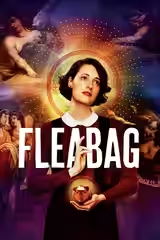
After I May Destroy You, try Chewing Gum (2015, Fi1m 78): Coel’s earlier comedy, same speed and nerve, with the stakes turned right down. Then Fleabag (2016, Fi1m 90): Another London woman telling jokes to keep something worse from getting in; and Top of the Lake (2013, Fi1m 82): Jane Campion’s New Zealand mystery about a town that would rather not know.

Cast

If you liked this, try…

  1. Chewing Gum (2015, Fi1m 78)Coel’s earlier comedy, same speed and nerve, with the stakes turned right down.

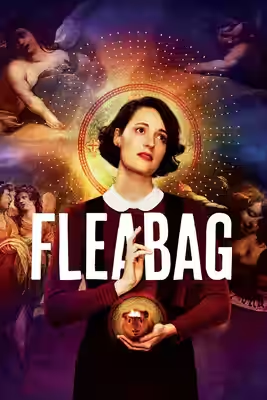
  2. Fleabag (2016, Fi1m 90)Another London woman telling jokes to keep something worse from getting in.

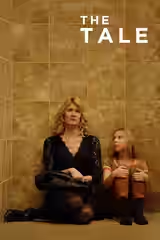
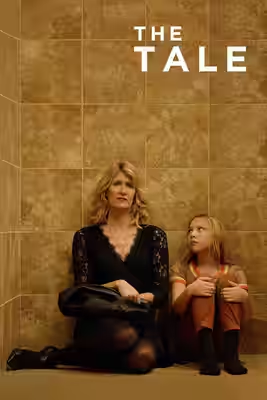
  3. The Tale (2018) · not reviewed yetJennifer Fox interrogates her own memory of childhood abuse, scene by scene.

  4. Top of the Lake (2013, Fi1m 82)Jane Campion’s New Zealand mystery about a town that would rather not know.

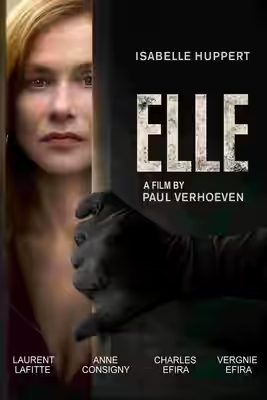
  5. Elle (2016, Fi1m 82)Verhoeven’s French provocation about a woman who refuses the victim’s script entirely.

Free account

Know what to watch tonight

Two lists that know where things are streaming, collections you can share, your own score beside ours, and Discover that remembers what you have seen.

  • Want to see, sorted by what is streaming now
  • Seen, with your score out of ten
  • No adverts, ever