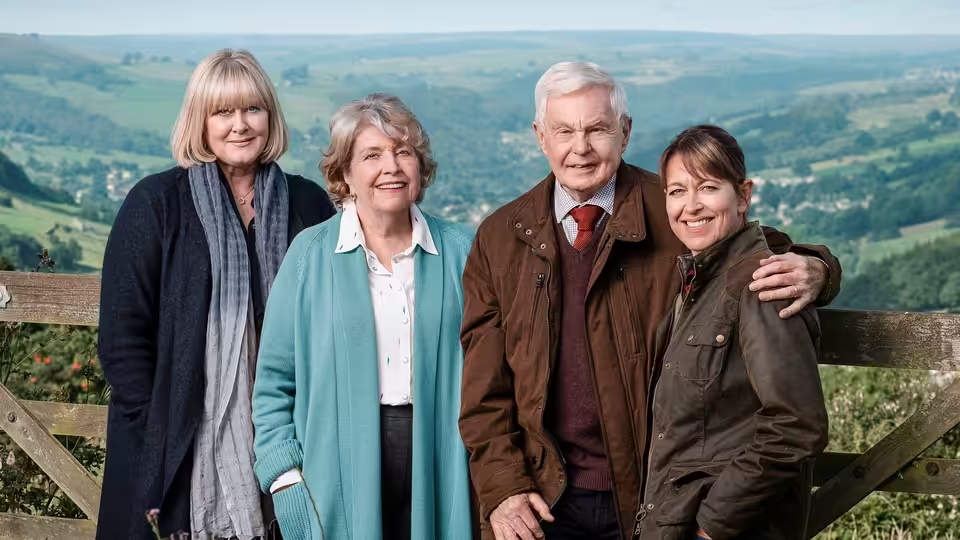
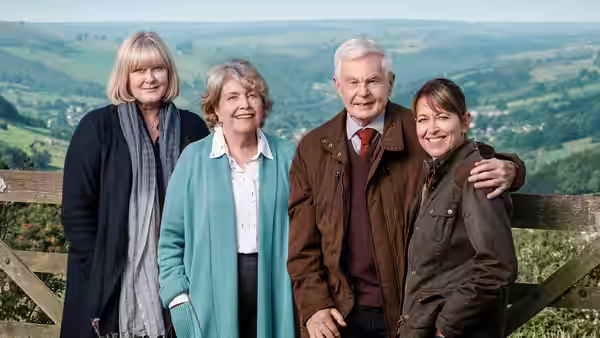
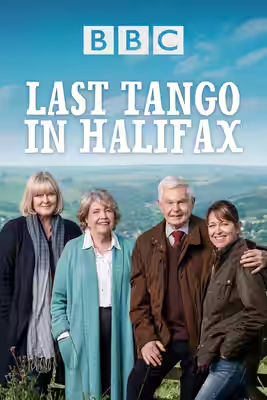
Sally Wainwright’s drama about two widowed seventy-somethings who find each other again is warm, well written and acted with great care by Anne Reid and Derek Jacobi. The daughters are as good as the parents; the plotting, over eight years, is not.
Sally Wainwright’s series starts from a premise so simple it hardly counts as one. Two widowed people in their seventies, who were sweet on each other at school in Halifax and lost touch, are put on Facebook by their grandchildren, find each other, meet for a cup of tea and decide to get married. That is the first episode. Five series followed, from 20 November 2012 to a four-part run in 2020, with a fourth series only two episodes long, and the question each time was whether anything else in it could be as good as those two.
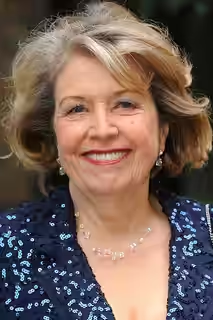
Anne Reid’s Celia is quick, proud and inclined to say the unkind thing first and think about it afterwards. Derek Jacobi’s Alan is slower, kinder and plainly astonished that this is happening to him. The scene in which they meet again, in a café in Skipton, is played with almost nothing: he stands up, she sees him, neither of them knows what to do with their hands. It moved us far more than two pensioners having tea has any right to, and what did it was Jacobi’s face, which goes from nerves to something like relief in one shot that nobody is in a hurry to cut away from.
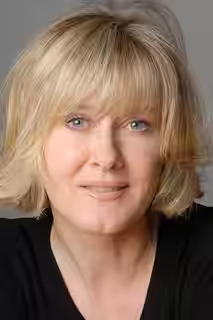
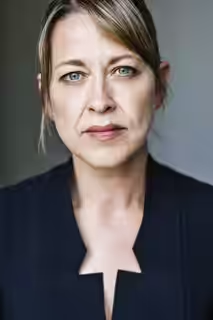
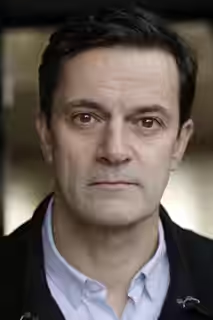
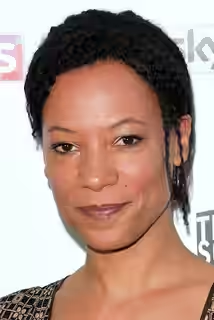
The daughters make it a drama rather than a sweet thing. Sarah Lancashire’s Caroline runs a school in Harrogate and a cold, expensive house, and has let her husband John (Tony Gardner) move back in after he left her for another woman, less because she wants him than because the alternative is a conversation. She is also, carefully and not yet out loud, involved with Kate (Nina Sosanya), a teacher at her school. Nicola Walker’s Gillian runs a sheep farm up the hill with her son Raff (Josh Bolt) and a brother-in-law, Robbie (Dean Andrews), who blames her for things she may or may not have done. Walker plays her as a woman who apologises before she has finished the sentence that needs apologising for. We laughed at Caroline often, because Lancashire can wither a man by pouring his coffee, and then noticed how frightened she is.
Sam McCurdy and Alan Almond shoot the two houses as two countries. Caroline’s is pale wood, glass and a kitchen island you could land a plane on; Gillian’s is dark stone, mud to the door and a table with a dog under it. The light outside both is the same flat Yorkshire grey, so the money changes the inside and nothing else. Wainwright writes talk the way people talk, over each other and off the subject, and the cast is allowed to finish a thought before the scene ends.
What does not hold is the plotting, and it holds less with every series. Wainwright has a habit of ending an episode with somebody saying something enormous in a kitchen, and once you have seen her do it four times you start waiting for it. Gillian is handed a crisis a year, and from the second series onwards the farm becomes a place where things get buried, which we will not describe, except to say that the show is better at quiet trouble than loud. John drifts in and out as the standing joke and is given a scene or two of real pain that the writing does not follow up. The two short later runs, in 2016 and 2020, arrive with big decisions already taken off screen and spend half their length catching us up.
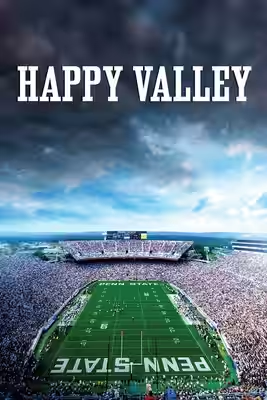
Against Wainwright’s own work it is the gentle one. Happy Valley (2014), also with Lancashire, took the same corner of West Yorkshire and filled it with violence; this takes the same hills and fills them with people who cannot say what they mean to the people they love. Most critics have been warmest about Reid and Jacobi, but we would put Walker alongside them. She has the hardest job in it, making a woman who keeps wrecking her own life worth eight years of our company.
Start with the first series and watch it in a week. It is six hours and it is complete. If you go on, and you probably will, know that the ground gets softer under you, and that every so often somebody in a nice kitchen is about to say something nobody asked to hear.