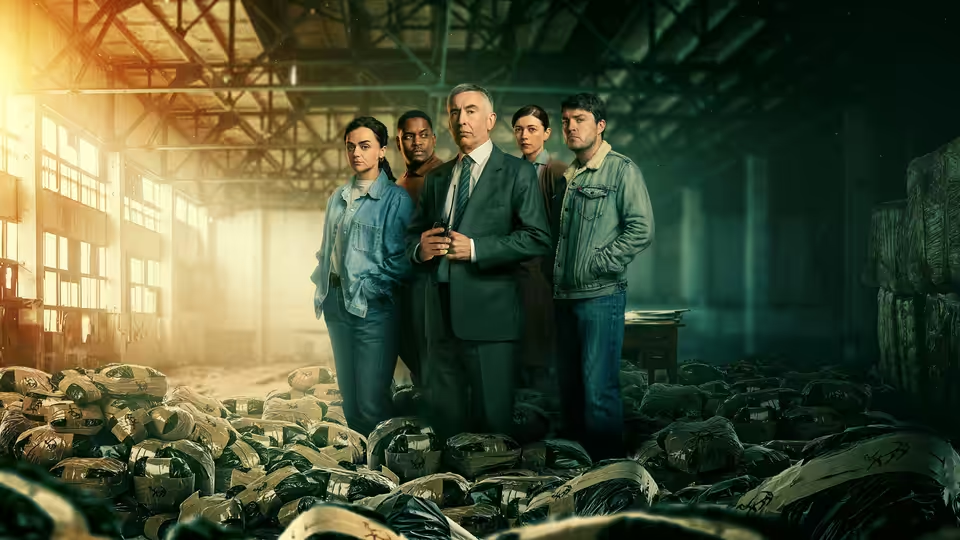
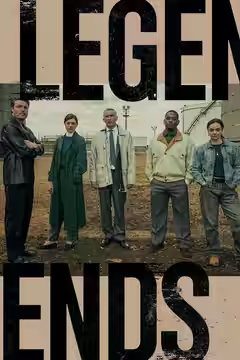
Legends earns its tension through a strong cast and the risks of undercover work. Neil Forsyth’s six-part thriller is worth the concentration, though crowded plotting and an excess of solemnity sometimes make it harder work than necessary.
Legends is a good undercover thriller that occasionally makes following it feel like a second assignment. Across six episodes, writer Neil Forsyth follows unlikely agents into the drug trade of Thatcher-era Britain, using their assumed identities to test what they can do under pressure. The attraction is watching people discover that they might be capable of a dangerous job. There is enough tension and character here to make the complications worth tolerating, though the series sometimes seems determined to discourage enjoyment.
The undercover work gives that idea something practical to do. Forsyth finds room for the enjoyment of pretending to be someone else, while keeping the danger of discovery in view. We were tense because these underdogs have to make their assumed identities convincing while risking their lives. Their lack of the usual spy-thriller assurance is useful: the missions matter because competence cannot simply be taken for granted.
Tom Burke is the main reason that uncertainty remains interesting. As Guy, he gives the business of assumed identity enough weight to keep the plotting from becoming merely a set of instructions; we care about the person attempting the job. Steve Coogan, playing Don, is equally valuable to a drama that needs its people to remain distinct amid a great deal of information. Hayley Squires plays Kate and Aml Ameen plays Bailey, within an ensemble whose strength helps the series cope with its crowded story.
Brady Hood and Julian Holmes direct a thriller with a welcome lack of fuss. Dan Atherton and Jan Jonaeus are credited with the cinematography, and Sion Trefor with the music; the production’s restraint allows the performers to do much of the persuading. The account of the criminal economy has a reach beyond the immediate danger of any one mission. It gives the work substance, though keeping track of that wider business can distract from the people we are following.
The difficulty is Forsyth’s plotting, which is dense enough to interrupt the suspense it has worked to establish. There are stretches when sorting out the story takes more attention than worrying about the agents, and a thriller loses something when those priorities change. The serious treatment of the true story also restricts the humour, even though the undercover premise supplies plenty of it. The lighter moments are welcome when they come, but the programme could trust them more without diminishing the risks.
What distinguishes Legends within the genre is its interest in who gets entrusted with difficult work. The people doing the dangerous work have ideals, and those give us another reason to care about whether they succeed. Forsyth does not need to make the agents invincible for their effort to matter. We would have preferred more time with these people and fewer demands to organise information in our heads.
Six episodes is a sensible length for this story, although a little more explanation would occasionally have been welcome. Burke and Coogan provide good reasons to stay attentive when the plot becomes busy, and the missions supply enough unease to reward that attention. Choose it for capable actors playing people under pressure. Just do not expect the intrigue to survive much conversation from the other end of the sofa