The first series of Matt Lucas and David Walliams’s sketch show is sharp, strange and often properly funny; by the third, the characters have shrunk to their catchphrases and the costumes have become the joke. It is worth one series, not three.
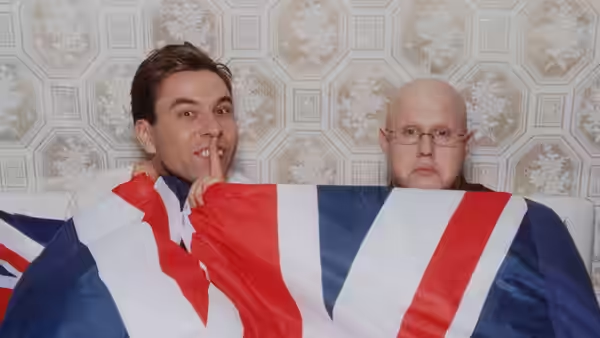
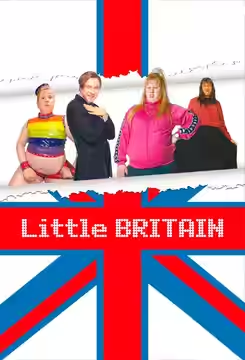
Little Britain began on radio and arrived on television on 16 September 2003 with a simple proposition: two men, Matt Lucas and David Walliams, play almost everyone in the country, and Tom Baker, between sketches, assures us that Britain is the greatest nation on earth. Three series followed, twenty episodes of half an hour. The first is sharp, strange and often properly funny. The second does the same thing with bigger wigs. By the third, the show is a parade of costumes, and a good deal of it is hard to sit through.
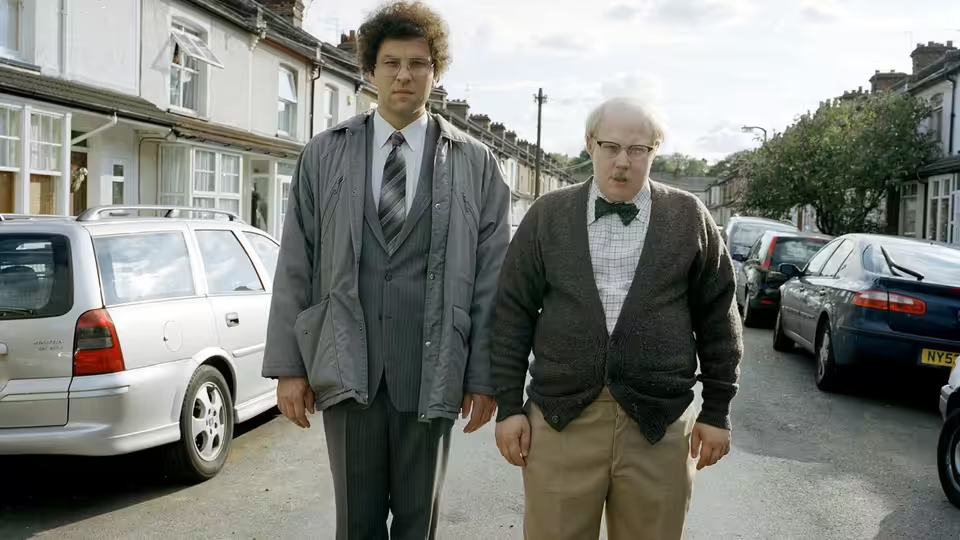
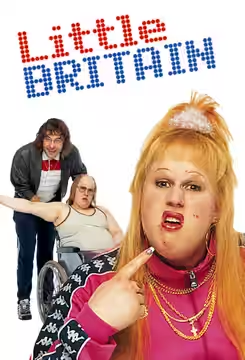
The best of it is Lucas. His Vicky Pollard, a teenage girl in a pink tracksuit who answers every accusation with a stream of denial, gossip and ‘yeah but no but’ that never reaches a full stop, is a feat of breath control as much as writing, and he plays her with his whole body, shoulders up, chin out, already halfway to the door. His Daffyd Thomas sits in a Welsh village pub announcing that he is the only gay in the village while the village, in the shape of Ruth Jones’s unbothered barmaid Myfanwy, keeps pointing out that he is not. We know exactly what he will say; the pleasure is in how the other characters take it.
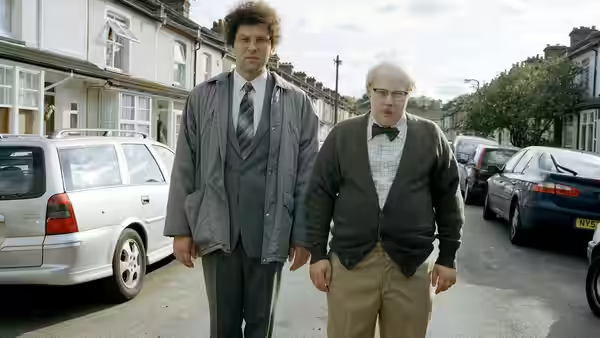
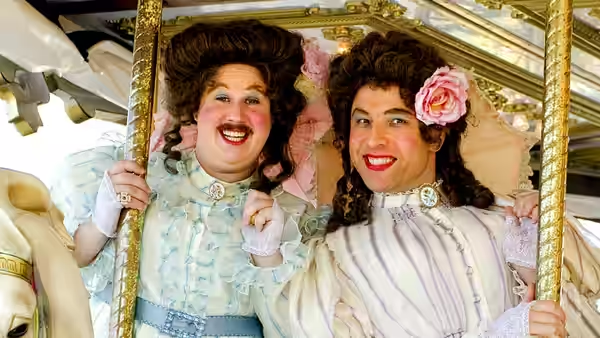
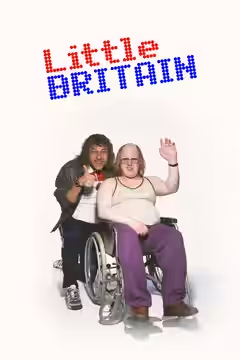
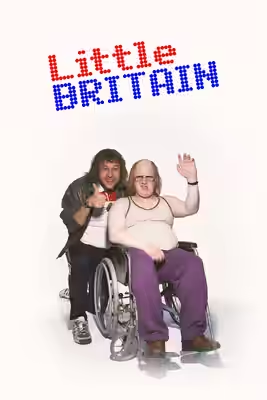
Walliams is better in the quieter parts. As Lou, pushing Andy’s wheelchair around an estate while Andy, who does not need it, gets up and walks the moment Lou’s back is turned, he plays the carer’s patience straight, and the sketch only works because he does. His Emily Howard, a man in a bonnet insisting he is a lady, is funnier for how little Walliams is doing under the costume. The directors, Steve Bendelack, Matt Lipsey and Declan Lowney, keep the camera still and let the performers fill the frame, and Mykola Pawluk cuts each sketch to end on the catchphrase and starts the next before the laugh has finished, so an episode feels shorter than its thirty minutes.
Dennis De Groot’s sets deserve a mention they seldom get: a slimming club in a church hall with plastic chairs, a flip chart and a plate of biscuits nobody is allowed; a pub with horse brasses and one regular; a Downing Street office that looks like a dentist’s waiting room. Joann Condon’s Fat Pat and Charubala Chokshi’s Meera sit through Lucas’s Marjorie Dawes, the club leader, insulting them week after week, and Chokshi gets a laugh out of nothing but a look. Rob Brydon turns up as the ex-husband of Lucas’s Bubbles DeVere and plays it like a man who has read the sketch and would like to leave.
Here is what we felt. We laughed at Vicky Pollard the first time and we laughed the tenth. We laughed less at the fat suits, and when Walliams appeared in the third series in dark make-up as Desiree DeVere, and Lucas as a Thai bride called Ting Tong, we stopped laughing altogether and sat there embarrassed for everyone involved. That included us, because the earlier sketches we had enjoyed ran on the same instinct: dress up as somebody you are not and invite the audience to laugh at the somebody. The show had been doing it all along. It took a while for the costumes to get ugly enough to notice.
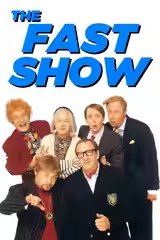
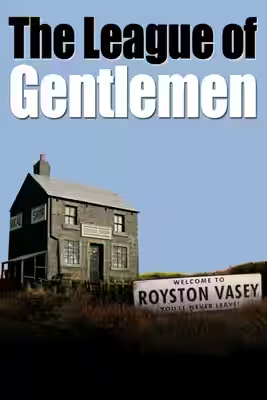
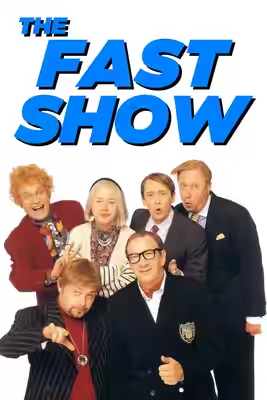
The deeper trouble is in the writing. Every character has one line and the scripts stop looking for a second. Carol Beer, the receptionist who tells each customer that the computer says no, is a sketch that consists entirely of its catchphrase, and by the second series most of the cast have gone the same way. The Fast Show ran on catchphrases too, but its people had lives that moved; The League of Gentlemen gave its grotesques a town and a plot. Nobody in Little Britain wants anything. They are jokes about who they are rather than what they do, and that kind of joke runs out faster.
Watch the first series, which has eight episodes and nearly all the ideas, and stop there. By the third, the sketches have stopped being a joke about the country’s meanness and become an example of it. It carries a 15 certificate, and in the later series it earns one.