Series review

Lord of the Flies

2026 · Directed by Marc Munden · Series · 58m · 15

In a sentenceKnowing what happens is no help when the camera gets this close to the children’s faces

DramaAction & Adventure

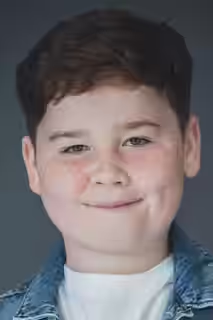
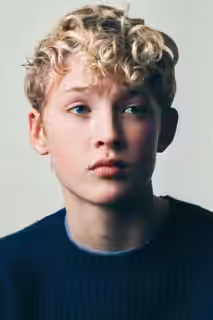
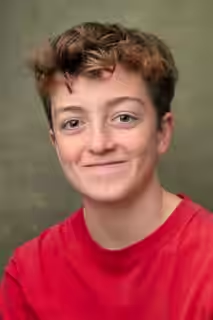
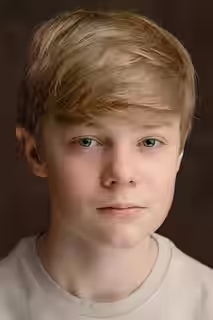
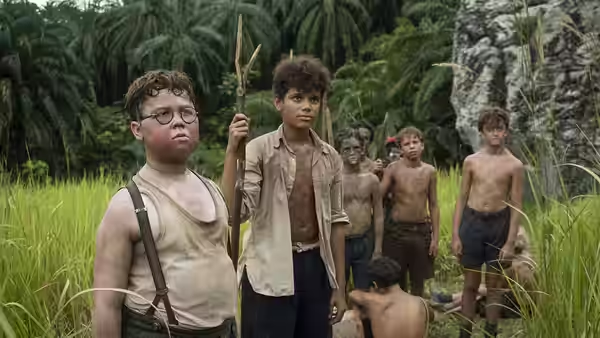
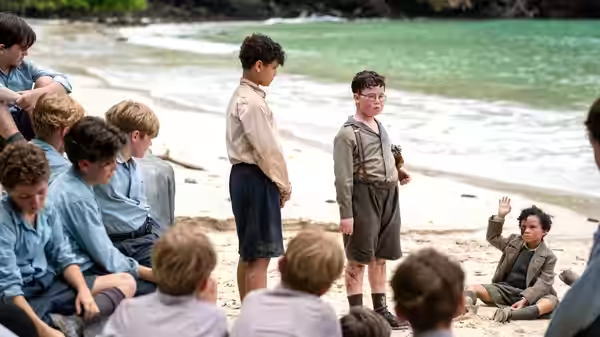
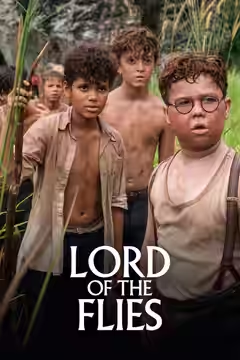
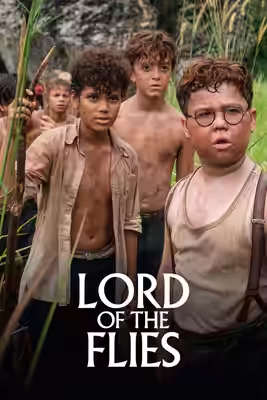
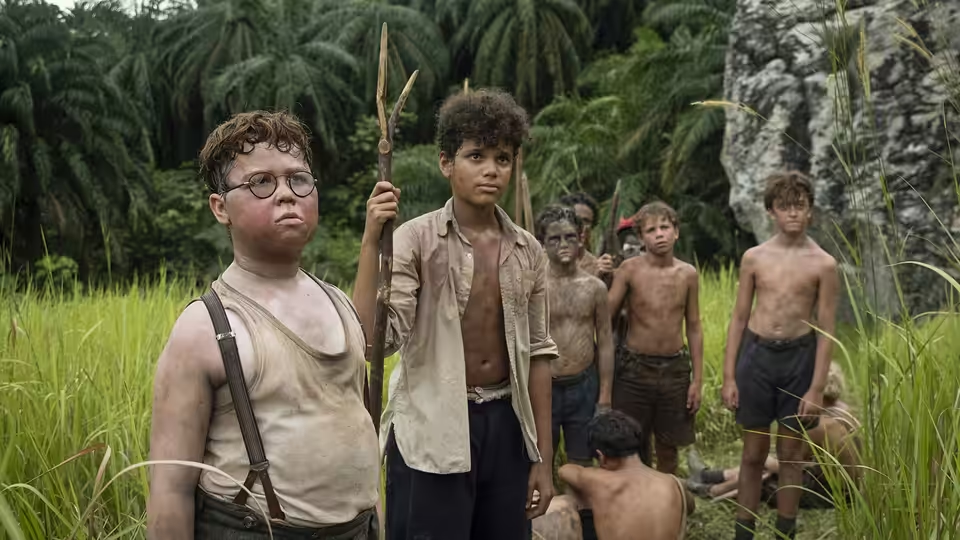
On an island, a group of boys sets about organising a society of its own. Ralph (Winston Sawyers), Nicholas “Piggy” (David McKenna) and Jack Merridew (Lox Pratt) are drawn into a struggle over rules, leadership and who belongs. As their plans begin to unravel, the pressure to choose sides grows. Simon Camborne (Ike Talbut) and Roger (Thomas Connor) are among the other boys caught in the conflict. Written by Jack Thorne and directed by Marc Munden, this four-part adaptation of the novel follows the group from individual boys’ perspectives as order begins to give way to violence.

Plays from YouTube when you press play; nothing loads from them until then.

Fi1m review

Marc Munden and Jack Thorne make Lord of the Flies frightening again, with a young cast that makes its cruelty hard to bear. Four episodes stretch the material, but this is an adaptation worth making time for.

Lord of the Flies makes a persuasive case for another adaptation, though four episodes give it more space than it needs. Writer Jack Thorne and director Marc Munden approach the boys with sympathy without making their behaviour any easier to watch. They want us to recognise children before we start sorting them into examples of everything wrong with humanity. That matters here, because the familiar story could so easily become an illustrated lecture, with the cast required to demonstrate a conclusion we arrived at before they appeared.

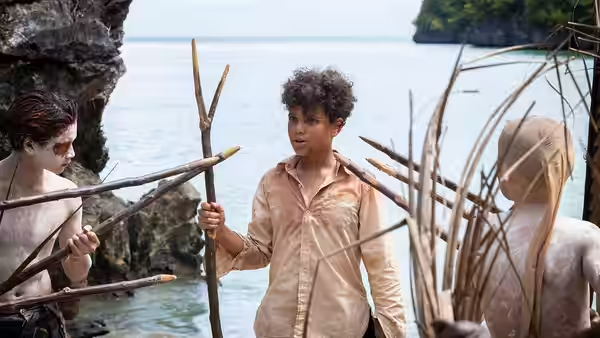
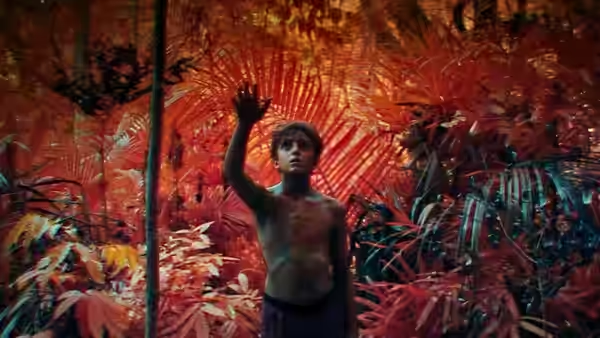
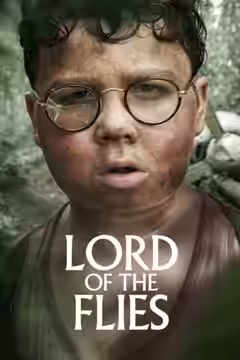
The young cast gives that approach its force, particularly David McKenna as Nicholas “Piggy” and Lox Pratt as Jack Merridew. Their performances have enough uncertainty in them to make us attend to the boys’ responses rather than simply wait for the next turn of the plot. Winston Sawyers’s Ralph is part of the same convincing group, with little sense of children carefully delivering important material. There is a plainness to the acting that holds our attention even when Munden makes the images more peculiar.

The structure helps. Moving between individual boys’ perspectives gives Thorne a reason to revisit the group’s behaviour, and allows different fears to matter at different points. Sparse dialogue leaves the actors room to suggest what the boys cannot comfortably say, particularly when being accepted by the others seems to depend on going along with them. In a survival drama, the practical business of getting through the day can be enough; here, the more absorbing question is how children decide which other child they will obey.

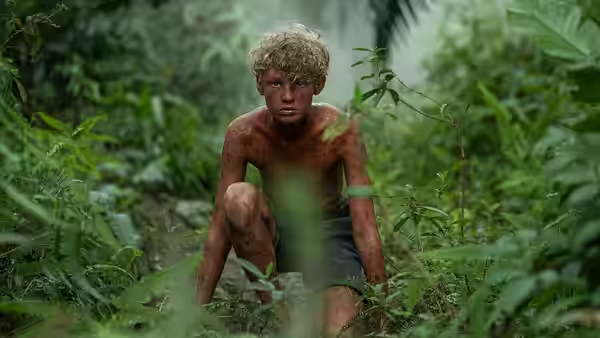
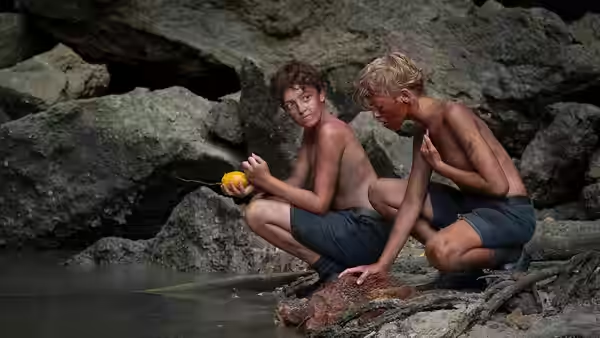
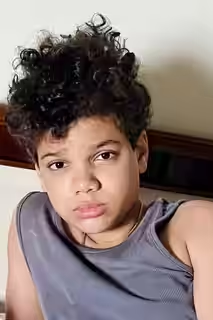
Mark Wolf’s cinematography makes the island difficult to enjoy as scenery, with close-ups and distorted views that keep drawing attention back to the children. We found those close-ups frightening because the faces still look so young; it is harder to keep the cruelty at a comfortable distance. Simon Walker’s production design makes the island credible enough for the stranger images to work, and Cristóbal Tapia de Veer’s music sustains the discomfort. Yet some of the camera choices press too hard, announcing how disturbing a moment is before the actors have finished showing us. The performances give Munden good reason to ease off.

The more substantial reservation is the length. Four episodes allow the boys to become people we spend time with, but sometimes there is too little change in the tension from one stretch to the next. Thorne’s attention to the children is welcome, but staying longer with them does not always deepen our understanding of what they do. A tighter version could have kept that sympathy and spared us the sense that the series occasionally mistrusts the strength of what it has already shown.

This is survival drama with little interest in offering the usual pleasures of resourcefulness and escape. Its attention stays on how the boys treat one another once they begin competing for power. We recommend it to anyone willing to sit with that discomfort, including those who feel they have had enough adaptations of this story. Leave something gentler for afterwards.
Critical consensus AI synthesised

80
Positive
7
Mixed
1
Negative
0

Most critics welcome Lord of the Flies as a forceful adaptation that finds fresh unease in a familiar story. Praise clusters around Marc Munden’s direction, whose distorted perspectives and unsettling close-ups turn the island into a place of mounting horror, and a young cast credited with naturalistic, affecting performances. The episodes’ focus on individual boys also earns approval for deepening the characters without weakening the novel’s impact. The reviews are predominantly positive, though enthusiasm ranges from wholehearted praise to doubts about the need for another adaptation.

Reservations concern occasional camera choices, length and familiarity: The Times finds it slightly too long, while Collider questions the four-episode stretch and some changes to the source. IndieWire offers the clearest dissent, acknowledging the eerie atmosphere but finding the adaptation inessential because the story is so familiar. The main disagreement is over how much freshness the treatment brings.

The Telegraph
8 February 2026 · ★★★★★ · Anita Singh
100

This is a first-class example of an adaptation done right, a horror story told with tenderness that is stunningly good. The critic singles out Marc Munden’s creative vision and direction, along with the superb young cast, for bringing fresh life to the story through its multi-perspective structure.

Read the full review →
The AV Club
4 May 2026 · A- · Elijah Gonzalez
90

The miniseries finds fresh terror in the familiar story through sharp writing, a strong young cast, and Marc Munden’s direction that blends naive wonder with horror. The episode structure humanizes the characters and adds depth without losing the novel’s impact.

Read the full review →
The Hollywood Reporter
4 May 2026
85*

The critic calls it very close to a definitive adaptation of the novel. They single out the superb casting and the direction for praise while noting minor quibbles with some camera choices.

Read the full review →
Radio Times
6 February 2026 · ★★★★ · James Hibbs
80

The critic calls it a glorious reminder of the novel's power and a compelling, visually distinct drama that highlights why the story remains iconic. They single out director Marc Munden's technical achievement and the innovative episode structure told from individual boys' perspectives.

Read the full review →
The Guardian
7 February 2026
80*

The critic praises this striking BBC adaptation as excellent surreal horror that leaves viewers feeling sick, highlighting its contemporary resonance with themes of toxic masculinity and the fragility of order. They single out the direction by Marc Munden for its unsettling close-ups and sparse dialogue that unmoor the audience.

Read the full review →
IndieWire
4 May 2026 · Ben Travers
55*

The critic calls the four-part Netflix series a vivid, eerie adaptation that echoes the writer's prior work on Adolescence, framing lost innocence as nurture over nature as the boys' utopia descends into chaos. It is described as inessential overall due to the overly familiar story.

Read the full review →

Cast

Stills

If you liked this, try…

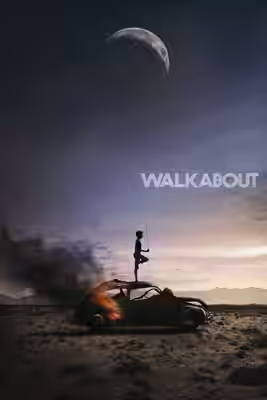
Walkabout poster

Walkabout

1971 · Children alone in unfamiliar country, with adult assumptions proving little help.

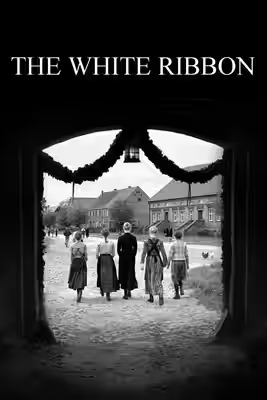
The White Ribbon poster

The White Ribbon

2009 · For another troubling study of children learning cruelty from the surrounding adults.

Monos poster

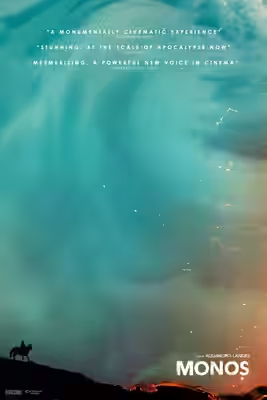
Monos

2019 · Armed adolescents discover how quickly group loyalty becomes permission for cruelty.

The Devil's Backbone poster

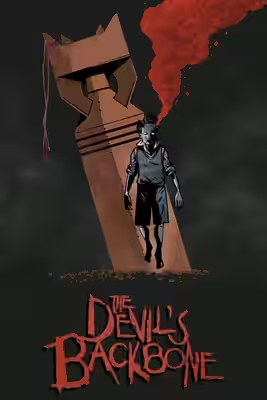
The Devil's Backbone

2001 · An isolated orphanage makes childhood fear both supernatural and painfully recognisable.

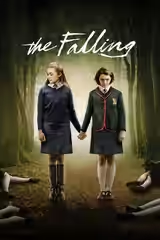
The Falling poster

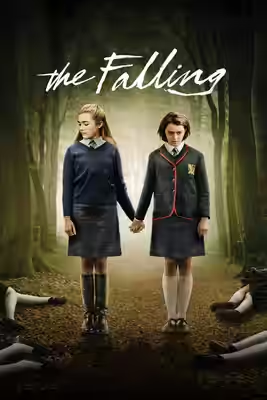
The Falling

2014 · Schoolgirl loyalties and collective panic offer a less obvious route onward.