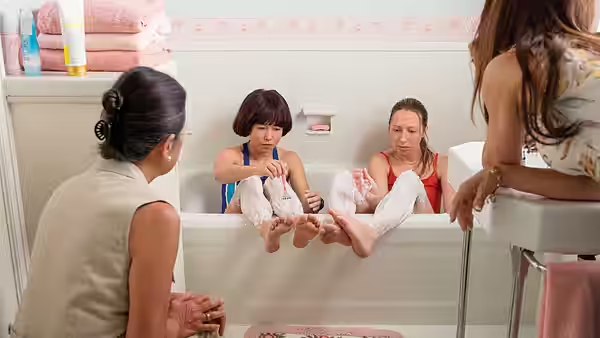
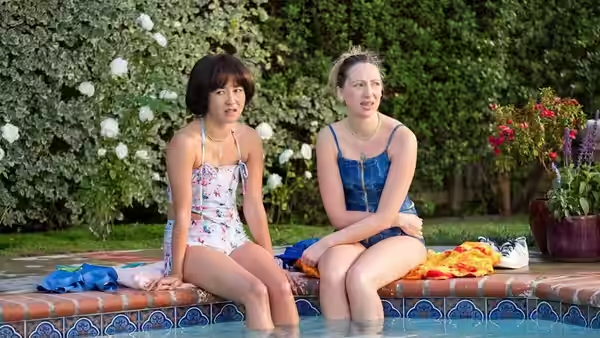
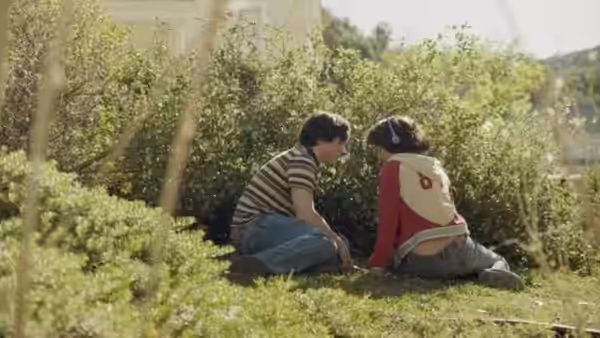
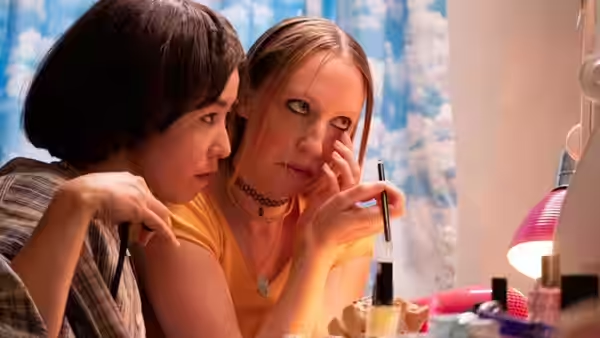
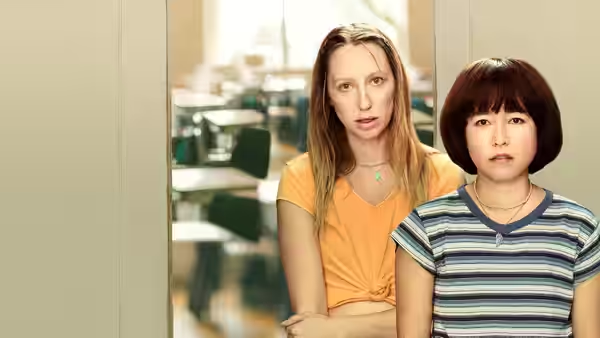
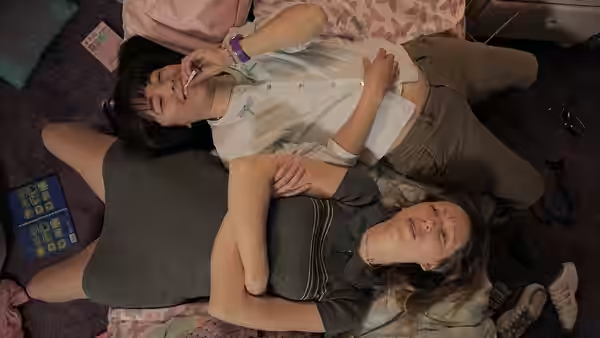
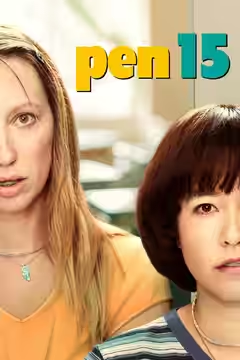
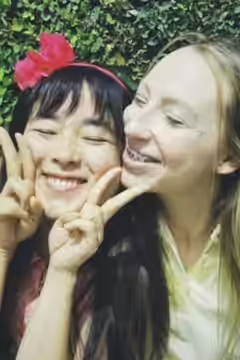
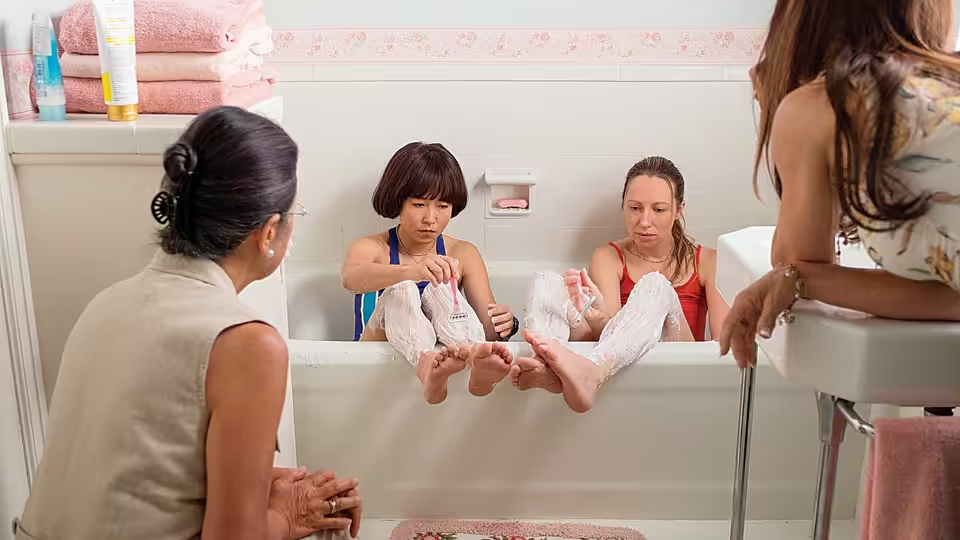
A scene from PEN15
Series review

PEN15

2019 · Created by Anna Konkle, Sam Zvibleman, Maya Erskine · Series · MPA TV-MA

In a sentenceTwo grown women in butterfly clips and a bowl cut, surrounded by actual children, and somehow the adults are the ones you worry about

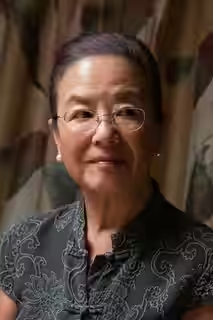
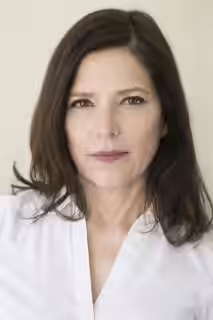
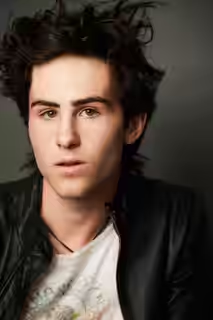
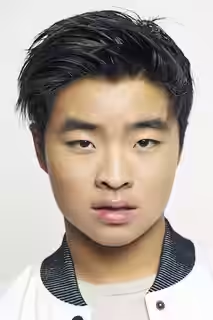
Best friends Maya Ishii-Peters (Maya Erskine) and Anna Kone (Anna Konkle) are starting middle school, played by two grown women in a cast of actual thirteen-year-olds. The night before, Maya’s mother Yuki Ishii-Peters (Mutsuko Erskine) gives her a haircut she did not ask for. The girls have a plan: this is the year they become popular, get boyfriends and have their first kiss. Instead, on the first day, the boys hand Maya a nickname she cannot shake. At home, Anna’s parents Curtis Kone (Taylor Nichols) and Kathy Kone (Melora Walters) argue through the walls. Sam Zablowski (Taj Cross) sits nearby in class and may or may not be a friend. Maya’s older brother Shuji Ishii-Peters (Dallas Liu) offers no help.

Plays from YouTube when you press play; nothing loads from them until then.

Fi1m review

Maya Erskine and Anna Konkle play thirteen-year-old versions of themselves among real children, and the trick holds because neither of them is joking. It is funny, frequently painful, and two or three episodes are sketches stretched to episode length.

Maya Erskine and Anna Konkle, who created the series with Sam Zvibleman, play thirteen-year-old versions of themselves, Maya Ishii-Peters and Anna Kone, starting middle school. Everyone around them is played by an actual child. That is a gimmick, and the title admits as much before you have pressed play. It works. The show is funny in the way that makes you hold a cushion in front of your face, and more often than we expected it stops being funny and simply hurts. We recommend it, with one caveat: it is ten episodes built on a single idea, and two or three of them show the strain.

The trick holds because neither woman is joking. Konkle plays Anna tall and stooped, hair tucked behind both ears, apologising before she has finished a sentence. Erskine gives Maya a bowl cut and a mouth that runs a full second ahead of her brain, and she can go from swagger to tears without a cut. Melissa Walker dresses them in butterfly clips, spaghetti-strap tops over t-shirts and jeans that ride too low, and they wear it all as their best clothes. The real children, Taj Cross’s Sam Zablowski chief among them, are shot in the same frame, and the directors, Zvibleman and Andrew DeYoung among them, are careful about where the adults’ hands and mouths go whenever a scene turns to kissing. The care is visible, and we did not mind that.

The three cinematographers, Bella Gonzales, Adam Silver and Andy Rydzewski, shoot it flat and bright, like a school photograph, with none of the golden haze that period comedy usually reaches for. Grace Alie’s production design gives Maya a cluttered house with her mother Yuki Ishii-Peters (Mutsuko Erskine) always at the edge of frame, and gives Anna a tidier, colder one where her parents Curtis Kone (Taylor Nichols) and Kathy Kone (Melora Walters) argue through the walls. Leo Birenberg’s score stays out of the way and lets the pop songs of the year do the remembering. The editors, five of them across the season, hold each embarrassment a beat longer than you want them to. That beat is the joke.

There is a scene at the end of the first episode where Maya, who has spent the day pretending not to mind what the boys have decided to call her, gets home and stops pretending. Erskine plays it with no laugh in it anywhere, and we realised we had stopped laughing some minutes before. It got at us because of the face. A real thirteen-year-old in that shot would have been a child being sad, which is sad enough. An adult in that shot is a memory, and we found we had one of our own.

Now the caveat. Several episodes are built on one situation, a music video, a sleepover, a school dance, and you can see the shape of the sketch under them: set-up, humiliation, hug. The writing staff is large, Gabe Liedman, Vera Santamaria and Stacy Osei-Kuffour are among the names, and when it reaches for the surreal the show loses its footing for a scene or two. The Kone marriage is well played by Nichols and Walters but arrives at the same argument each time it appears. And there were moments when we wanted the girls to be allowed one clean win. The show is more interested in the loss, and it knows the loss better.

The second season, fifteen episodes from 18 September 2020, is longer, sadder and less like a sketch show, which suggests the creators noticed what we did. Against the genre, this sits closer to the gentle end of the school comedy than a tagline calling it R-rated lets on. The 15 certificate is honest about the language. It undersells the tenderness.

Watch it two episodes at a time, at home, with someone who will not judge you for looking away. Anyone who was ever thirteen should be warned that it will find them.
Critical consensus AI synthesised

79
Positive
8
Mixed
1
Negative
0

Most critics like PEN15, and they like it for the same reason: Maya Erskine and Anna Konkle, both adults, play their thirteen-year-old selves among a cast of real children, and the reviews agree the gimmick stops feeling like one very quickly. The praise clusters on the two lead performances, which critics describe as fully committed rather than a comic turn, and on the writing’s honesty about how awkward, over-confident and insecure a teenage girl can be at once. Several also single out the period detail, with the year 2000 rebuilt in costume, set design and dialogue.

The reservations are few and fairly consistent. The Hollywood Reporter, the one mixed review, finds the premise a sketch stretched to series length, and Paste, otherwise warm, says something similar. IndieWire is cooler than the rest without being negative. Nobody dislikes it; the argument is over whether one good idea can carry a whole series.

Variety
8 February 2019 · Caroline Framke
90*

The critic finds the Hulu comedy a minor miracle for its insightful take on the awkward, over-confident and insecure experience of being a teenage girl, which is rarely depicted so accurately on screen. It stands out for flipping familiar adolescent tropes in clever ways while focusing on the geeks from a female perspective.

Read the full review →
Vulture
5 February 2019
90*

PEN15 is an irresistible millennial coming-of-age series that blends brutal honesty with gentle poignance in its portrayal of middle school friendship and awkwardness. The adult casting of the leads succeeds brilliantly in capturing preteen behavior and nostalgia for the year 2000.

Read the full review →
The Guardian
8 February 2019
85*

The critic praises the series as a warmhearted yet terrifyingly well-observed comedy about being uncool at school that transcends its central gimmick of adults playing 13-year-olds. The lead performances by Maya Erskine and Anna Konkle are singled out for their full commitment and convincing portrayal of teenage selves, delivering more heart than schtick.

Read the full review →
IndieWire
6 February 2019 · Ben Travers
70*

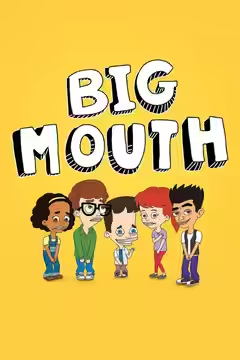
The series combines the pathos of Eighth Grade with the outrageousness of Big Mouth into a ridiculous yet truthful comedy. Adult actors playing teenagers allows for scenarios that could not be filmed with actual teens.

Read the full review →
The Hollywood Reporter
5 February 2019 · Tim Goodman
60*

Incredible performances by the adult leads playing 13-year-olds make the series intriguing and relatable, especially for its commitment to realism in awkward middle-school moments. However, it ultimately feels like a sketch stretched into a full series, making the whole experience less inviting.

Read the full review →
Consequence
8 February 2019
85*

PEN15 delivers a bittersweet, age-bending triumph that captures the excitement and terror of early teen desire with honesty and humor. The creators elevate their self-portraits into tragicomic masterworks through sharp, stammering dialogue.

Read the full review →

Straight answers AI written, from our review

Is PEN15 worth watching?
PEN15 is worth watching for anyone who was ever thirteen and can bear to be reminded of it, and we scored it 80. Maya Erskine and Anna Konkle play their thirteen-year-old selves among real children without once winking, and the result is funny and then, more often than we expected, simply painful. Two or three episodes are sketches stretched thin, which is the one caveat.
How long is PEN15, and what is it rated?
PEN15 is rated TV-MA by the MPA in the US. It is a comedy series.
Where can I watch PEN15 in the US?
PEN15 is streaming on Hulu in the US, and it is also available to buy from Apple TV and Amazon Prime Video. Availability is checked daily; the links above go straight to each service.
How violent or frightening is PEN15, and is it suitable for children?
PEN15 carries a UK 15 certificate, earned mainly by the language, and it is not violent or frightening in any conventional sense. The discomfort comes from humiliation held a beat too long and from two adults playing children among actual children, with visible care taken whenever a scene turns to kissing. It is not for young children, but the certificate undersells how tender it is.
How does PEN15 compare to Eighth Grade?
PEN15 and Eighth Grade cover the same age and the same terror, but the series uses two grown women playing thirteen while the film uses a real thirteen-year-old, Elsie Fisher, with no safety net. The film is the tighter piece; the series is funnier and has room to be sadder over ten episodes, though a few of them sag. Choose the film for one concentrated evening, the series for company over a fortnight.

Cast

If you liked this, try…