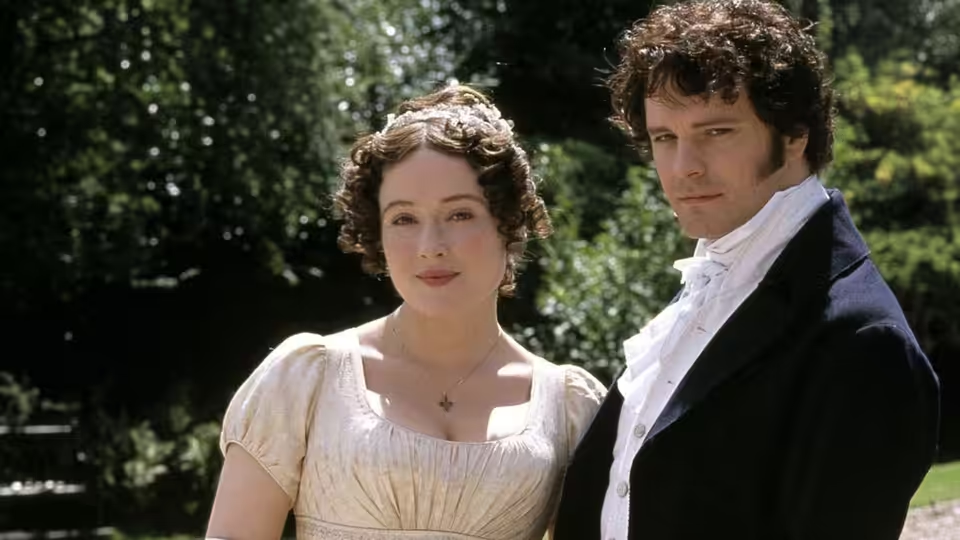
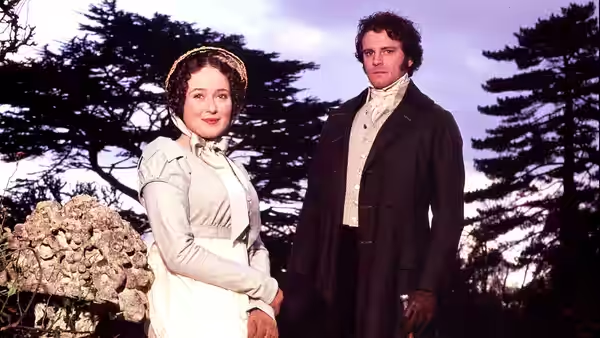
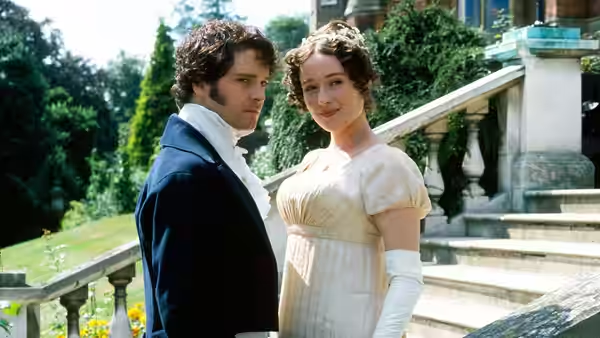
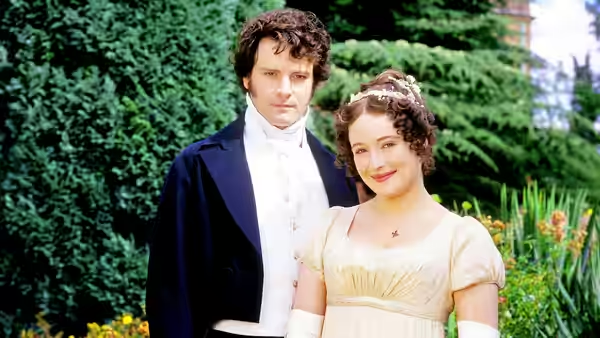
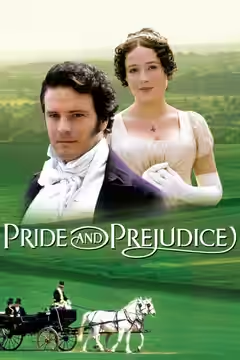
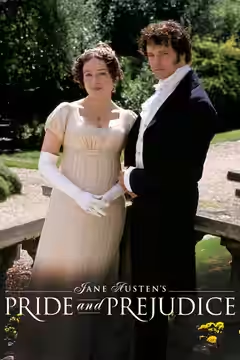
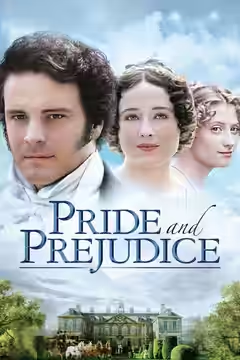
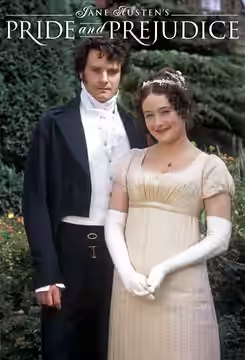
Jennifer Ehle and Colin Firth make this Austen adaptation worth its leisurely pace, with wit and attraction given equal care. A few supporting performances are too broad, but the central romance earns our patience.
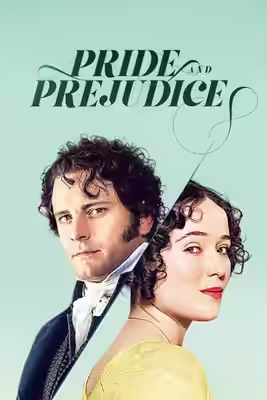
Simon Langton’s Pride and Prejudice is an unusually satisfying romance, and we recommend it warmly, with one reservation: some of the supporting comedy is pushed too hard. Andrew Davies’s adaptation of Jane Austen gives Jennifer Ehle and Colin Firth enough room to make attraction feel like a complicated business. Across six episodes, the pleasure is in paying attention to people who believe they have already understood one another. The wit matters as much as the courtship.
Ehle’s Elizabeth Bennet is the chief reason to stay. Her amusement is infectious, but there is enough confidence behind it to make her judgement something worth questioning. We laughed at the self-satisfaction Ehle allows into Elizabeth’s amusement, because being clever does not stop her enjoying herself at somebody else’s expense. Ehle makes that pleasure appealing enough for us to share it before noticing the unkindness. The performance keeps the comedy close to a recognisable human weakness.
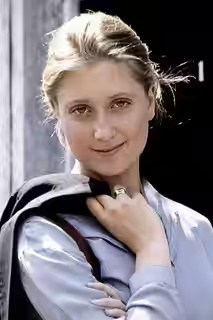
Firth’s Mr Darcy could easily have become an exercise in looking forbidding. Instead, Firth makes reserve seem to require effort, so that small changes in expression carry more interest than a declaration would elsewhere. Together, these performances make a long television courtship feel worth the time it takes, rather than a device for postponing the obvious. Susannah Harker’s Jane Bennet and Crispin Bonham-Carter’s Charles Bingley provide a gentler counterweight, and both benefit from being allowed less conspicuous charm.
John Kenway’s cinematography makes faces readable within the formal surroundings, a useful quality in a drama where a look can change the meaning of a courteous sentence. Gerry Scott’s production design gives the social comedy a convincing setting, though the appeal of the surroundings sometimes makes the characters’ anxieties feel comfortably distant. Dinah Collin’s costumes help the actors suggest how comfortable, or uncomfortable, they are being inspected. The visual polish is pleasurable, but we value it most when it helps explain somebody’s behaviour.
Peter Coulson’s editing gives reactions their due without making every exchange feel like a contest to find the cleverest face. The leisurely stretches are more debatable: six episodes offer ample space, and occasionally a scene feels settled before the programme is ready to leave it. Carl Davis’s music supplies buoyancy, keeping the formality from turning solemn. Its brightness can press the comedy a little firmly when the actors have already done enough.
Alison Steadman’s Mrs Bennet is our chief reservation among the performances. The emphatic delivery makes her funny in broad terms, but it leaves less room to notice the worry beneath the fuss. Benjamin Whitrow’s Mr Bennet is more comfortable company, though his dryness can make detachment look rather too attractive. Langton gets a great deal right about the ensemble, but the shift between these larger performances and Ehle’s finer adjustments can be jarring.
Costume romance can become a matter of waiting for two attractive people to stop being difficult, with little reason to care what they might discuss afterwards. Here Davies and the leading actors make conversation itself worth watching, even when it proceeds badly. That earns the length and keeps the romance from depending on the appeal of the clothes and houses. Choose it for an evening when there is time to enjoy people taking rather longer than necessary to say what they mean.