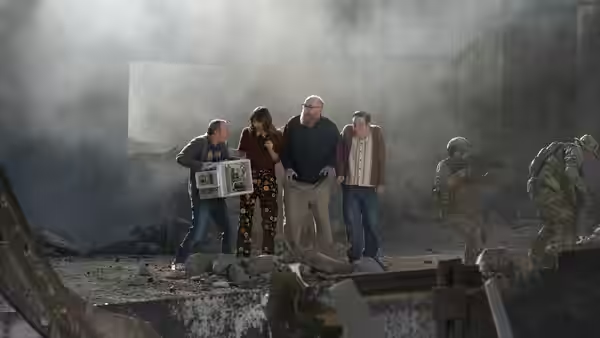
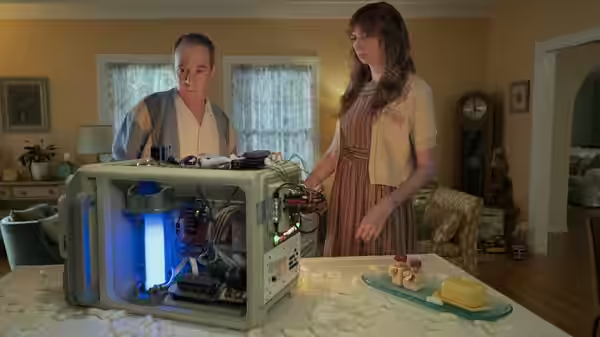
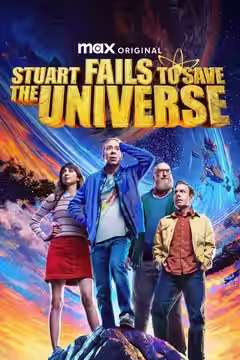
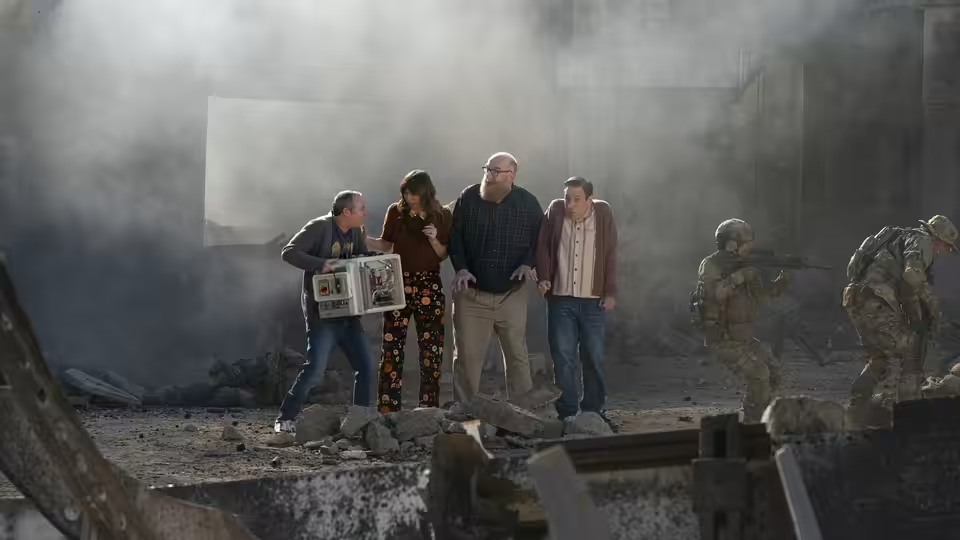
Group standing amid rubble and smoke as armed soldiers approach from the side
Series review

Stuart Fails to Save the Universe

2026 · Created by Chuck Lorre, Zak Penn, Bill Prady · Series · 24m · MPA TV-MA

In a sentenceEvery possible universe, and Stuart is a disappointment in all of them

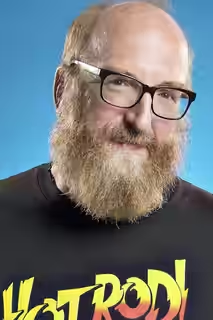
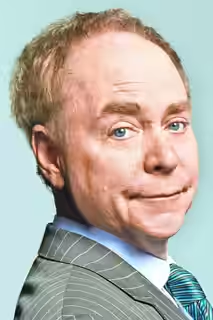
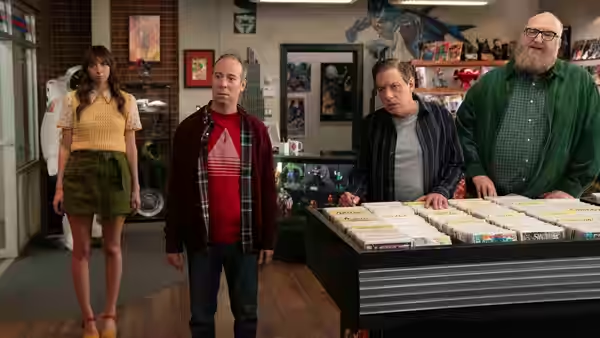
Stuart Bloom (Kevin Sussman) runs a comic-book shop in Pasadena and is not, by any measure, a hero. When he and the people who orbit the shop are thrown out of their own universe and into a run of others, he becomes one anyway, or has to try. Along for the fall are Denise (Lauren Lapkus), who works behind his counter, Bert Kibbler (Brian Posehn), a geologist with a rock for every occasion, and Barry Kripke (John Ross Bowie), a physicist with an opinion on everything. Each new universe holds another version of themselves, and Stuart keeps meeting the Stuart who did better. Rajesh Koothrappali (Kunal Nayyar) turns up from the old life; so, playing themselves, do Penn Jillette and Teller. Ten episodes, 24 minutes each.

Plays from YouTube when you press play; nothing loads from them until then.

Fi1m review

The Big Bang Theory’s background players get their own multiverse, and the idea is better than the jokes. Kevin Sussman and Brian Posehn are good company for ten short episodes; the writing keeps reaching for a reference when it needs a laugh.

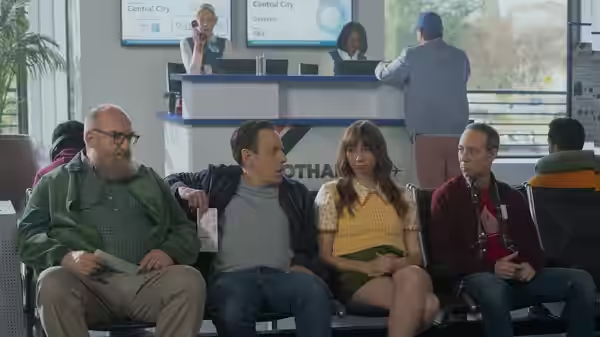
Chuck Lorre and Bill Prady spent twelve seasons of The Big Bang Theory on four physicists and the women who put up with them. With Zak Penn they have now gone back for the people at the edge of the frame: Stuart Bloom (Kevin Sussman), who runs the comic-book shop; Denise (Lauren Lapkus), who works in it; Bert Kibbler (Brian Posehn), the geologist; and Barry Kripke (John Ross Bowie), the colleague nobody wanted at lunch. The plan is to knock them out of their own universe and through several others, and to make them meet the versions of themselves who made better choices. It is a good idea. Across ten episodes of 24 minutes it is a good idea about a third of the time.

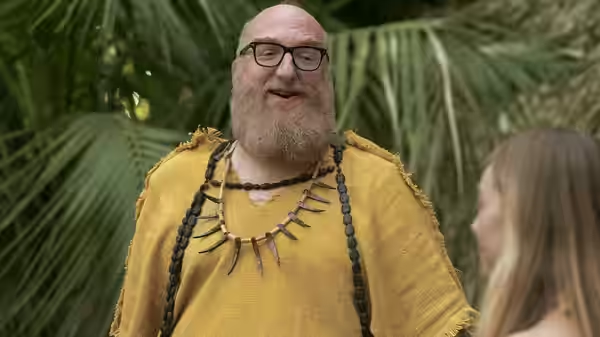
The third that works belongs to the cast. Sussman has always played Stuart as a man apologising for the space he takes up, and the series finally gives that a use, because the alternate Stuart he keeps running into has the same face and none of the apology. Watching Sussman play both, and watching the first flinch at the second, is the show’s one real joke about character rather than about comics. Posehn is the other reason to stay. He plays Bert as a large, gentle man who is pleased by almost everything, including the end of reality, and he gets the biggest laughs by doing the least.

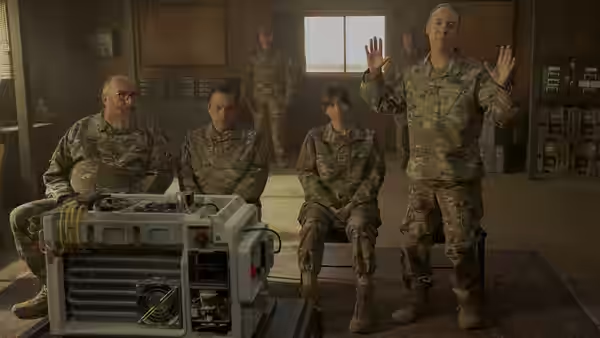
It looks better than a sitcom spin-off needs to. Valda Witt’s production design gives each universe its own furniture and its own palette, so we always know within a shot that we have moved, and the cinematographers Grant Smith and Anthony Hardwick light the shop in the flat, friendly daylight of the old show and everywhere else with a little more shadow. Joseph LoDuca’s score does the heavy orchestral thing the material is sending up, and it knows when to stop. Two of the three directors, Jonathan Frakes and Robert Duncan McNeill, spent years on Star Trek bridges, and it shows in the way the bigger set pieces are blocked: people know where the door is and the camera knows where they are going.

The trouble is the writing, which is odd, given who wrote it. Lorre’s sitcom rhythm, setup and beat and punchline, was built for people sitting on a sofa, and it does not travel well to people fleeing across dimensions. Too many scenes stop for a reference, hold for the recognition, and move on without having said anything funny. Denise is the clearest casualty. Lapkus is a quick, likeable performer, and she spends most of the run reacting to other people’s lines. Bowie’s Kripke, meanwhile, is a running gag from another show, and ten episodes is a long time for a running gag.

Here is where we landed. We laughed properly perhaps five times in ten episodes, and four of those were Posehn. Around the middle of the run we noticed we had stopped caring which universe we were in and were waiting for the next familiar face to appear, and the series obliged: Kunal Nayyar’s Rajesh arrives from the old life, Penn Jillette and Teller arrive as themselves, and each time the screen brightens and the plot pauses. It is a strange thing to feel pleased to see someone and slightly cross about why they are there.

Most critics have been kinder than this, and we understand the goodwill. A spin-off that hands the leads to the supporting cast and then tries something structurally ambitious deserves credit for the attempt. But The Big Bang Theory at its best was funny about people who happened to love comics; this is funny about comics, and the people are along for the ride. The gap matters over ten weeks.

A second season is listed and has not yet aired. If it comes, it will need to find out what Denise wants and to let Stuart fail at something smaller than the universe. For now this is one for people who already know the shop, watched in twos, with a bowl of something, and with the expectation of smiling more than laughing.
Critical consensus AI synthesised

61
Positive
5
Mixed
1
Negative
1

Most critics like it, with reservations. The praise clusters on the premise: a multiverse format that lets secondary Big Bang Theory characters lead their own adventure and gives the writers room for inventive scenarios, detailed alternate dimensions and meta jokes about the parent show. Several reviews single out the world-building and the comic chemistry of the central cast, and the general feeling is that it is bolder and nerdier than anyone expected from a spin-off.

The reservations are almost all about the jokes. Even admirers find the comedy uneven and only sporadically funny, and Collider notes the female characters are underserved and the emotional depth is limited. The spread is wide. The Telegraph finds the premise clever but the result irritating, and Vulture dissents outright, calling it painful, badly plotted and without stakes, an interesting idea let down by its execution. Five positive verdicts against one mixed and one negative, but the negative one is emphatic.

Variety
22 July 2026 · Alison Herman
80*

The critic praises the series as a playful and creative romp that innovatively uses a multiverse premise, distinguishing it from other Big Bang spinoffs. They highlight the inventive scenarios across episodes and the strong comic chemistry among the central cast.

Read the full review →
The AV Club
22 July 2026 · B · Noel Murray
77

The critic finds the series wilder and nerdier but uneven and only sporadically funny, though it holds onto the franchise's appeal with some emotional core and playfulness. Praises the clever world-building and self-lacerating humor but notes the comedy often falls flat.

Read the full review →
The Telegraph
24 July 2026
50*

The critic finds the ambitious Big Bang Theory spin-off clever in its multiverse premise and nerd humour but ultimately irritating and rarely laugh-out-loud funny.

Read the full review →
Vulture
23 July 2026
10*

The critic finds the series painful and not funny, a grim death march through overworn jokes and poor plotting, with no stakes or compelling characters. Criticizes the execution despite an interesting premise on paper.

Read the full review →
Digital Spy
24 July 2026 · Claire Crick
80*

The critic finds the series well worth the wait and praises its genius format, special treats for fans, and the way it expands the Big Bang universe with alternate versions of characters. Highlights the engaging multiverse adventures and Easter eggs.

Read the full review →
NME
22 July 2026 · James Mottram
75*

The review praises the series as a refreshing, dimension-hopping romp through nerd culture that turns secondary Big Bang Theory characters into leads of their own cosmic adventure. It singles out the inventive sci-fi twists, multiverse riffs and meta elements for making the show feel like something the original characters would dream up.

Read the full review →

Straight answers AI written, from our review

Is Stuart Fails to Save the Universe worth watching?
Stuart Fails to Save the Universe is only worth watching for people who already know The Big Bang Theory and its comic-book shop, and we scored it 57. Kevin Sussman and Brian Posehn are good company across ten short episodes, but the writing reaches for a reference whenever it needs a joke. Expect to smile more than laugh.
How long is Stuart Fails to Save the Universe, and what is it rated?
Stuart Fails to Save the Universe has episodes of about 24m and is rated TV-MA by the MPA in the US. It is a comedy and sci-fi & fantasy series.
Where can I watch Stuart Fails to Save the Universe in the US?
Stuart Fails to Save the Universe is streaming on HBO Max, The Roku Channel, Hulu and Amazon Prime Video in the US. Availability is checked daily; the links above go straight to each service.
How violent or frightening is Stuart Fails to Save the Universe, and is it suitable for children?
Stuart Fails to Save the Universe has no UK certificate and carries a TV-MA rating in the US, which marks it as made for adults rather than children. We noticed nothing violent or frightening in it; the danger is played for comedy, even the end of reality. The rating most likely reflects language and grown-up humour, and the jokes assume you know the original show.
What should I watch after Stuart Fails to Save the Universe?
After Stuart Fails to Save the Universe, try Red Dwarf (1988, Fi1m 80): Four idiots, a spaceship, no budget, and thirty years of getting the tone right. Then Everything Everywhere All at Once (2022, Fi1m 77): The multiverse used to say something about a family, not about films.

Cast

If you liked this, try…

  1. The Big Bang Theory (2007) · not on Fi1m yetWhere these four came from, and where the jokes were about people first.

  2. Red Dwarf (1988, Fi1m 80)Four idiots, a spaceship, no budget, and thirty years of getting the tone right.

  3. Galaxy Quest (1999) · not on Fi1m yetThe gentlest possible mockery of fandom, made by people who plainly love it.

  4. Everything Everywhere All at Once (2022, Fi1m 77)The multiverse used to say something about a family, not about films.

  5. Community (2009) · not on Fi1m yetA sitcom that bends genre every other week and keeps its characters intact.