Katie Robbins’s near-future Kyoto mystery is handsome and well played, with Rashida Jones and a sweetly voiced robot doing most of the carrying. The mystery underneath is thinner than the design, and ten episodes is more than it has to say.
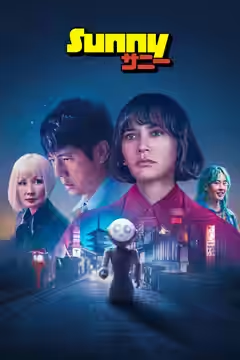
Katie Robbins has turned Colin O’Sullivan’s novel into ten episodes about an American widow in Kyoto and the robot her dead husband left behind. The year is never given; it is near enough that the taxis look familiar and far enough that every kitchen has a homebot standing in the corner. Suzie Sakamoto (Rashida Jones) wants nothing to do with hers. The series is at its best in that kitchen, with a woman and a machine learning to share a house, and at its weakest whenever it leaves to chase its plot. It is handsome, often funny, well acted, and about three episodes longer than it needs to be.
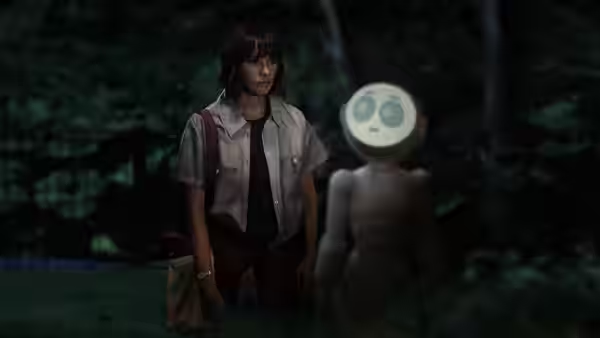
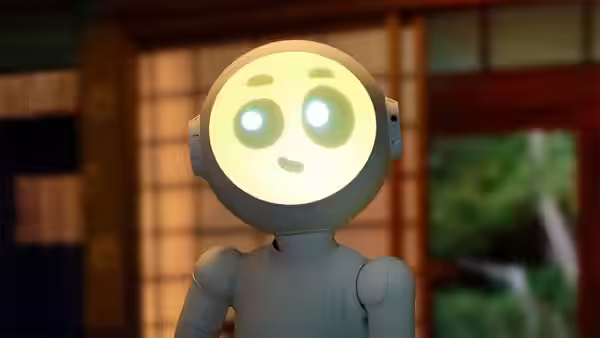
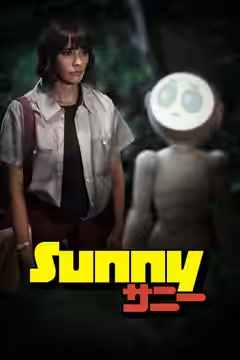
The robot is the reason to watch. Sunny is a rounded white body on wheels with a black screen for a face, and on that screen two dots and a curved line do most of the acting. Joanna Sotomura’s voice does the rest: eager, a little too helpful, wounded when Suzie is unkind and quick to pretend she is not. Suzie is unkind a good deal. Jones plays grief as temper rather than tears, snapping at the help, at her mother-in-law, at Kyoto, and it is both truer and funnier than the alternative.
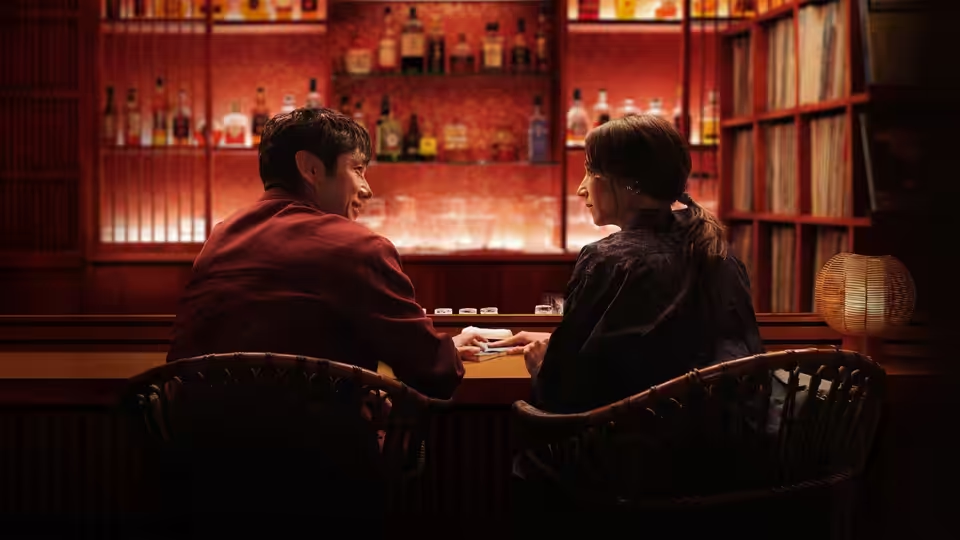
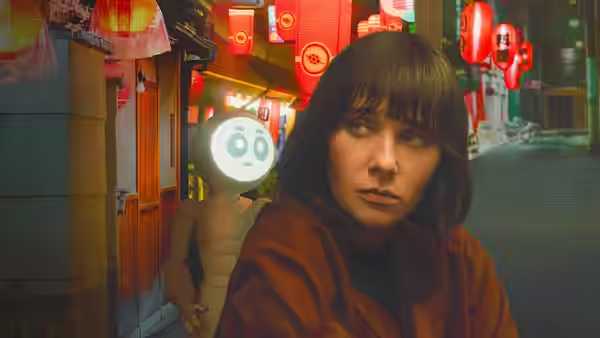
The look is the other reason. Larry Smith and Ryoma Kohari shoot Kyoto in warm, saturated colour, orange light through paper screens and neon on wet streets, and they keep the camera low so the robots are always slightly in the way. Shinsuke Kojima dresses the near future in old things: wood panelling, pastel plastic, dials where you would expect touchscreens, so the homebots look like appliances from a 1970s catalogue rather than from a laboratory. Analucia McGorty puts Suzie in dark, oversized knitwear she has plainly not changed in days. Daniel Hart’s score is light and jazzy and keeps insisting this is a comedy, which is right about half the time.
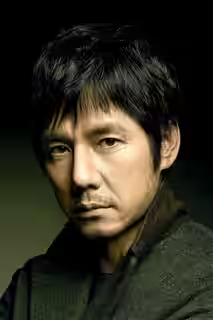
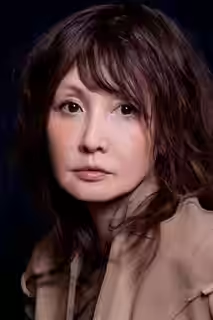
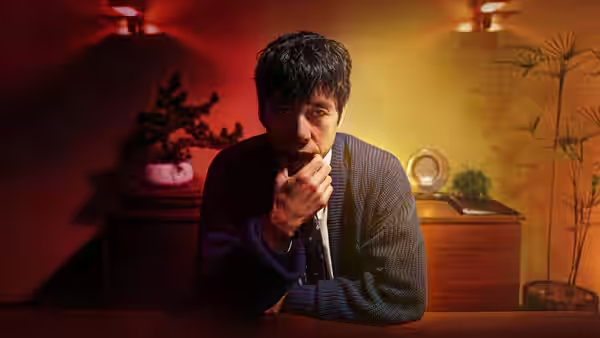
Around the pair, the casting holds up. Judy Ongg’s Noriko is the mother-in-law who never thought Suzie good enough for her son and is not about to stop saying so now he is gone; her scenes with Jones are small, sharp and well judged. annie the clumsy, as the bartender Mixxy, gives Suzie the one friend who talks back. YOU plays Himé, a yakuza boss’s daughter angling to inherit her ailing father’s operation, with a flat, bored menace that works better than any shouting would. Hidetoshi Nishijima’s Masa appears mostly in flashback and is quietly good as a man keeping something from his wife.
The trouble is the mystery, and it is a structural trouble. Four directors and five editors are credited across the ten episodes, and it shows: the tone lurches from kitchen comedy to gangster film to grief drama, sometimes within a scene, and the yakuza plot never makes clear what anyone wants or why Suzie should care. One episode is framed as a television game show and another as a dream, and both are inventive and both stop the story dead. By the seventh episode we were counting how many were left. We were never bored, exactly; we had simply stopped believing the plot knew where it was going, and the finale confirmed it.
And yet. There is a moment early on when Suzie comes home drunk and Sunny gets her to bed, saying nothing clever, and the two dots on the screen go soft, and we were moved more than we expected to be by a face with no features in it. That is the series working: one idea, one room, a machine doing something kind for a woman who has told it to leave.
Her and After Yang each took one idea about a machine and a lonely person and followed it to the end. Sunny has that idea, and a good one, and keeps putting it down to answer a phone call from the plot. Watch the first three episodes, which are the best, and see whether the robot has you. If she does, she will carry you further than the story deserves. It is certified 15, and the yakuza earn it.