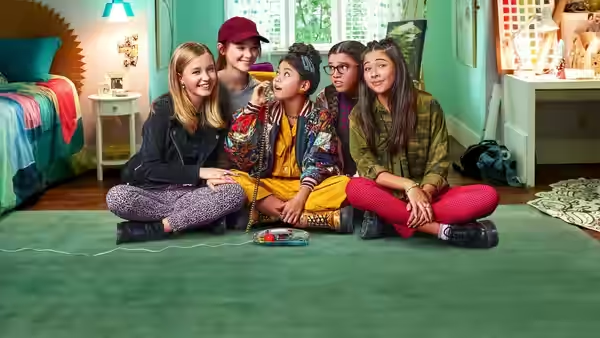
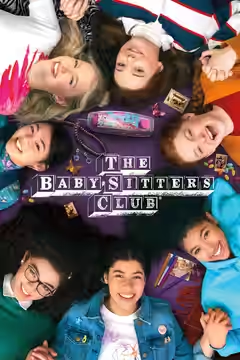
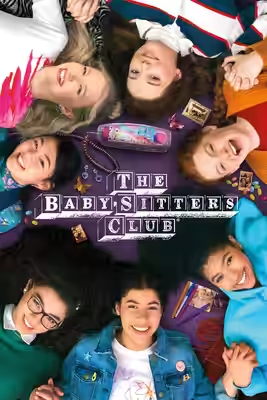
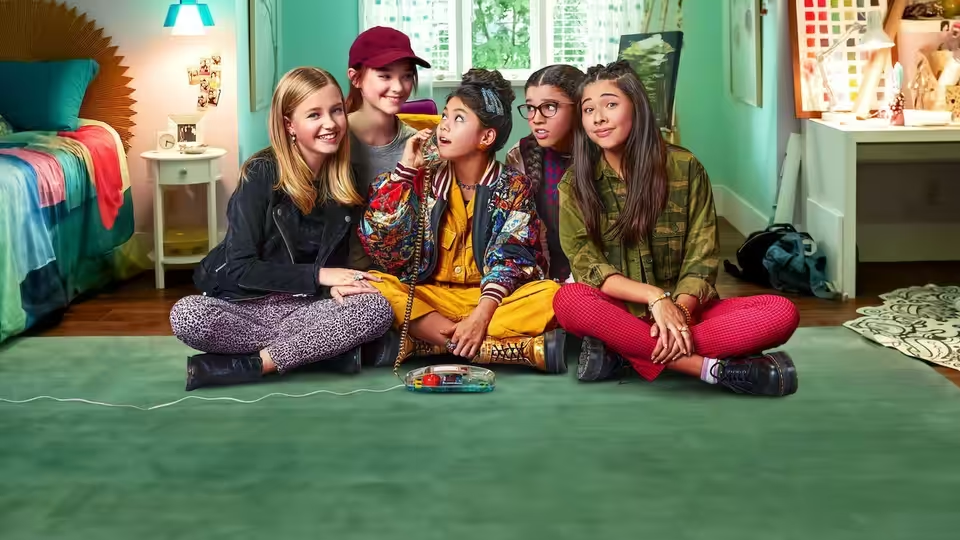
Five friends sit together on a bedroom floor around a board game
Series review

The Baby-Sitters Club

2020 · Created by Rachel Shukert · Series · NMHH Unrated

In a sentenceFour girls, proper friendships, and no need for an adult to explain why any of it matters

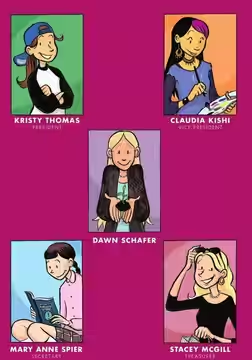
Kristy Thomas (Sophie Grace), Claudia Kishi (Momona Tamada), Stacey McGill (Shay Rudolph) and Mary Anne Spier (Malia Baker) navigate friendship and family life in The Baby-Sitters Club. Each girl has concerns of her own as well as a place in the group, where their different experiences meet. Elizabeth Thomas-Brewer (Alicia Silverstone) and Watson Brewer (Mark Feuerstein) are among the people around them. Everyday childhood worries sit alongside questions about inclusion and how people treat one another. Based on Ann M. Martin’s books, the series follows the girls both together and individually, keeping their relationships at the centre.

Plays from YouTube when you press play; nothing loads from them until then.

Fi1m review

Rachel Shukert’s adaptation treats children’s friendships with unusual care, helped by a young cast who seem comfortable together. Its reassuring manner sometimes limits the drama, but the warmth is earned and the humour travels across generations.

The Baby-Sitters Club is good family television because it pays attention to the children. Rachel Shukert’s adaptation of Ann M. Martin’s books takes friendship seriously, even when the immediate worry seems small from an adult’s distance. We recommend it, with one reservation: its eagerness to reassure can soften the drama. Across two seasons, though, the young ensemble gives the programme enough life to make that a complaint about something we like.

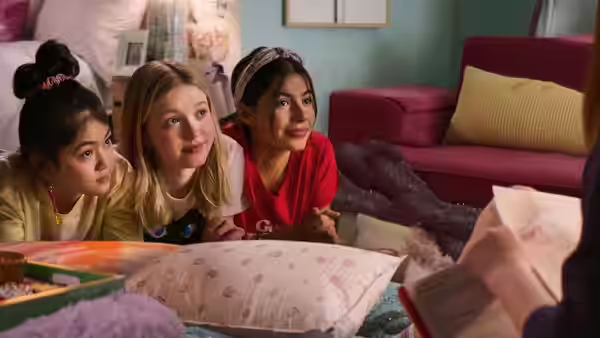
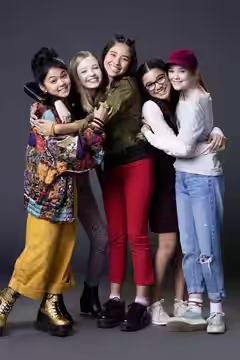
Sophie Grace’s Kristy Thomas, Momona Tamada’s Claudia Kishi, Shay Rudolph’s Stacey McGill and Malia Baker’s Mary Anne Spier have the difficult job of making a group feel close without making its members interchangeable. The performances give us reasons to care about each girl, and their ease together keeps the writing from sounding like a set of carefully allocated talking points. We warmed to them more quickly than we expected. It was the sense of mutual attention in the ensemble: each friendship seems to matter to the people inside it.

Updating a children’s book can become an exercise in congratulating adults on how much they have learnt since reading it. Rachel Shukert keeps the girls’ concerns central, including when the subject reaches beyond their own friendships. The writing gives everyday childhood worries space alongside wider social questions, without insisting that the audience rank them by importance. Its feminism begins with the simple assumption that these girls deserve our attention, even when an adult might consider their problems minor.

The humour also reaches across generations without making the young characters look foolish for caring about their own problems. Adults can enjoy the company without being asked to feel superior to it. We never felt that a second, more knowing programme was being performed over the children’s heads. Family television becomes hard work when it keeps stopping to reassure adults that they are the cleverest people watching, and this series has better uses for its attention.

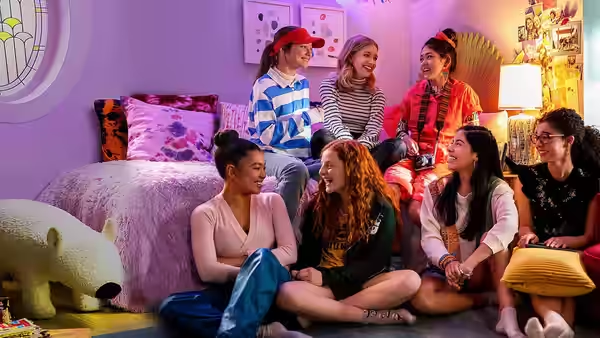
The colourful production design makes the programme inviting before anyone has had to explain much. Cinematographers Adam Silver and Christopher Charles Kempinski keep the emphasis on the ensemble, while Janet Weinberg’s editing makes the group easy to follow. Jesse Novak’s music fits that light touch, although the combined effect can feel too determined to put us at ease. We like the lack of fuss; we would occasionally like something to disturb all this good company.

The limitation matters because reassurance can arrive before a worry has had much chance to trouble us. We sometimes wanted the series to sit longer with awkwardness, and to trust the cast to hold our attention without keeping the atmosphere so pleasant. Its sympathy for the girls is never in doubt, but sympathy alone cannot supply every dramatic beat. Viewers who need family stories to be abrasive will find the gentleness a real obstacle.

Try an episode before dismissing it as something to leave the children watching. With ten episodes in the first season and eight in the second, there is room to let the friendships develop without facing an endless commitment. It is worth watching together without turning every disagreement into a discussion about what everyone has learnt. Let the children have the first word afterwards.

Critical consensus AI synthesised

90
Positive
9
Mixed
0
Negative
0

The reviews are uniformly positive about The Baby-Sitters Club, with praise centred on its young ensemble and its careful updating of the books. Critics repeatedly single out the cast’s chemistry, the girls’ distinct personalities and the warmth of their friendships and family relationships. The adaptation’s inclusiveness is widely welcomed, as is its ability to take childhood worries seriously while making room for wider social questions. Across the reviews, sincerity and respect for young viewers are recurring strengths.

There is no clear dissent among these nine reviews, and the supplied accounts identify no substantial recurring reservation. Differences concern emphasis more than judgement: The Guardian particularly values the humour and natural handling of feminist themes, while The AV Club’s season-two review stresses the balance between serious subjects and lighthearted storytelling. The consensus is that the series preserves the books’ appeal without treating their original world as something that cannot change.

The AV Club
6 October 2021 · A · Saloni Gajjar
95

The critic finds season two a joyful, charming escape that balances serious themes with lighthearted storytelling. She especially praises the young cast’s chemistry and the show’s nuanced portrayal of friendships and family life.

Read the full review →
IndieWire
29 June 2020 · A- · Kristen Lopez
90

Lopez praises the series as warm, sincere summer fun that makes the books’ characters feel vivid and relatable. She especially singles out the young cast’s performances and the inclusive, cohesive ensemble.

Read the full review →
The Hollywood Reporter
2 July 2020 · Robyn Bahr
90*

Bahr finds the adaptation wholesome, breezy, and among Netflix’s best shows. She especially praises its colorful production design and careful updating of the original stories.

Read the full review →
Vulture
29 June 2020 · Kathryn VanArendonk
90*

The critic finds the series a comforting, delightful adaptation that preserves the books’ warmth while updating their concerns for 2020. She praises its earnest treatment of seemingly small childhood problems alongside weighty social issues.

Read the full review →
Variety
29 June 2020 · Caroline Framke
85*

Framke finds the series warm, sincere and empathetic, successfully updating the books without losing their spirit. She especially praises its thoughtful portrayals of the girls’ distinct storylines and its respectful treatment of young viewers.

Read the full review →
The Guardian
3 July 2020 · Lucy Mangan
82*

Mangan finds the series a funny, fresh reimagining that balances contemporary themes with old-fashioned charm. She especially praises its light, cross-generational touches and the natural, humorous handling of feminist themes.

Read the full review →

Straight answers AI written, from our review

Is The Baby-Sitters Club worth watching?
The Baby-Sitters Club is worth watching for its attentive treatment of childhood friendships and humour that works across generations; we score it 85 out of 100. We recommend it for watching together as a family, though its eagerness to reassure sometimes settles worries before the drama has enough time to develop.
How long is The Baby-Sitters Club, and what is it rated?
The Baby-Sitters Club is rated Unrated by the NMHH in Hungary. It is a kids and drama series.
Where can I watch The Baby-Sitters Club in Hungary?
The Baby-Sitters Club is streaming on Netflix in Hungary. Availability is checked daily; the links above go straight to each service.
How does The Baby-Sitters Club compare to Little Women?
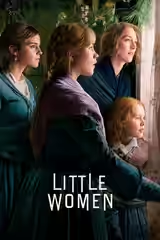
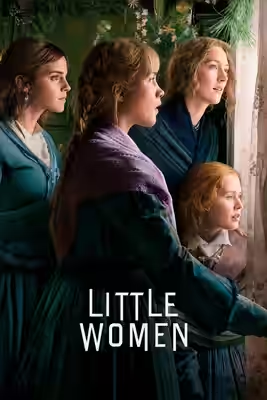
The Baby-Sitters Club offers gentler, more reassuring company than Little Women, which we recommend for sharper drama about money and the March sisters’ competing wishes. Both take girls’ relationships seriously without belittling their concerns, but the series gives friendships room to develop gradually, while the film moves briskly between two timelines, sometimes too briskly.
Is The Baby-Sitters Club based on a true story or a book?
The Baby-Sitters Club is based on Ann M. Martin’s books, rather than a true story. Rachel Shukert’s adaptation updates the material while keeping the girls’ friendships and individual concerns central, and we find it welcoming without prior knowledge of the books. Its appeal rests on the young ensemble rather than recognition of the source.
What should I watch after The Baby-Sitters Club?
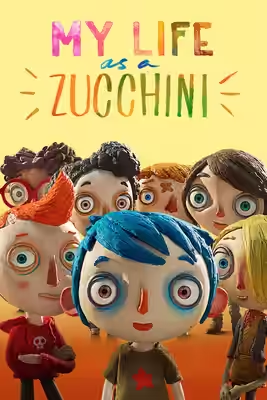
After The Baby-Sitters Club, try Little Women (2019, Fi1m 83): Sisters argue, make plans and learn how much room to give each other. Then My Life as a Courgette (2016, Fi1m 84): Animation with a similar respect for children’s friendships, though the hurt runs deeper; and Petite maman (2021, Fi1m 88): A quieter look at childhood friendship, with equal patience for complicated feelings.

Cast

If you liked this, try…

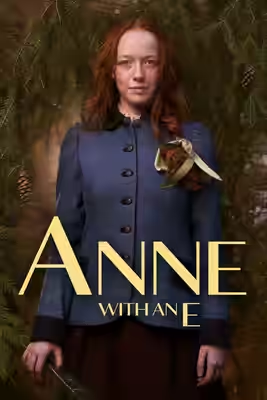
  1. Anne with an E (2017) · not reviewed yetAnother book adaptation that lets a young heroine be difficult and deserving of affection.

  2. Little Women (2019, Fi1m 83)Sisters argue, make plans and learn how much room to give each other.

  3. My Life as a Courgette (2016, Fi1m 84)Animation with a similar respect for children’s friendships, though the hurt runs deeper.

  4. Petite maman (2021, Fi1m 88)A quieter look at childhood friendship, with equal patience for complicated feelings.

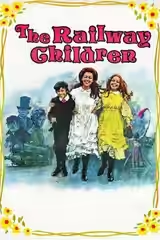
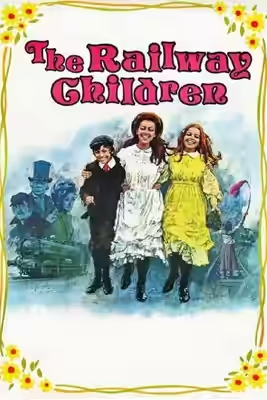
  5. The Railway Children (1970) · not reviewed yetFamily upheaval and resourceful children, handled with warmth that does not require smugness.

Free account

Know what to watch tonight

Two lists that know where things are streaming, collections you can share, your own score beside ours, and Discover that remembers what you have seen.

  • Want to see, sorted by what is streaming now
  • Seen, with your score out of ten
  • No adverts, ever