David Nobbs and Leonard Rossiter make a sitcom about a middle-aged commuter quietly coming apart, and it is funnier and sadder than the studio laughter lets on. The catchphrases wear thin over four series; Rossiter never does.
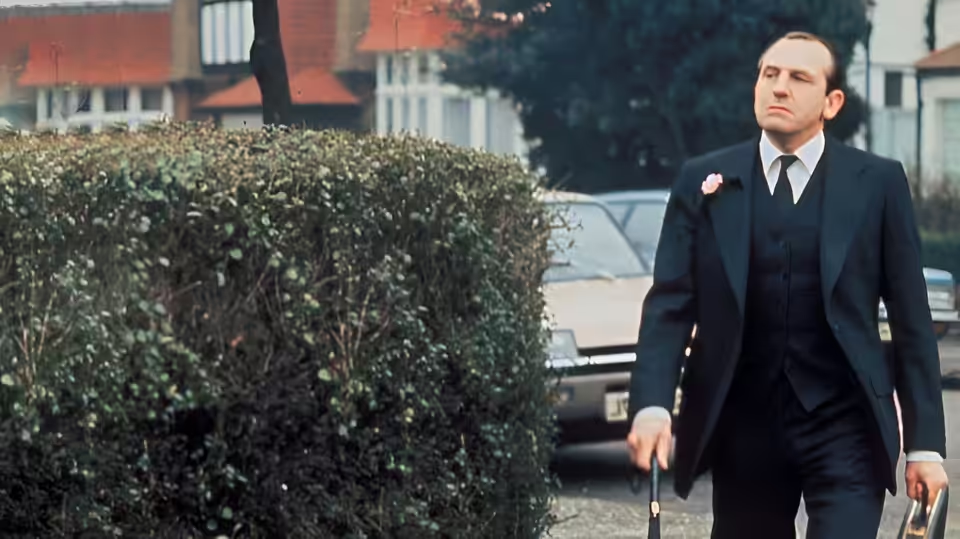
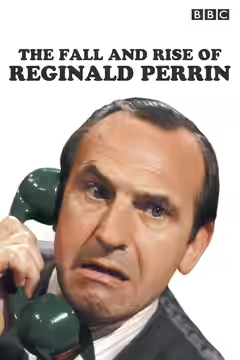
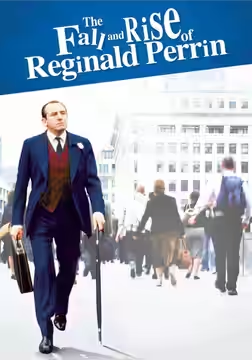
Reginald Perrin is forty-six, works for a pudding company, and takes the same late train every morning to the same office where the same men say the same things. David Nobbs, adapting his own novel, turns that into a half-hour comedy in which a man slowly loses his grip on the whole arrangement, and the first series, which began on 8 September 1976, remains one of the best things British television did with a studio audience and three sets. We recommend it warmly. The later series are thinner, and we will say which to skip.
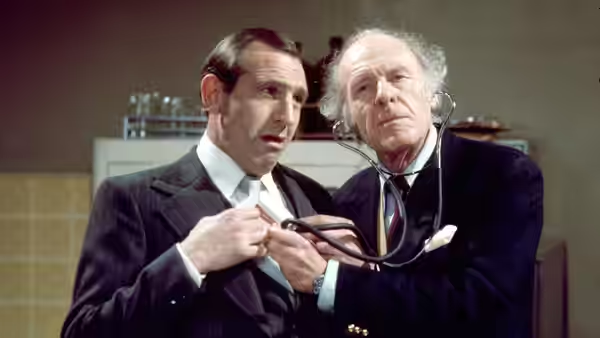
The office at Sunshine Desserts is a machine for producing phrases. C.J. (John Barron) did not get where he is today by doing anything anyone suggests. Tony Webster (Trevor Adams) says “Great”. David Harris-Jones (Bruce Bould) says “Super”. Doc Morrissey (John Horsley) diagnoses every patient with whatever he has himself. Nobbs builds each episode out of these repetitions, and the joke is not the lines but that nobody in the meeting has ever once listened to them. By the third series the phrases are doing most of the work and you can feel it.
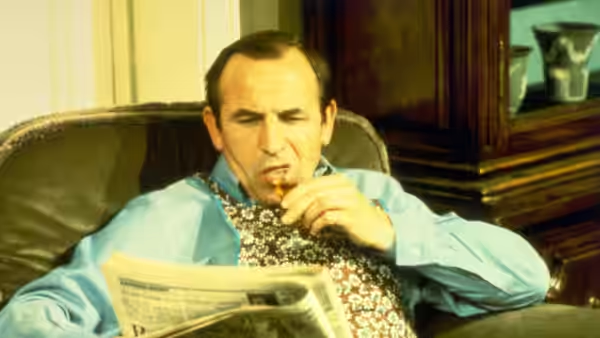
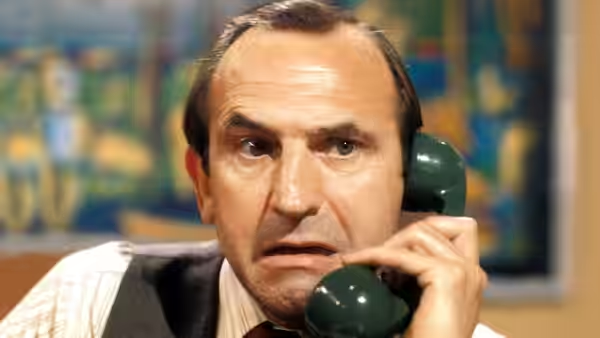
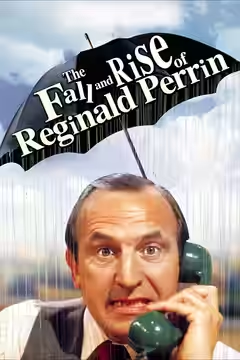
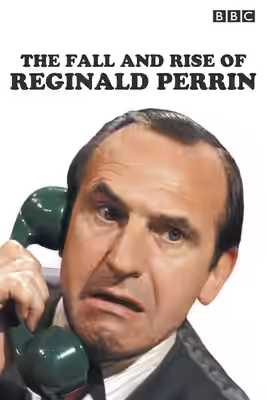
Rossiter is the reason to watch. He plays Reggie fast and precise, a man whose mouth runs a half-second ahead of his judgement, and the pleasure of the early episodes is watching him say something appalling in a meeting and watching the meeting carry on regardless. John Howard Davies cuts to a hippopotamus whenever Reggie thinks of his mother-in-law. The first time we laughed out loud. By the fifth time we had stopped laughing, because we had started looking at Rossiter’s face in the second before the cut, and it is the face of a man who knows what is coming and cannot stop it. That is where the series earns its sadness: not in anything it says, but in a comic actor letting you see a frightened man behind the timing.
The craft is modest and right. Davies and Gareth Gwenlan direct it like the videotaped sitcom it is, with a front room, an office and a train platform, and they are wise enough to let Rossiter move and keep the camera still. Ronnie Hazlehurst’s theme is a small, downcast tune that sounds like a man walking to a station he does not want to reach. Five editors are credited across the run, which tells you how little of the effect depends on cutting; the one trick that matters, the hippo, is a cut, and it is enough. Pauline Yates gives Elizabeth more patience than the script gives her lines, and Sue Nicholls makes Joan’s loyalty funny and a little painful. Geoffrey Palmer, as Reggie’s brother-in-law Jimmy, is dry as paper and steals every dinner he attends.
The flaws are the flaws of the form. The audience laughs at everything, including the moments that are not jokes, and on a sofa in a quiet room the laughter sometimes sounds like it is coming from another building. Elizabeth is written as a good woman who waits, and Yates can do only so much with waiting. The surreal flourishes, Reggie’s daydreams and his outbursts, occasionally come down to a man saying rude things to a wall, and the script mistakes that for release. The second half of the first series takes a turn the title has already hinted at, and we will leave it there; it is handled with more nerve than most sitcoms of the period would have risked.
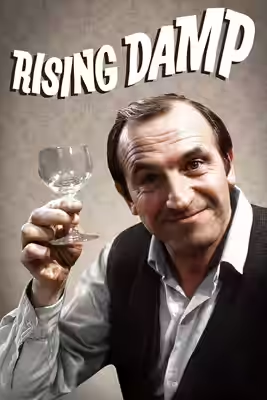
Of the three series made with Rossiter, the first is clearly the best, the second, The Return of Reginald Perrin, finds a new idea and runs with it, and the third, The Better World of Reginald Perrin, has run out of them. A fourth, The Legacy of Reginald Perrin, arrived in 1996, long after Rossiter’s death in 1984, and the old cast do their best around the absence. Nobody needs it. Rossiter made Rising Damp for ITV in the same years, and Rigsby is the broader creation; Reggie is the one that stays with you.
Watch the first seven episodes in a week, one a night, which is roughly how Reggie would have done it. The train will be eleven minutes late every time, and by the end you will know exactly how he feels about that.