The Four Seasons is a decent, uneven relationship comedy, with Colman Domingo making its holiday company worth joining. There is warmth in the performances, but the writing too often settles for familiar complaints and intermittent laughs.
The Four Seasons is a decent, uneven comedy about the difficulty of remaining good company as we get older. Three couples take four holidays together, bringing their marriages and their accumulated opinions of one another along. The cast makes it worth trying, though the jokes are too intermittent for us to recommend it simply as a comedy. Its more interesting concern is what happens to friendship when people begin to question arrangements everyone else has grown comfortable with.
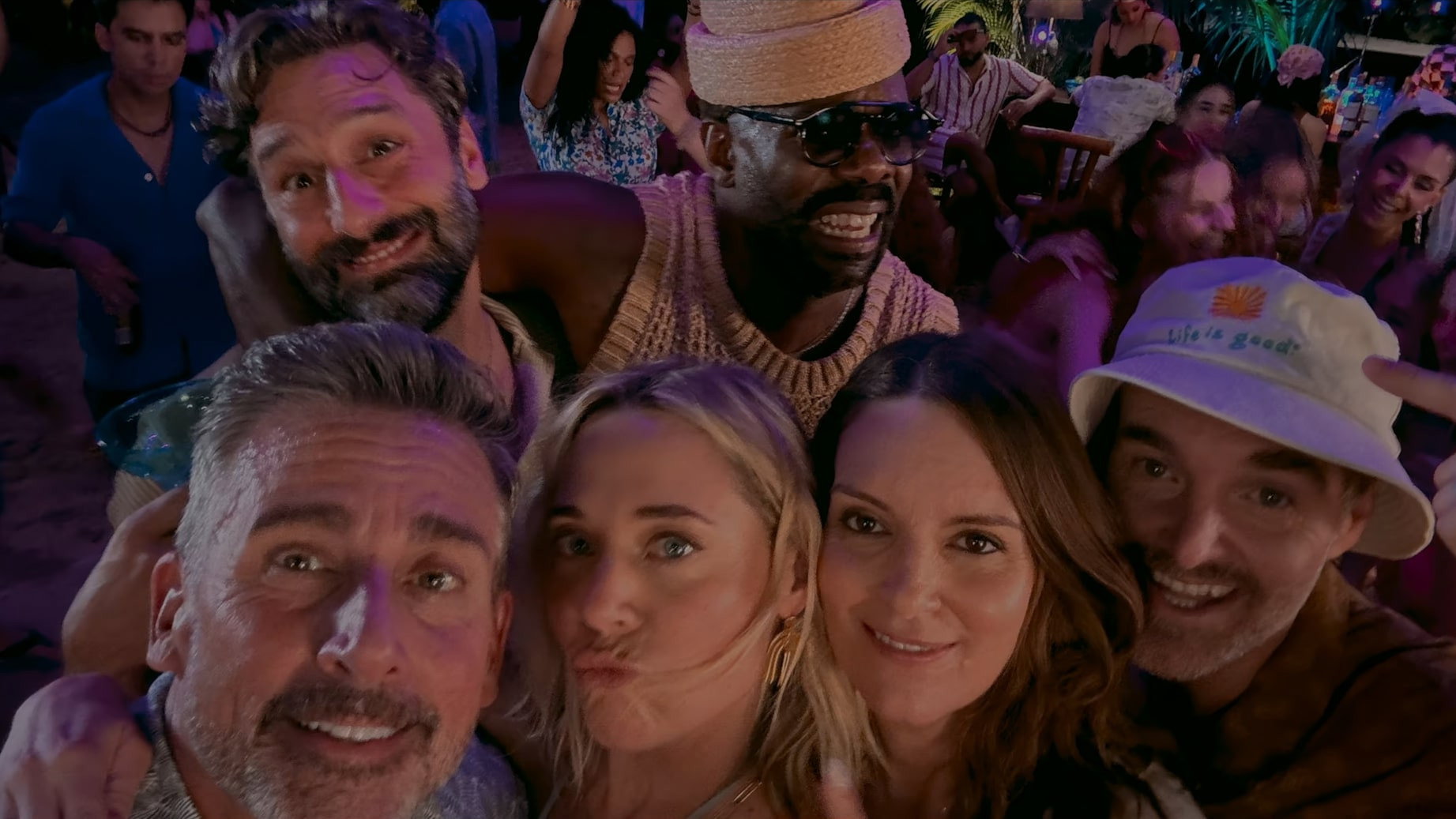
Colman Domingo, playing Danny, does most to make the gathering feel worth attending. We laughed at his delivery, and felt relieved to find a friend whose company we actively wanted to keep. His comic timing makes the humour seem spontaneous and gives the group some much-needed warmth. Steve Carell’s Nick Pagano supplies another reason to stay: Carell makes the unhappiness in this material register without insisting that we stop finding these people ridiculous.
Tina Fey’s Kate belongs to an ensemble with plenty of ability to spare, including Kerri Kenney, Will Forte, Marco Calvani and Erika Henningsen. The writing, by a team including Fey, Lang Fisher and Tracey Wigfield, does not always give those actors enough to distinguish a familiar marital grievance from a fresh joke. There is recognisable truth in the way a friendship group can make everybody’s relationship its business. Too often, however, a familiar complaint arrives without a sufficiently good joke.
Tim Orr’s cinematography and Sharon Lomofsky’s production design give the holidays an inviting appearance, helping establish the pleasure these friends might take in going away together. The settings do their share of making this comfortable viewing, even when the company becomes difficult. Jeff Richmond’s music contributes to the easygoing mood and suits the gentler comedy. It is less helpful when the conversations become uncomfortable, when a little less reassurance would let the friction register more strongly.
The editing, shared by Kyle Gilman, Ken Eluto, Sarah Lillian Pachter and Martina Nilgitsalanont, has the harder task of moving between jokes and marital unhappiness. Some transitions allow the comedy and the hurt to belong to the same conversation. Others feel like a signal that we are now expected to take these people seriously, before their behaviour has earned that attention. Those changes of mood expose how little we sometimes know about a character beyond their current grievance.
The first series spreads its holidays across eight episodes. That is room enough for a relationship comedy to show why people keep choosing one another after the easy explanations have run out. There are moments of tenderness here that make the extra time worthwhile, particularly when the performers can suggest affection without having to explain it. There are also stretches when another round of complaints adds little to our understanding of the couples.
We would give it a try for Domingo and Carell, with expectations set for a gentle, occasionally perceptive evening. Anyone hoping for a reliably sharp comedy may find the pauses between laughs too long. If the prospect of going away with the same friends again already sounds exhausting, this is unlikely to change that.