Film review

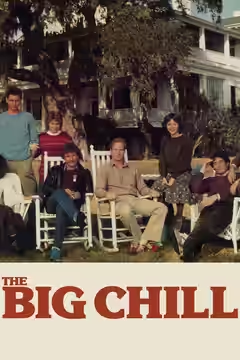
The Big Chill

1983 · Directed by Lawrence Kasdan · 1h 45m · MPA R

In a sentenceEveryone weeps, then washes up to the Temptations, and the dead friend never gets a line

ComedyDrama

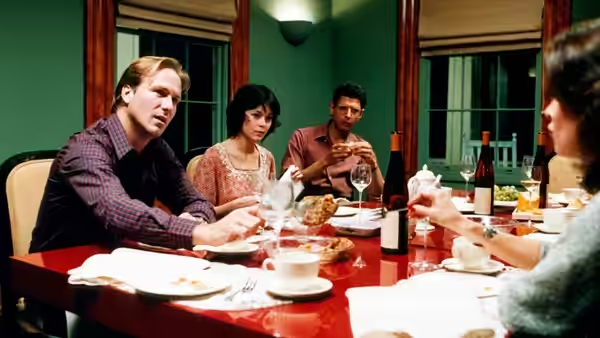
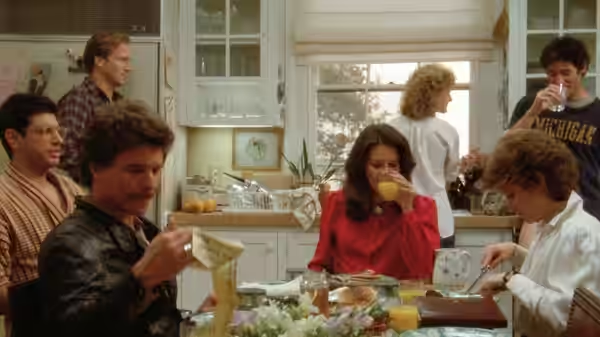
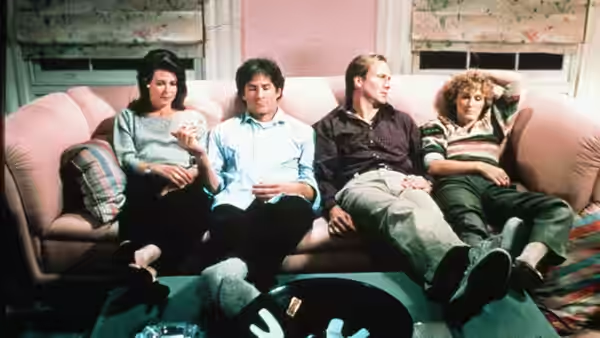
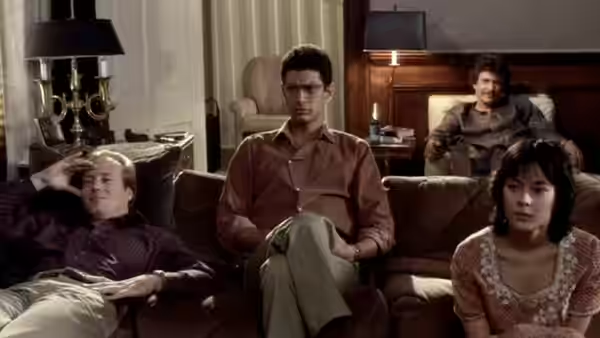
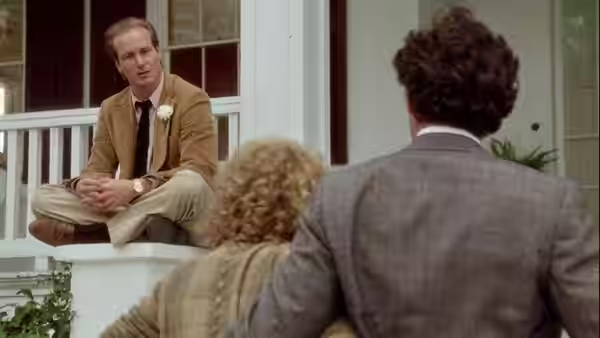
Alex, the brightest of a set of friends from university in Michigan in the 1960s, has killed himself. His funeral brings the gang to the country house of Harold Cooper (Kevin Kline) and his wife Sarah (Glenn Close): Sam Weber (Tom Berenger), star of a television cop show; Michael Gold (Jeff Goldblum), who writes for a celebrity magazine; Meg Jones (Mary Kay Place), a lawyer; Karen Bowens (JoBeth Williams) and her husband Richard (Don Galloway), who was never one of them; and Nick Carlton (William Hurt), who arrives in a Porsche with a case of pills. Alex’s young girlfriend Chloe (Meg Tilly) comes too. Sarah asks everyone to stay the weekend, and over meals, records and a football match on television they ask what became of them.

Plays from YouTube when you press play; nothing loads from them until then.

Fi1m review

Lawrence Kasdan’s reunion film is warmly acted, sharply written scene by scene and sounds wonderful, and it lets its eight mourners off far too lightly. Worth an evening for the ensemble; do not expect it to draw blood.

Lawrence Kasdan had written The Empire Strikes Back and Raiders of the Lost Ark and directed Body Heat when he made this, and The Big Chill is what he did with the credit those bought him: eight people in a house for a weekend after a funeral. The friends met at university in Michigan in the sixties and marched and meant it. Fifteen years on they sell running shoes, star in a television cop show and write for a celebrity magazine, and the one who never settled has cut his wrists. Kasdan and his co-writer Barbara Benedek want to know what became of the promises. They ask the question well and never make anyone answer it.

The cast is the pleasure. Kevin Kline’s Harold is the host who has made the most money and feels least bad about it, all easy hospitality with something tighter underneath. Glenn Close gives Sarah, his wife, the film’s one moment of raw grief, alone in the shower on the morning of the funeral, and plays it with her back to us. Jeff Goldblum’s Michael gets the best lines and knows it. William Hurt’s Nick, arriving in a Porsche with a case of pills, is the one performance that suggests real damage; Hurt keeps his voice so flat that when he raises it everyone else stops talking. Mary Kay Place, JoBeth Williams and Tom Berenger fill the table without a weak link, and Meg Tilly, as the dead man’s young girlfriend Chloe, is the only person in the house who was not at the university and does not pretend to miss it.

Ida Random’s house is big, wooden and full of books nobody is reading, and John Bailey lights it amber so it seems permanently at the end of a long dinner. He keeps the camera at table height and lets the group fill the frame, and the film is best whenever six of them are talking at once. Carol Littleton’s opening, cutting between each friend dressing for the funeral and a pair of hands dressing the corpse, to Marvin Gaye’s ‘I Heard It Through the Grapevine’, shows the method in four minutes: death, beautifully soundtracked. Bill Conti is credited with the score and we cannot recall a note of it, because the Motown does the work.

After dinner Harold puts on the Temptations’ ‘Ain’t Too Proud to Beg’ and the whole party washes up dancing, plates passing hand to hand, Kline doing something unforgivable with his hips. We grinned all the way through it and then felt faintly ashamed, because ten minutes earlier we had been at a graveside and the film had made grief go away with a record. It is a lovely trick. It is also the only one the film has, and it plays it whenever a conversation gets near anything painful.

What it will not do is hurt anybody. Alex, the dead friend, is never seen alive and barely described, so the suicide at the centre of the film is a blank onto which the survivors project whatever regret suits them. Nobody’s compromise is examined for longer than a wisecrack. Michael’s video interview with Nick, in which Nick ends up questioning himself, is the one scene that looks at a wrecked life and stays there, and it lasts about three minutes. An arrangement made on the last night, which we will not describe, treats a real loneliness as something a good friend can fix with a favour, and we did not believe it for a moment. Don Galloway’s Richard, the husband who was not at Michigan and says so at dinner, is the one person who tells them the sixties are over, and the film changes the subject.

John Sayles had made the same weekend three years earlier as Return of the Secaucus 7 (1980), on almost no money and with far more patience for letting his people be dull, petty and wrong. Kasdan’s version is better acted and better dressed; April Ferry puts enough money on everyone’s back that you can read the bank balances before anyone speaks. But Body Heat was willing to leave its people worse off than it found them. This one sends everyone home slightly improved.

It runs 105 minutes and carries a 15, and it is an easy evening in good company, which is all it wants to be. Watch it for the cast, the records and Hurt. Then, if you want to see the same weekend go badly, find the Sayles.

Critical consensus AI synthesised

60
Positive
7
Mixed
1
Negative
3

Most of the reviews come down in favour, and the praise gathers around the cast. Critics agree the ensemble is well acted, that Kasdan’s dialogue catches how old university friends in their thirties actually talk, and that the reunion banter and shared rituals feel true. Several find it sharp and melancholy at once, poignant without turning sticky. The Motown soundtrack is mentioned by nearly everyone, more often as a pleasure than a fault.

The disagreement is about depth, and it is wide. Even admirers say the film has all the right moves and no real payoff, preferring cosy nostalgia to a hard look at what these former activists once believed. The dissenters go further. The New Yorker calls it slick, over-controlled and shallow; Slant Magazine objects to pandering nostalgia and a fetishised soundtrack; The Hollywood Reporter finds the screenplay losing focus among the romantic liaisons. That same soundtrack, warmly received elsewhere, is for these critics the film’s most intrusive habit.

The Guardian
24 May 2023
80*

The critic finds the 1983 ensemble comedy-drama poignant without being cloying and praises its authentic depiction of friends reconnecting through shared rituals and banter after a loss.

Read the full review →
The Independent
18 March 2022 · Geoffrey Macnab
80*

The critic calls it one of the greatest films about friendship, highlighting its influential ensemble drama about university friends reuniting after a suicide and its mix of irony, comedy, and nostalgia for lost ideals.

Read the full review →
The AV Club
30 July 2014 · B · Mike D'Angelo
77

The review highlights the film's iconic musical nostalgia sequence as a standout but notes its glib complications and reliance on a cozy Motown soundtrack over deeper exploration of the characters' past ideals. It praises the ensemble cast while comparing it unfavorably in depth to John Sayles' similar film.

Read the full review →
Empire
1 January 2000 · William Thomas
75*

The critic notes its similarity to earlier indie efforts but praises Kasdan's hit version for its strong ensemble, witty Motown soundtrack, and skillful balance of social satire and sentiment in depicting 60s activists turned 80s yuppies.

Read the full review →
RogerEbert.com
30 September 1983 · Roger Ebert
70*

The film is a good, well-acted ensemble piece that observes how 1960s college friends have matured into their 30s with accurate dialogue and body language. It is a splendid technical exercise with all the right moves but lacks a real payoff or resolution.

Read the full review →
The New York Times
23 September 1983 · NYT Critic’s Pick · Vincent Canby
70*

Kasdan's sweet, sharp, melancholy comedy about 1960s activists reuniting at a funeral is unusually good mainstream filmmaking that works effectively on an intimate scale. It is a fancy variation on similar reunion stories with sharper dramatic tension around lost ideals.

Read the full review →

Cast

Awards

Academy Awards, 1984

Nominated
Best Picture
Nominated
Best Supporting Actress
Nominated
Best Writing, Original Screenplay

If you liked this, try…

Return of the Secaucus 7 poster

Return of the Secaucus 7

1980 · Sayles’s cheaper, shabbier version of the same weekend, with people allowed to be wrong

Husbands poster

Husbands

1970 · Cassavetes sends three men on a bender after a friend’s funeral; nobody dances

Diner poster84

Diner

1982 · Barry Levinson’s Baltimore boys talk round a table and dread growing up

Peter's Friends poster72

Peter's Friends

1992 · The British country-house reunion, with Branagh’s gang, more tears and worse jokes

Little White Lies poster

Little White Lies

2010 · French friends holiday while one lies in hospital; guilt served with rosé