A praised cast and sharp non sequiturs suggest a sitcom worth investigating, though its comic shape remains uncertain. Our provisional verdict on The Kennedys is a cautious recommendation for comedy enthusiasts prepared to forgive some untidiness.
On the limited published critical account, The Kennedys merits a cautious look from sitcom enthusiasts, not an unqualified recommendation. Emma Kennedy created the comedy and Christine Gernon directs, with the strongest reported assets being the cast and the sharp non sequiturs. The reservation is that the programme does not yet seem fully formed. That supports a provisional score of 60: enough promise to interest us, with a substantial question still hanging over how well the whole thing works.
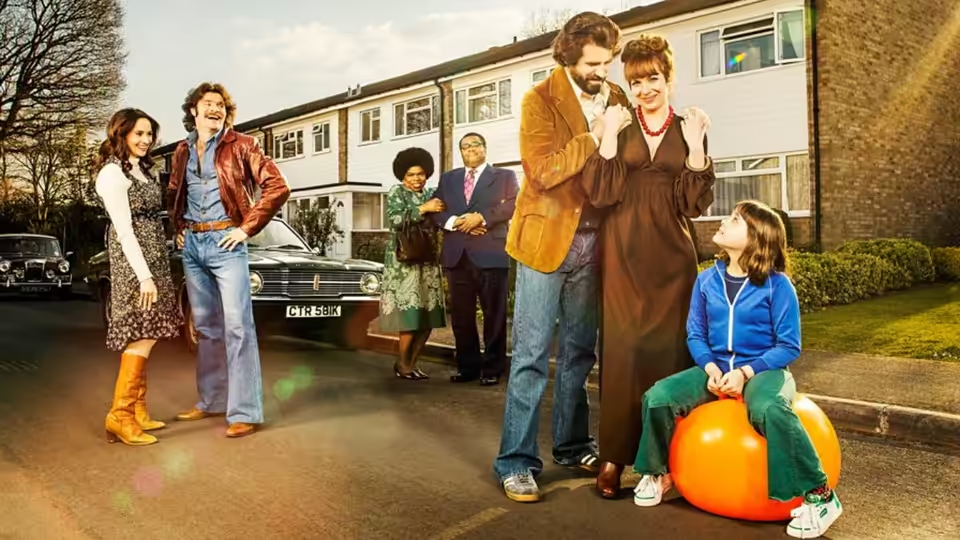
Lucy Hutchinson plays Emma Kennedy, with Katherine Parkinson as Brenda Kennedy and Daniel Renton Skinner as Tony Kennedy. This is the central credited trio, and the praise for the ensemble is the clearest reason to investigate the programme. Comedy depends on performers making us want to spend time with the people they play, especially when the writing is still finding its feet. A strong ensemble can make that settling-in period tolerable. It cannot make uncertainty about the programme’s comic direction disappear.
The praise for sharp non sequiturs is more useful than a vague assurance that there are laughs. A sudden change of subject can expose a character’s odd priorities without a speech explaining them, and it can interrupt the expected rhythm of a scene. We find that prospect appealing, because a sitcom becomes tiring when every reply can be guessed in advance. Enjoying those individual surprises, however, does not necessarily mean finding the surrounding comedy consistently satisfying.
Christine Gernon’s direction and Emma Kennedy’s creation have to support more than the next odd remark: a series also needs reasons for us to return to the same characters. The critical assessment praises the performers more confidently than the programme as a whole. That is a recognisable sitcom problem, and a consequential one. Affection for a cast may keep us watching while the comedy settles, but it should not oblige us to do all the work of deciding what sort of programme this is.
The first series has six episodes running 30 minutes each, which makes the commitment fairly modest. Short episodes do not, however, exempt a comedy from having to sustain itself between its best lines. In this format, the question is how readily a scene can turn an amusing remark into the next reason to keep watching. The reported combination of sharp jokes and uncertain focus suggests a programme worth sampling before committing to the whole run, rather than one to queue up on faith.
We would therefore keep the recommendation narrow. The cast and the unexpected verbal turns are sound reasons for a comedy enthusiast to be curious, while the lack of a fully convincing comic shape is a reason to temper expectations. This remains an assessment of the limited critical account, not a claim to an independent viewing or to consensus among critics. Try it for the performers if an unsettled sitcom does not put you off.