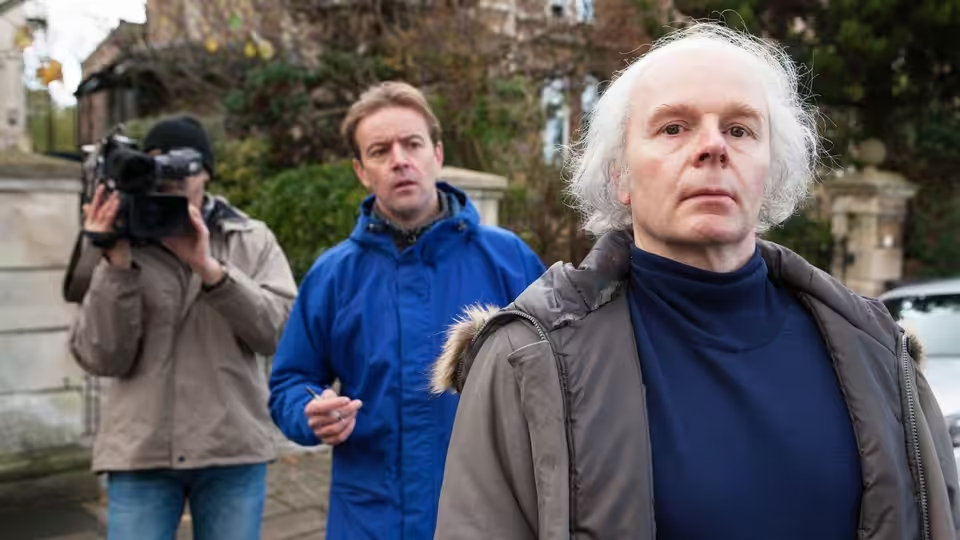
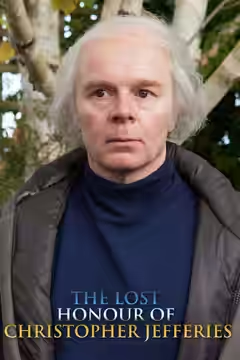
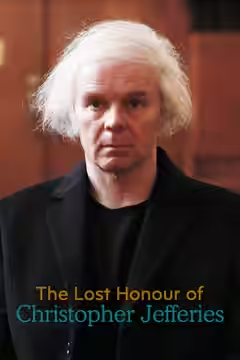
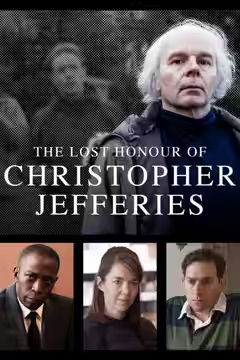
Jason Watkins gives this humane drama a difficult, distinctive centre. We recommend it for a performance that resists easy sympathy, with a caveat: the second episode explains more than it needs to.
The Lost Honour of Christopher Jefferies is a humane, persuasive drama whose strongest decision is to let its central figure remain difficult to categorise. Roger Michell directs and Peter Morgan writes, but Jason Watkins gives the programme its reason to be watched. We recommend it, particularly for his refusal to make Jefferies conveniently agreeable. Across two episodes, the writing becomes more insistent about its lessons, and that costs it some of its early force.
Watkins understands the danger of playing someone wronged as someone without faults or peculiarities. That approach would make sympathy easy, while quietly accepting that only agreeable people deserve fair treatment. His Jefferies retains an individuality that the audience has to accommodate rather than congratulate itself for recognising. We found the public humiliation upsetting because the performance keeps a particular person before us, someone whose dignity does not depend on becoming more familiar or easier to like.
Morgan’s strongest writing supports that choice. There is no need to smooth Jefferies into a representative decent man before allowing us to care about what happens to him. The programme asks us to examine the readiness with which unusual behaviour can become a reason for adverse judgement. That is a substantial subject for a crime drama, and the emphasis on public disgrace gives it something more useful to do than merely arrange information for an audience awaiting an answer.
The production is elegant, although elegance is not what makes it worth the time. Mike Eley is the cinematographer, Helen Scott the production designer, Kristina Hetherington the editor and Dan Jones the composer; the finished programme gives Watkins room to hold our attention. Its strongest achievement is the prominence of the person being portrayed, rather than any competing claim for attention from the presentation. We would be reluctant to separate that effect into individual technical triumphs: the performance and the surrounding restraint work together.
The first episode is the more compelling of the two because the treatment of Jefferies supplies enough reason for anger without much assistance. The second becomes more didactic, and Morgan’s determination to make the injustice understood begins to limit the drama. Once the programme has made us attend to this man, further explanation can feel like a lack of confidence in what Watkins has already communicated. The subject deserves seriousness, but seriousness does not require every implication to be underlined.
Within crime television, the decision to concentrate on someone’s damaged standing is valuable in itself. Michell and Morgan are interested in how a person is regarded, and Watkins prevents that concern from becoming merely an occasion for worthy statements. The weakness is that the writing does not always trust the distinctive man it has put before us to carry its meaning. Watch it for Watkins, and allow for a second episode that is rather more anxious to ensure we have understood.