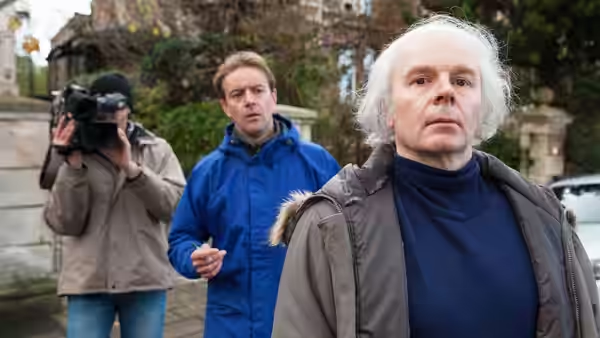
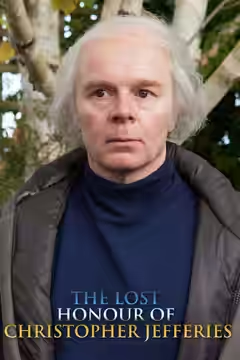
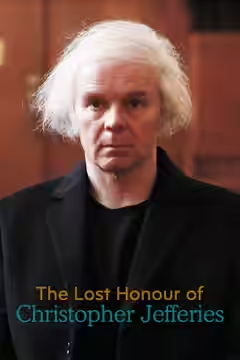
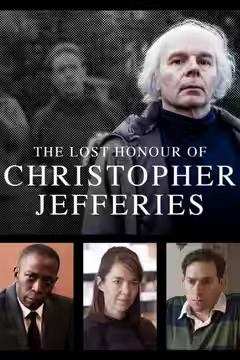
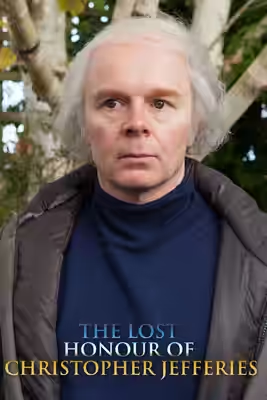
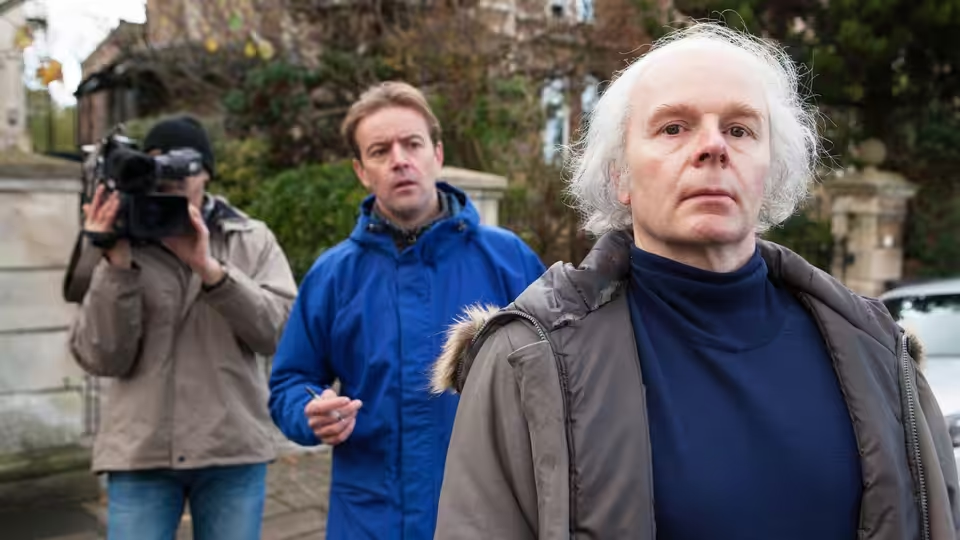
Christopher Jefferies (Jason Watkins) walks past a cameraman as a man in blue follows
Series review

The Lost Honour of Christopher Jefferies

2014 · Series · 57m

In a sentenceBeing an awkward man should not require a defence

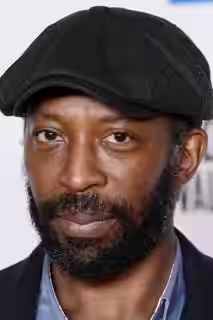
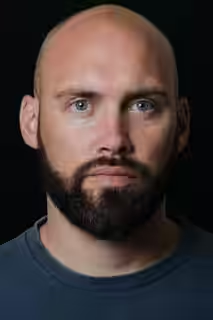
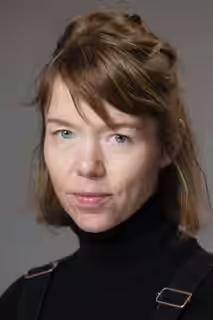
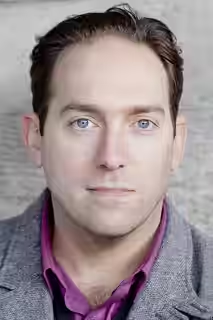
Christopher Jefferies (Jason Watkins) becomes the subject of public disgrace, his character scrutinised and his individuality treated as grounds for suspicion. The drama follows the damage done when a person becomes a public story and other people decide what that story means. Its cast also includes Nathalie Armin as Melissa Chapman, Shaun Parkes as Paul Okebu and Anna Maxwell Martin as Janine. Across two episodes, the programme keeps Jefferies at its centre, examining the treatment of a man who does not fit comfortably into other people’s expectations.

Plays from YouTube when you press play; nothing loads from them until then.

Fi1m review

Jason Watkins gives this humane drama a difficult, distinctive centre. We recommend it for a performance that resists easy sympathy, with a caveat: the second episode explains more than it needs to.

The Lost Honour of Christopher Jefferies is a humane, persuasive drama whose strongest decision is to let its central figure remain difficult to categorise. Roger Michell directs and Peter Morgan writes, but Jason Watkins gives the programme its reason to be watched. We recommend it, particularly for his refusal to make Jefferies conveniently agreeable. Across two episodes, the writing becomes more insistent about its lessons, and that costs it some of its early force.

Watkins understands the danger of playing someone wronged as someone without faults or peculiarities. That approach would make sympathy easy, while quietly accepting that only agreeable people deserve fair treatment. His Jefferies retains an individuality that the audience has to accommodate rather than congratulate itself for recognising. We found the public humiliation upsetting because the performance keeps a particular person before us, someone whose dignity does not depend on becoming more familiar or easier to like.

Morgan’s strongest writing supports that choice. There is no need to smooth Jefferies into a representative decent man before allowing us to care about what happens to him. The programme asks us to examine the readiness with which unusual behaviour can become a reason for adverse judgement. That is a substantial subject for a crime drama, and the emphasis on public disgrace gives it something more useful to do than merely arrange information for an audience awaiting an answer.

The production is elegant, although elegance is not what makes it worth the time. Mike Eley is the cinematographer, Helen Scott the production designer, Kristina Hetherington the editor and Dan Jones the composer; the finished programme gives Watkins room to hold our attention. Its strongest achievement is the prominence of the person being portrayed, rather than any competing claim for attention from the presentation. We would be reluctant to separate that effect into individual technical triumphs: the performance and the surrounding restraint work together.

The first episode is the more compelling of the two because the treatment of Jefferies supplies enough reason for anger without much assistance. The second becomes more didactic, and Morgan’s determination to make the injustice understood begins to limit the drama. Once the programme has made us attend to this man, further explanation can feel like a lack of confidence in what Watkins has already communicated. The subject deserves seriousness, but seriousness does not require every implication to be underlined.

Within crime television, the decision to concentrate on someone’s damaged standing is valuable in itself. Michell and Morgan are interested in how a person is regarded, and Watkins prevents that concern from becoming merely an occasion for worthy statements. The weakness is that the writing does not always trust the distinctive man it has put before us to carry its meaning. Watch it for Watkins, and allow for a second episode that is rather more anxious to ensure we have understood.

Critical consensus AI synthesised

2 of 6
Positive
2
Mixed
0
Negative
0
The Guardian
14 December 2014 · Euan Ferguson
90*

Ferguson praises the drama as a humane and compelling restoration of Jefferies’s reputation. He singles out Jason Watkins’s brilliant portrayal and Peter Morgan’s refusal to simplify Jefferies into a maligned everyman.

Read the full review →
Evening Standard
12 December 2014 · Alastair McKay
70*

McKay finds the drama elegantly made and an effective account of the public disgrace inflicted on Christopher Jefferies. He praises Jason Watkins’s portrayal and singles out the first episode, while finding the second more didactic.

Read the full review →

Straight answers AI written, from our review

Is The Lost Honour of Christopher Jefferies worth watching?
The Lost Honour of Christopher Jefferies is worth watching for Jason Watkins’s distinctive central performance, and we score it 81 out of 100. We recommend this humane two-episode drama to anyone interested in the damage caused by public suspicion, with one reservation: the second episode explains lessons the first makes clear enough.
How long is The Lost Honour of Christopher Jefferies, and what is it rated?
The Lost Honour of Christopher Jefferies has episodes of about 57m. It is a drama and crime series.
Where can I watch The Lost Honour of Christopher Jefferies in Malaysia?
The Lost Honour of Christopher Jefferies is not on any streaming or rental service in Malaysia at the moment. It is available in 34 other countries; change your country at the top of the page to see where. Availability is checked daily.
How violent or frightening is The Lost Honour of Christopher Jefferies, and is it suitable for children?
The Lost Honour of Christopher Jefferies is upsetting in its portrayal of public humiliation, but no UK or US certificate is supplied to establish age suitability. We find the treatment of Jefferies distressing because Watkins makes his damaged dignity matter; that emotional cruelty warrants caution for children, though we cannot give a firm age recommendation or assess its violence from the information available.
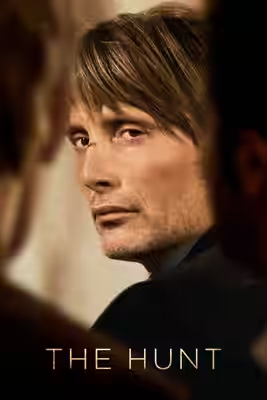
How does The Lost Honour of Christopher Jefferies compare to The Hunt?
The Lost Honour of Christopher Jefferies is the better choice for a humane character portrait, while we recommend The Hunt for a more frightening account of suspicion becoming permission to mistreat someone. Watkins and Mads Mikkelsen make the personal damage convincing in both. Each script labours its point: Jefferies adds explanation, while The Hunt keeps adding punishment after the harm is clear.
What should I watch after The Lost Honour of Christopher Jefferies?
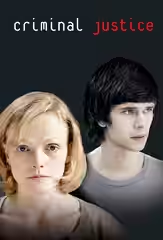
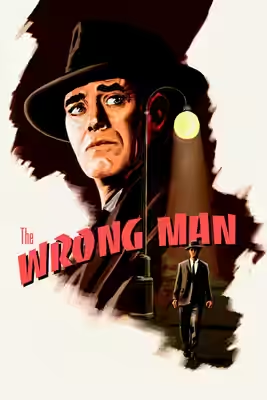
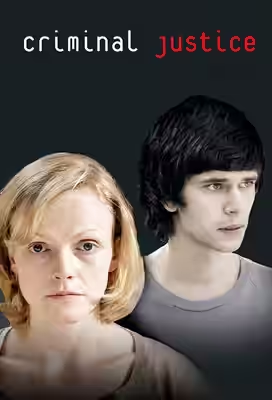
After The Lost Honour of Christopher Jefferies, try The Hunt (2012, Fi1m 82): Another unsettling account of suspicion becoming permission to mistreat a person. Then The Wrong Man (1956, Fi1m 83): Hitchcock gives wrongful suspicion a patient, painfully ordinary human scale; and Criminal Justice (2008, Fi1m 85): For another British drama attentive to the individual beneath the accusation.

Cast

If you liked this, try…

  1. The Hunt (2012, Fi1m 82)Another unsettling account of suspicion becoming permission to mistreat a person.

  2. The Wrong Man (1956, Fi1m 83)Hitchcock gives wrongful suspicion a patient, painfully ordinary human scale.

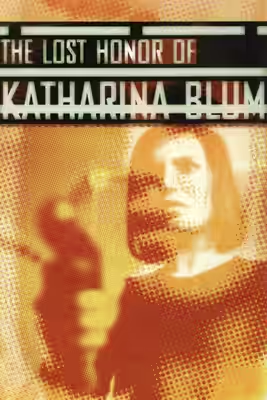
  3. The Lost Honour of Katharina Blum (1975) · not reviewed yetA sharper, angrier examination of public judgement and journalistic intrusion.

  4. Criminal Justice (2008, Fi1m 85)For another British drama attentive to the individual beneath the accusation.

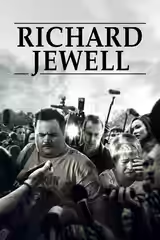
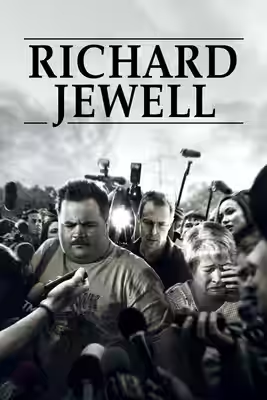
  5. Richard Jewell (2019) · not reviewed yetPublic suspicion again overwhelms a man insufficiently protected by being innocent.

Free account

Know what to watch tonight

Two lists that know where things are streaming, collections you can share, your own score beside ours, and Discover that remembers what you have seen.

  • Want to see, sorted by what is streaming now
  • Seen, with your score out of ten
  • No adverts, ever