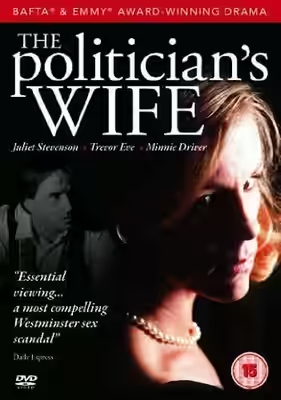
Paula Milne’s three-part drama about a betrayed wife who takes her husband’s career apart is sharp, well acted and still uncomfortably recognisable. Juliet Stevenson is the reason to watch; the plotting, once it settles into its groove, is a little too sure of itself.
Paula Milne’s The Politician’s Wife begins where most political scandals end, with the apology on the doorstep and the wife at the minister’s side, and asks what the wife was thinking. The answer, over three episodes first broadcast on 15 May 1995, is that she was thinking very hard indeed. It is a revenge story told in the register of a drawing-room drama, and for most of its 185 minutes that is a fine thing to be.
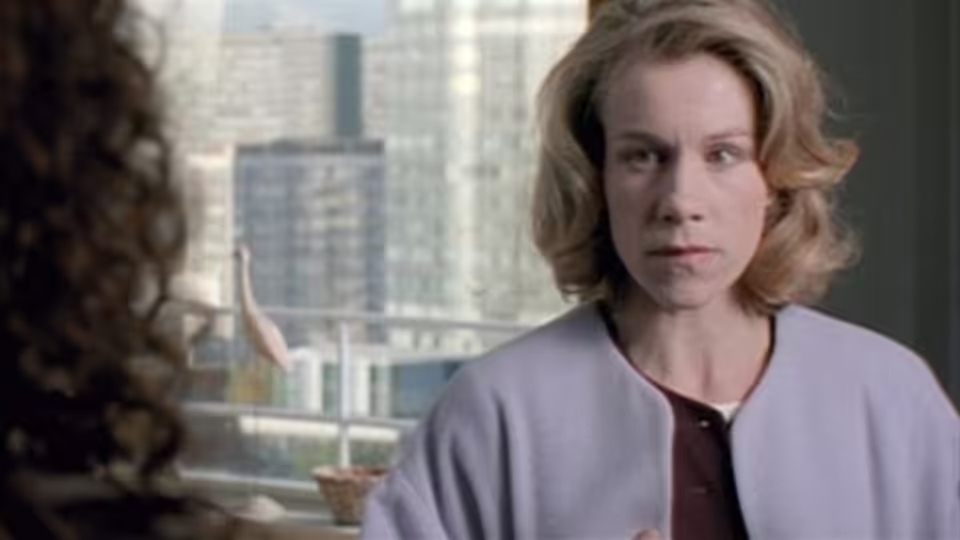
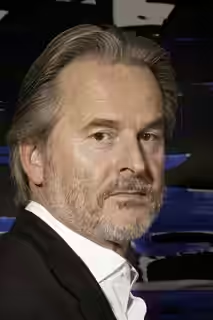
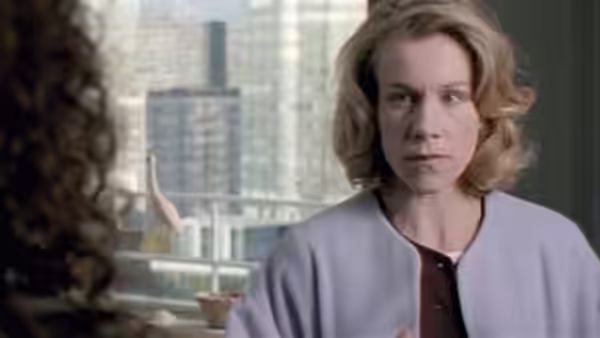
The set-up is done with real economy. Trevor Eve’s Duncan Matlock is caught, confesses to the smallest version of the truth, and waits for his wife to do what wives in his party do. Juliet Stevenson’s Flora does it. She stands in the right place and says the right words, and Stevenson lets us see, in a face that barely moves, that something has gone out behind the eyes and something colder has come in. Graham Theakston directs these early scenes without fuss: a hallway, a telephone, the children on the stairs, and a woman learning how much of her life was a performance she had not been told she was giving.
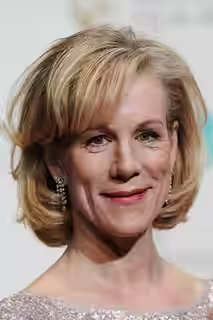
Stevenson is the whole case for the series. She plays Flora as a competent woman who has spent years being competent on someone else’s behalf, and who discovers that the same skills, turned the other way, are weapons. There is no shouting. She listens, and she remembers, and she makes a note. The pleasure of the middle episode is watching her work a room full of men who have never once thought of her as a participant. We found ourselves rooting for her with an enthusiasm that surprised us, and then, as the series went on, slightly uneasy about how much we were enjoying it, because Milne is careful to show that Flora’s method costs other people too.
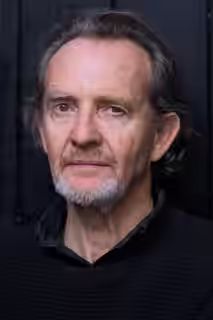
Eve has the less showy job and does it well. His Duncan is not a monster but a man of ordinary vanity who believes, sincerely, that he is the injured party, and Eve plays the self-pity straight enough that it stings. Minnie Driver gives Jennifer Caird a hard, bright practicality that refuses to let her be a victim or a vamp; she is the one person in the piece who knows exactly what she is worth to everybody and says so. Ian Bannen’s Sir Donald Frazier speaks in a rumble that suggests he has buried a dozen of these stories before breakfast. Anton Lesser, as Mark Hollister, does his usual quiet work of making a soft voice sound dangerous.
The trouble, such as it is, comes with the plotting. Once Flora has decided what she is going to do, the series knows it too, and so do we. Milne arranges her reversals with care, but by the third episode the pieces move where the design needs them and the men stay obligingly stupid. Alan Jones cuts briskly between Westminster and the home, so that each public humiliation lands against a private one, and the rhythm is good; it is also, after a while, predictable. The question of whether Flora is becoming the thing she despises is raised and then set aside in favour of the next move.
It looks like what it is, a British television drama of the mid 1990s: muted interiors, grey London light, a lot of good coats. That is not a complaint. The plainness suits a story in which the most violent act is a telephone call made at the right moment to the right person.
Against the political dramas it sits beside, this one is smaller and more personal, and better for it. It has no interest in policy and every interest in what a marriage looks like from the inside when the public version has been printed on the front page. Watch it for Stevenson, over two or three evenings rather than one, and expect to know where it is going by the second hour. It carries a 15 certificate, mostly for language and for one or two scenes that are franker about the affair than the doorstep version ever was.