Robert King and Michelle King’s legal drama starts as a tidy network procedural and, without ever dropping the case of the week, turns into a long, cool study of a woman deciding how ruthless to be. Margulies holds it together; the last two seasons wobble.
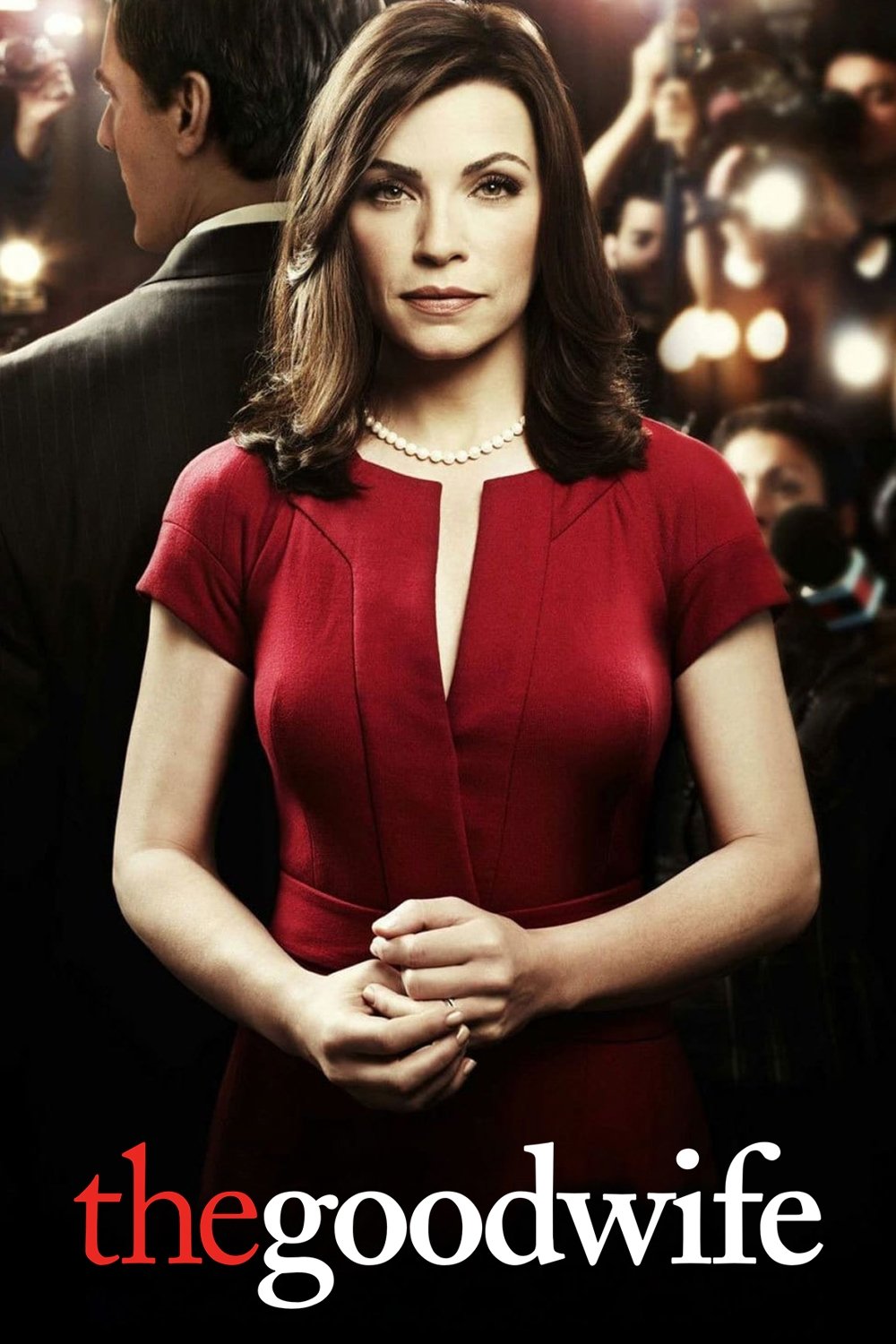
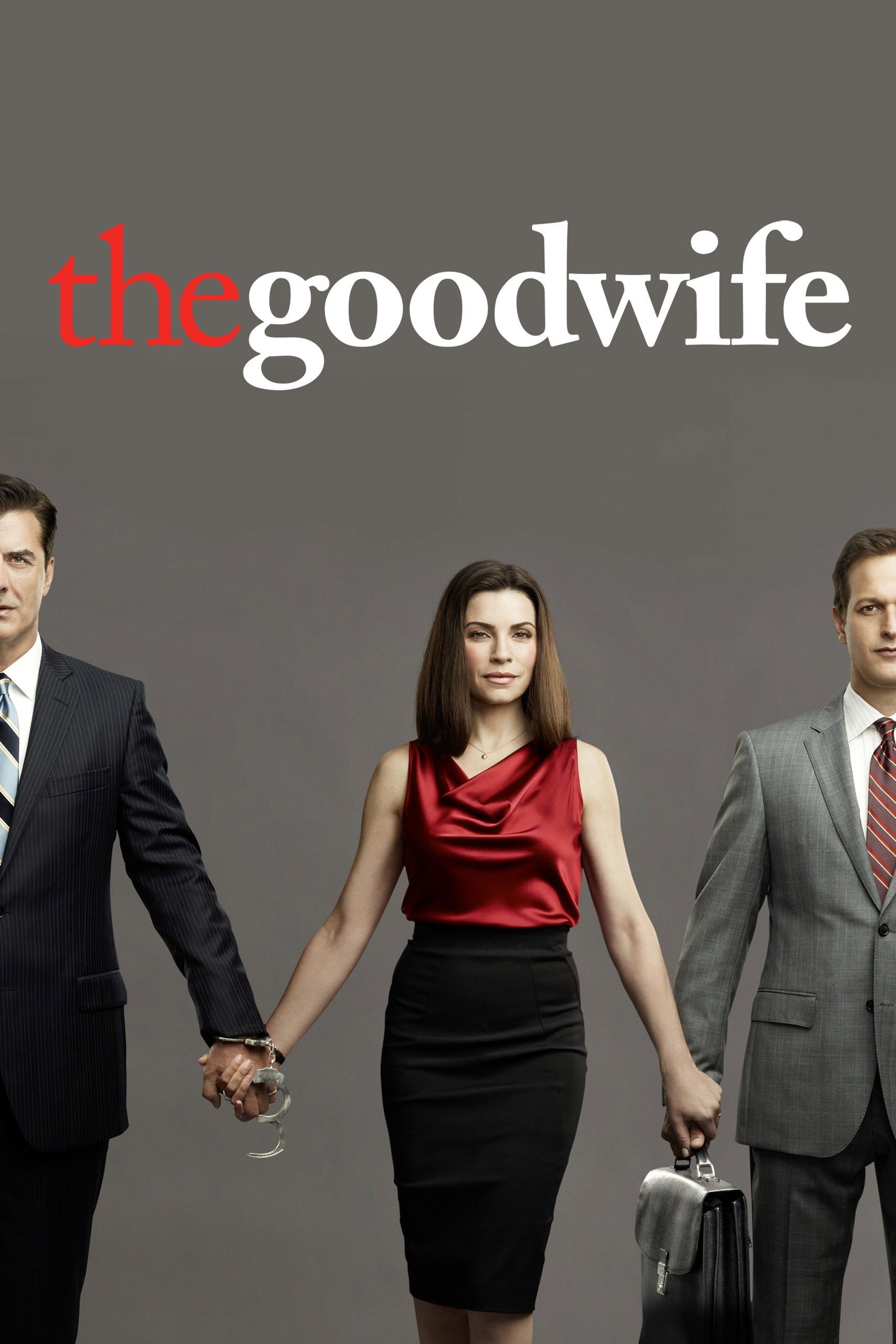
It begins with a press conference. Peter Florrick, the top prosecutor in Cook County, is resigning over prostitutes and misused money, and his wife stands beside him in a grey suit and says nothing. Robert King and Michelle King, who created the programme, keep the camera on Alicia Florrick (Julianna Margulies) rather than on the man speaking; she is looking at a loose thread on his sleeve. In the corridor afterwards she slaps him, once. Some months later he is in prison and she is a first-year associate at a Chicago law firm, past forty, handed a pro bono case nobody wants.
The shape is a familiar one: a case each week, tried inside 43 minutes, with a longer story about a marriage running underneath. What the Kings did with it across seven seasons and 156 episodes is the reason to watch. The cases are good, but the programme is about a woman who has been humiliated in public working out, week by week, how much of her decency she is prepared to spend. We recommend it to anyone with patience for a long series. The last two seasons need more of that patience than the first five.
Margulies plays Alicia on the intake of breath. She listens, her face barely moves, and then she says something precise. In the pilot a partner reminds her she has been out of the law for thirteen years, and her reply is a slight lift of the chin. We felt the slap in the corridor in our own hand, because for the previous three minutes Margulies had shown us a woman holding herself completely still, and the release was ours as much as hers.
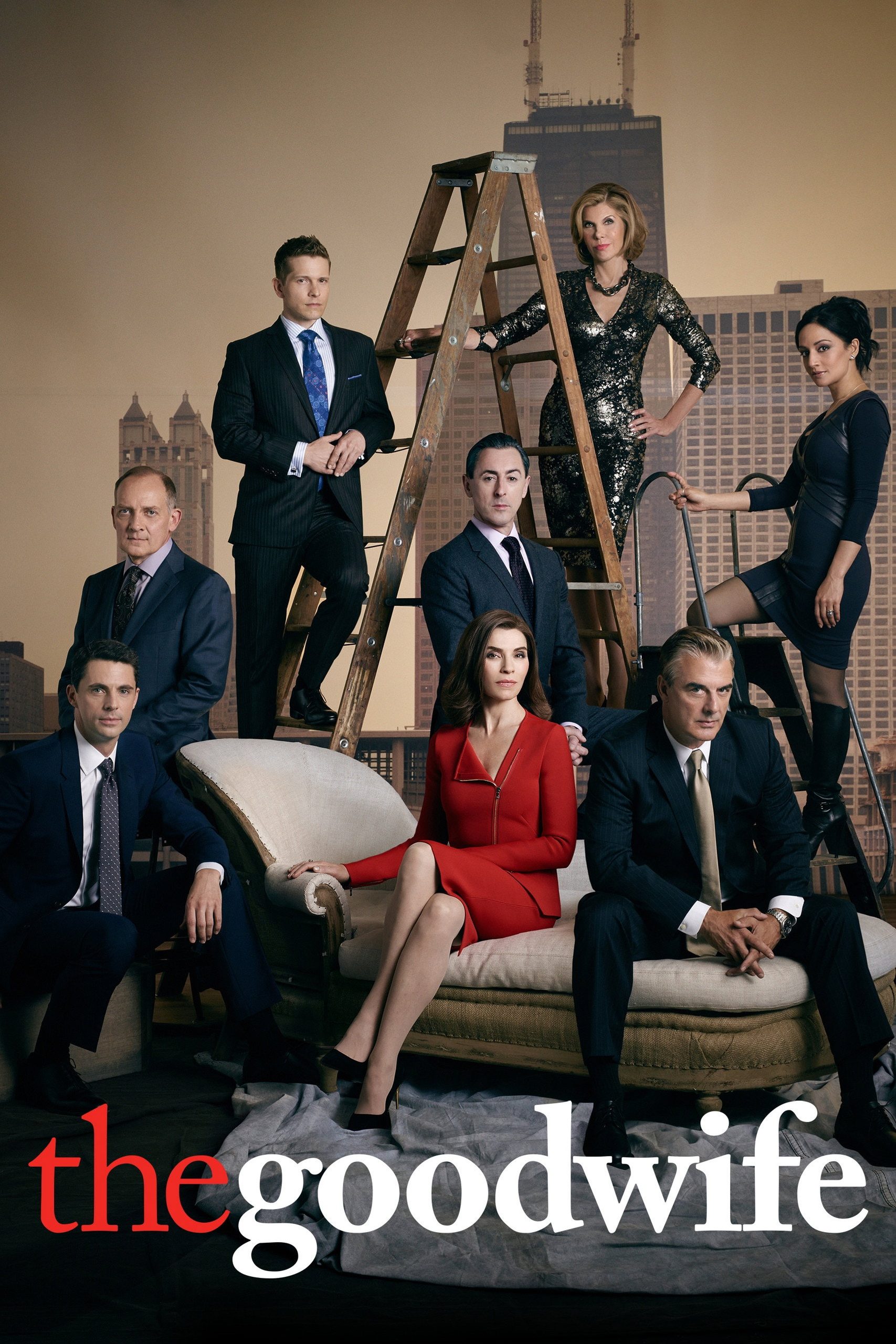
The firm around her is well cast. Christine Baranski’s Diane Lockhart runs the place in tailored jackets and large brooches, and Daniel Lawson’s costumes tell you who holds power in a room before anyone speaks; Alicia’s suits start dark and plain and get sharper as she does. Josh Charles’s Will Gardner is the law-school friend who hired her and would like it to be more than that. Matt Czuchry’s Cary Agos competes with her for one permanent job, and the writing is fair to him, which it did not have to be. Archie Panjabi’s Kalinda Sharma, the firm’s investigator, walks in wearing boots and a leather jacket with a small notebook, and for several seasons she is the most interesting person on screen.
Fred Murphy, Tim Guinness and M. David Mullen shoot the offices as glass boxes, everyone visible to everyone, and the courtrooms in warm wood and low light, so a cut from one to the other is a cut from being watched to performing. Matthew Budgeon and Stephen Hendrickson give the partners views of the city and the associates a corridor. David Buckley’s theme is quick strings over a ticking pulse, the sound of someone late for court. Editors including Paul Karasick and Dody Dorn cut the cross-examinations as a line, a face, a line, and they hold up on a second viewing.
The best idea was to let the politics leak in. Alan Cumming arrives as Eli Gold, a campaign strategist with a phone in each hand, and the programme improves the moment he does; his scenes with Margulies, two people who dislike and need each other, are among the best written in it. The cases keep finding subjects most television had not yet noticed, search engines, wiretaps, what a phone company knows about you, argued before a rotating bench of judges with tics. The judges are sometimes too cute; the arguments are real.
What does not work is what rarely works in an American network drama of 22 episodes a year. There are weeks when the case is filler and the marriage is parked. The cast turns over in the last two seasons, and we will not say how or why; Cush Jumbo’s Lucca Quinn, Matthew Goode’s Finn Polmar and Jeffrey Dean Morgan’s Jason Crouse are all good and none is given quite enough to do. By the seventh season we were bored, and then annoyed at being bored, because Margulies and Baranski were still doing the work and the scripts were not meeting them.
It is a 12 certificate, and the sex is discussed more than shown, which suits a programme in which everyone is always at work. Watch a season at a time with a gap between episodes; it was built for the week’s wait and it is better with one. Alicia pours herself a glass of red wine at the end of most days. It is rarely her husband she is toasting.