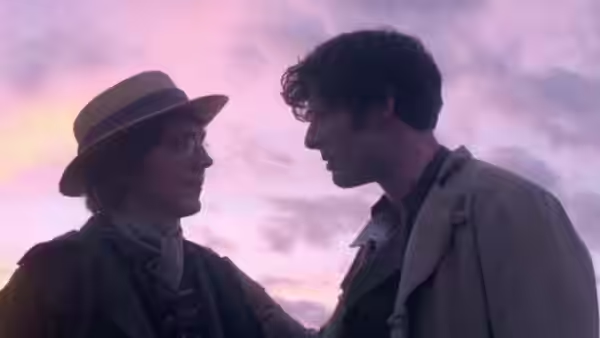
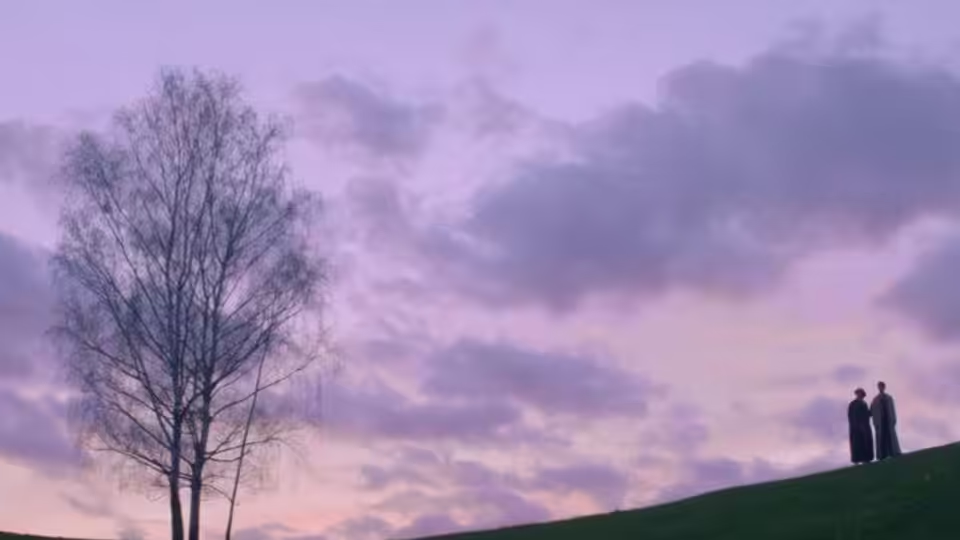
Two men stand together on a grassy ridge beneath a cloudy evening sky
Series review

War and Peace

2016 · Series · 45m · MTRCB G

In a sentenceWe spent rather too much of the conversation admiring the furniture

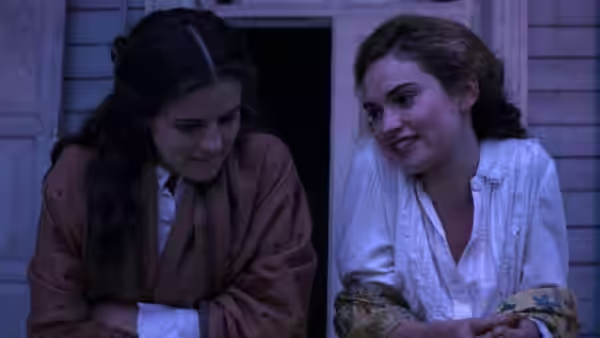
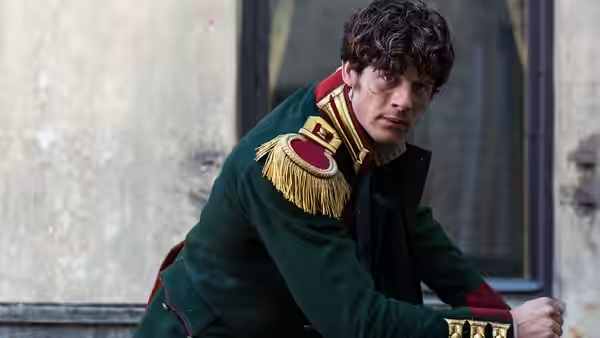
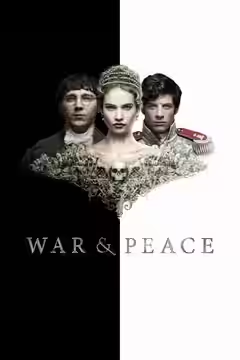
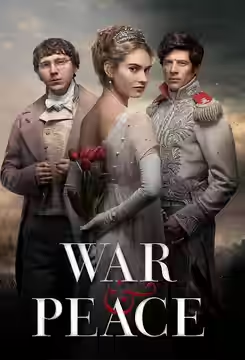
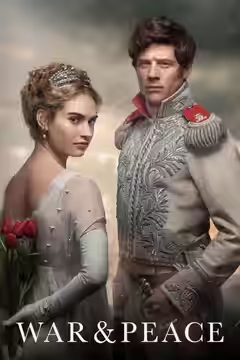
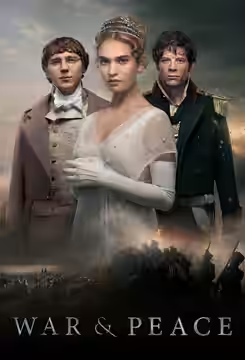
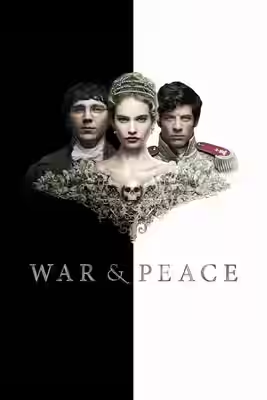
Pierre Bezukhov (Paul Dano), Natasha Rostova (Lily James) and Andrei Bolkonsky (James Norton) belong to a social circle whose private affairs unfold alongside war. In the drawing rooms, conversations bring relationships and competing interests into view. Anna Pavlovna Scherer (Gillian Anderson), Marya Bolkonskaya (Jessie Buckley) and Sonya Rostova (Aisling Loftus) are among the figures in this circle, each with private concerns. The series introduces these people through conversations and family relationships, with battles forming the other part of its story.

Plays from YouTube when you press play; nothing loads from them until then.

Fi1m review

Tom Harper’s War and Peace offers fine acting, grand rooms and clearly staged battles. Andrew Davies’s adaptation is worth trying for the performances, but thin character development and slow conversations keep it from becoming consistently absorbing.

Tom Harper’s War and Peace is an uneven historical drama with enough good acting to justify the patience it asks for. Across six episodes, Andrew Davies gets personal disputes under way efficiently, but leaves too many of the people involved only partly understood. We usually know what a scene is about without knowing enough about the person at its centre to feel strongly about it. That is a substantial problem for a series which asks us to care about so many lives.

Paul Dano, Lily James and James Norton are good reasons to keep going. Their performances make Pierre Bezukhov, Natasha Rostova and Andrei Bolkonsky engaging company even when the writing has not given them much room to develop. The limitations are clearest when an exchange ends just as it seems to be getting beyond the business of moving the story on. The cast makes us want to spend longer with these people, which is both a pleasure and a reminder of what the adaptation has left out.

The sharper social encounters are an exception: competing interests give those scenes a clear purpose, and the people involved stop seeming so carefully introduced. Andrew Davies is good at finding the indignity in a supposedly dignified gathering. We grew impatient when those exchanges gave way to drawing-room conversations that told us little more about the people speaking.

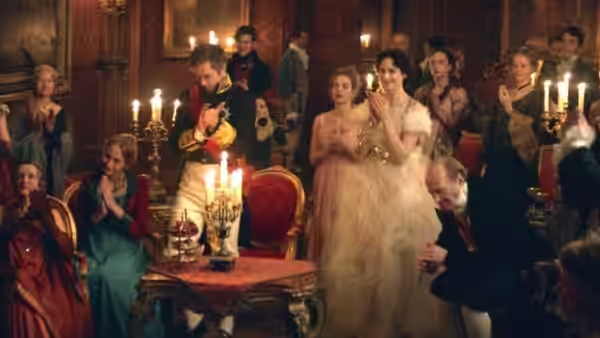
George Steel’s cinematography and Chris Roope’s production design make those surroundings considerable attractions. The lavish rooms establish a persuasive setting for the social encounters, although they sometimes hold our attention longer than the conversation does. Tom Harper directs the battles with a clarity and purpose that the drawing-room scenes too often lack. There is something to follow in the fighting, and a sense that each movement matters. Back indoors, another conversation can feel like an obligation to get through before the series is allowed to move again.

Mark Eckersley and Steven Worsley have the awkward task of keeping this crowded adaptation moving while leaving room for its characters. The editing cannot quite reconcile those needs: some encounters feel curtailed, while others linger without adding much to our understanding. Martin Phipps’s music supplies emotional weight, but there are passages when it seems to be doing work the dialogue should already have done. That encouragement is sometimes more noticeable than anything the characters are saying.

The larger weakness is the thin sense of history beyond the immediate disputes. Historical drama need not stop for a lecture, but it does need to make the pressures on private decisions intelligible. The battles are clear enough, but the wider political circumstances remain indistinct. This leaves the relationships carrying more of the drama, and the hurried character development means they are not always strong enough to sustain it.

We would recommend it chiefly to viewers who already have an appetite for period drama and are prepared to forgive a slow conversation. There are performances here worth giving time to, though the series is not consistently good at rewarding that patience. Try the opening before committing to the whole company. If the drawing rooms already feel airless, their handsome furnishings are unlikely to change your mind.

Critical consensus AI synthesised

58
Positive
1
Mixed
1
Negative
2
Radio Times
8 December 2017 · Ben Dowell
95*

Dowell describes the finale as a flawless and powerful conclusion. He praises the way it settles the fates of the heroes, heroines and villains.

Read the full review →
The Guardian
4 January 2016 · Stuart Jeffries
65*

Jeffries finds the adaptation compellingly silly and engaging, though overly English. He especially praises the deathbed dispute and the disturbing violence of Prince Andrei’s treatment of his wife.

Read the full review →
The Hollywood Reporter
18 January 2016 · Daniel Fienberg
40*

Fienberg finds the miniseries entertaining but too limited to convey the novel’s depth, concluding that the book is bigger and better. He praises the cast and lavish production, while criticizing the thin character development and lack of historical context.

Read the full review →
Variety
15 January 2016 · Maureen Ryan
30*

Ryan finds the miniseries handsome but plodding, with little momentum or memorable characterization. She praises its lavish settings and well-choreographed battles, while faulting the drawing-room scenes for their tedium.

Read the full review →

Straight answers AI written, from our review

Is War and Peace worth watching?
War and Peace is worth trying for viewers with an appetite for period drama and patience for slow conversations; we score it 65 out of 100. Paul Dano, Lily James and James Norton make engaging company, and the battles are clearly staged, but thin character development keeps the six episodes from being consistently absorbing.
How long is War and Peace, and what is it rated?
War and Peace has episodes of about 45m and is rated G by the MTRCB in the Philippines. It is a drama series.
Where can I watch War and Peace in the Philippines?
War and Peace is not on any streaming or rental service in the Philippines at the moment. It is available in 7 other countries; change your country at the top of the page to see where. Availability is checked daily.
How does War and Peace compare to The Age of Innocence?
War and Peace offers clearly staged battles alongside drawing-room disputes, but we recommend The Age of Innocence more strongly for its persuasive romance and tense social encounters. Both give us fine performances and handsome surroundings; the difference is that social rules make polite conversation feel dangerous in The Age of Innocence, while too many exchanges in War and Peace tell us little about the people speaking.
What should I watch after War and Peace?
After War and Peace, try The Age of Innocence (1993, Fi1m 86): For social rules that make every polite conversation feel dangerous. Then The Leopard (1963, Fi1m 88): The grand rooms remain, but history presses harder on their occupants; and A Royal Affair (2012, Fi1m 70): Court politics and private desire share the same rooms, with sharper consequences.

Cast

If you liked this, try…

  1. The Age of Innocence (1993, Fi1m 86)For social rules that make every polite conversation feel dangerous.

  2. The Leopard (1963, Fi1m 88)The grand rooms remain, but history presses harder on their occupants.

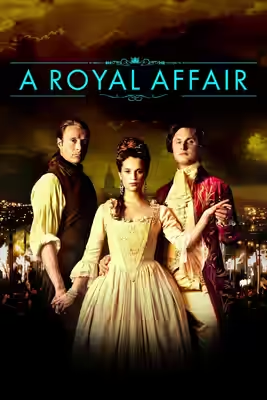
  3. A Royal Affair (2012, Fi1m 70)Court politics and private desire share the same rooms, with sharper consequences.

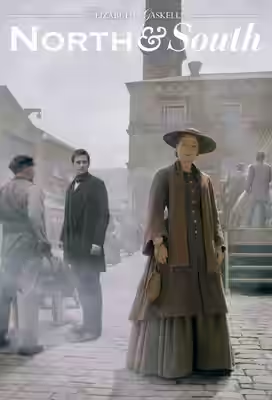
  4. North & South (2004, Fi1m 83)Another period series whose social pressures give its relationships more substance.

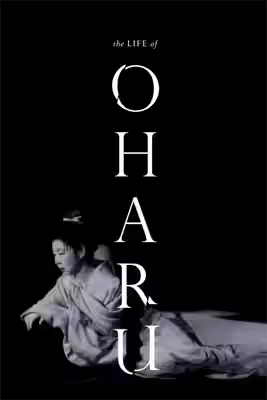
  5. The Life of Oharu (1952) · not reviewed yetA harsher account of how social rank narrows a woman’s choices.

Free account

Know what to watch tonight

Two lists that know where things are streaming, collections you can share, your own score beside ours, and Discover that remembers what you have seen.

  • Want to see, sorted by what is streaming now
  • Seen, with your score out of ten
  • No adverts, ever