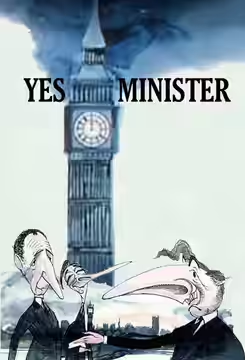
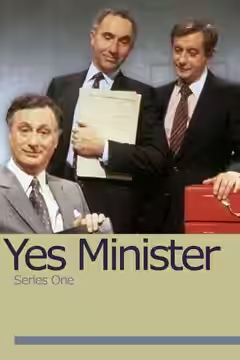
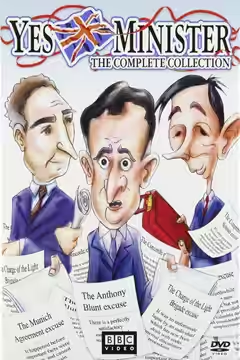
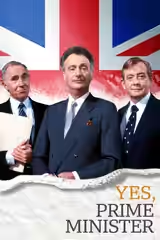
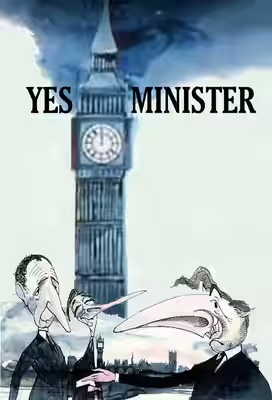
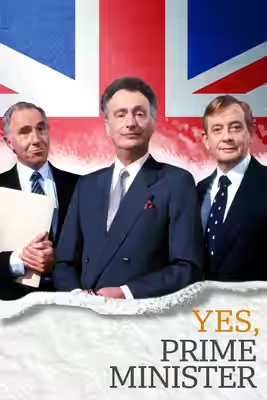
Jonathan Lynn and Antony Jay’s comedy about a minister and the mandarin who manages him is still the sharpest thing British television has said about government. Every episode has the same shape, and after four in a row it shows; that is a small price.
Yes Minister is about a politician who thinks he is in charge and the civil servant who lets him think so. Jonathan Lynn and Antony Jay wrote all 21 episodes across three series between 1980 and 1982, each half an hour long and each built the same way. Jim Hacker, Minister for Administrative Affairs, has an idea. Sir Humphrey Appleby, his Permanent Secretary, explains at length why it cannot be done. By the closing credits the idea has been buried and Hacker has been persuaded the burial was his own. Nothing changes, which is the joke, and also the point.
We think it is the best comedy anyone has written about how British government works, and it has dated far less than a show made in a studio in 1980 has any right to. The plots are about things that sound like nothing: a new hospital with no patients, a set of figures the minister has not read, a visit to a factory. Lynn and Jay knew that the dull things are where the power is, and they trusted the audience to find that funny. Most of the reviews we have read agree with us, and for once we have no quarrel with them.
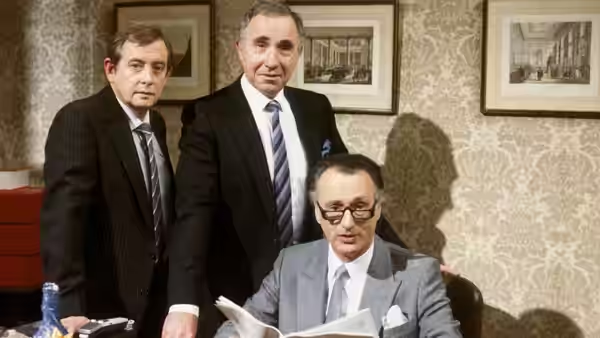
Nigel Hawthorne’s Sir Humphrey is the reason people still quote it. Lynn and Jay give him sentences that run for a paragraph, every clause qualifying the one before, and Hawthorne delivers them without a breath, in the tone of a man helping a slow child across a road. We laughed at the first of these, and the third, and somewhere around the tenth we felt a chill, because it was plain he was right: the minister will be gone in two years and the department will still be there. Hawthorne never plays him as a villain. He plays him as a man who loves the building.
Paul Eddington gives Hacker vanity, cowardice and a decent heart, roughly in that order, and the trick of the performance is that we side with him anyway. Watch his face when a journalist is mentioned. Derek Fowlds has the hardest job, saying almost nothing while the other two talk, and he does it with small flinches and a pedant’s need to point out when a metaphor has been mixed. Diana Hoddinott’s Annie is the only person who tells Hacker the truth, and the show uses her too little. John Nettleton turns up as Sir Arnold Robinson, the Cabinet Secretary, and in two minutes shows you there is a ceiling above Sir Humphrey’s ceiling.
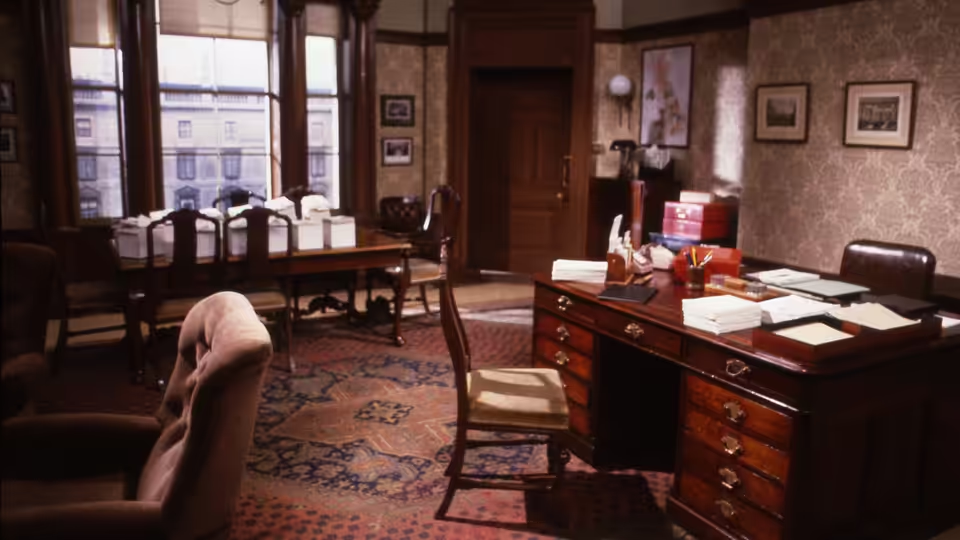
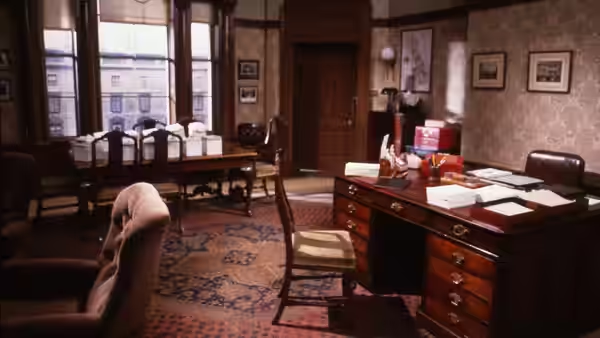
There is not much to say about how it looks, because it was not made to be looked at. Peter Whitmore, Sydney Lotterby and Stuart Allen directed it as a stage play with cameras: the minister’s office, a club, the occasional corridor, and a studio audience whose laughter is on the soundtrack. The wide two-shot does the work. When Hawthorne starts a long sentence the camera stays where it is and lets Eddington go through hope, confusion and defeat in real time. A cleverer director would have cut away, and lost it.
The faults belong to the form. Every episode is the same shape, and if you watch four in a row the shape starts to show through the paint. The world is all men in dark suits; women appear as wives and secretaries and not much else. A few of the episodes reach for farce, with hidden documents and mistaken rooms, and the show is weaker whenever anyone has to run. It is best at a desk.
Later political comedies, The Thick of It most obviously, swear more and shout more, and their politicians live in terror of the press. Hacker is afraid of the press too, but the real subject here is older and quieter: the people nobody elected, doing what they have always done. Watching it now, the surprise is how little of it needs a footnote.
Start at the beginning. The first episode, broadcast on 25 February 1980, sets up everything and is as good as anything that follows. It carries a PG certificate, and we cannot think what for.