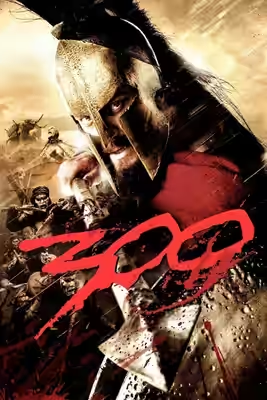
Zack Snyder makes fighting look carefully arranged and talking feel like an interruption. 300 has considerable visual discipline, but its narrow emotional range and repeated slow motion wear us down.
Zack Snyder builds 300 around the pleasure of watching combat arranged for the camera. It is skilfully done, but the film is too repetitive and too poorly written for us to recommend it. The fighting is given a force and precision that the conversations rarely approach. At 117 minutes, this narrow range becomes a problem: each fresh bout of violence has to justify another stretch in the company of people who barely develop.
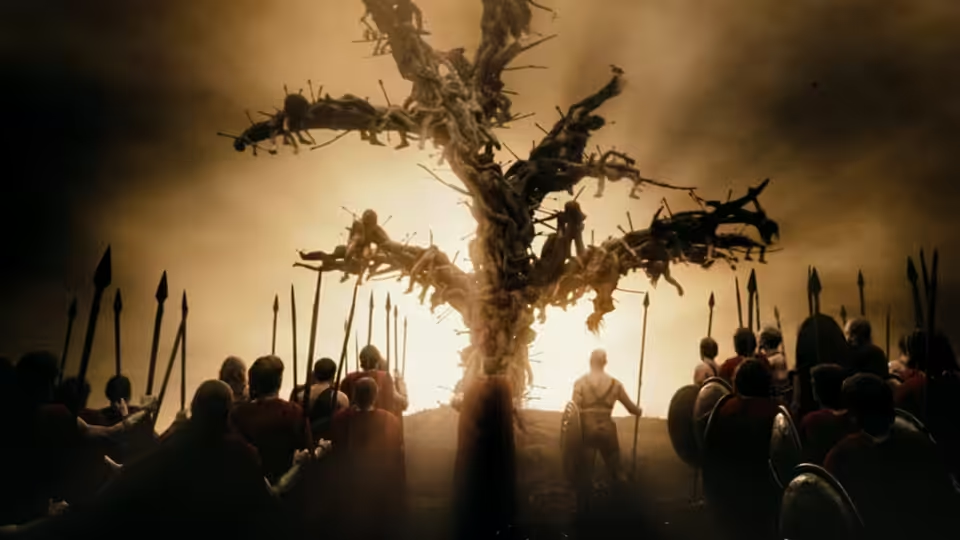
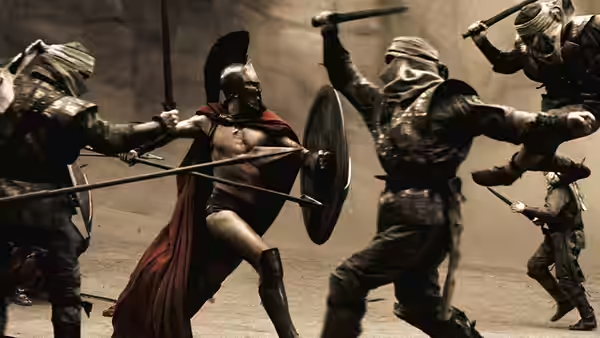
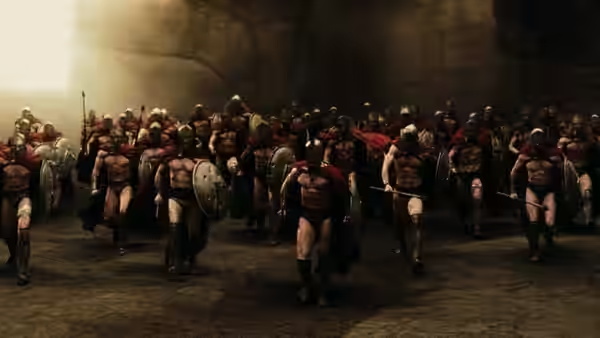
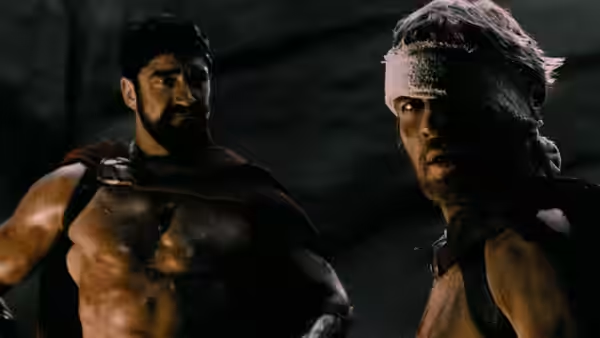
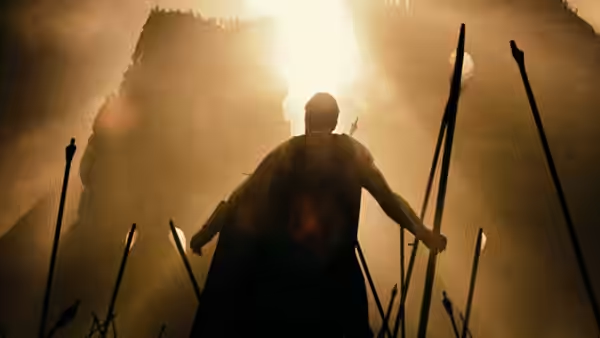
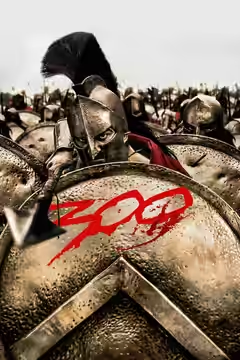
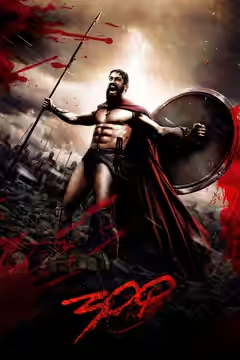
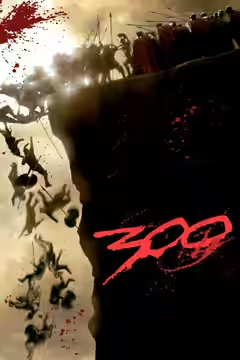
Larry Fong’s cinematography is the strongest reason to stay. The tightly controlled colour makes the combatants legible within busy compositions, while James D. Bissell’s production design gives the fantasy landscapes enough solidity to hold those figures. We felt a surge of excitement at the choreographed fighting, because movement remains readable even when the imagery is heavily stylised. There is care here about where a body sits within a frame, and how the surrounding space directs our attention towards it.
William Hoy’s editing becomes less persuasive as the fighting continues. The repeated use of slow motion keeps announcing the importance of individual blows, until we start noticing the device instead of feeling the impact. A held moment needs something worth examining, and too often the extra time lets us see how little danger these bodies seem to be in. The choreography remains impressive, but the violence starts to feel like an exercise we have already watched.
Tyler Bates’s music compounds the problem. It presses hard for excitement even when the images have already supplied it, leaving little space for tension to develop at a different volume. Less insistent scoring might allow us to attend to an individual movement without being told how much it matters. Instead, the music keeps pushing, and the fighting becomes tiring well before it has exhausted its visual possibilities.
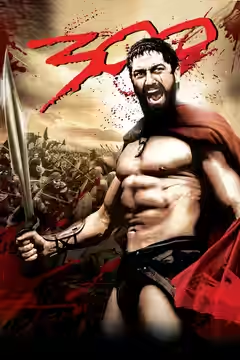
The screenplay, credited to Michael B. Gordon, Zack Snyder and Kurt Johnstad, leaves Gerard Butler with a King Leonidas who has little room to change. Butler supplies the required force, but there is only so much a performance can do when each speech seems to reaffirm the same attitude. The political subplot ought to make the people away from combat matter; instead it interrupts the action without making the stakes more involving. Lena Headey’s Gorgo and Dominic West’s Theron deserve more than this narrow stretch of the film allows them.
There is also something dispiriting about the way the film asks us to enjoy its martial pride. The carefully arranged violence gives us too little sense of what fighting costs the people involved. A war film need not pause for a lecture, but fear and uncertainty would give these combatants something to do beyond looking formidable. We are asked to admire them so insistently that there is barely an opportunity to become concerned about them.
A few stretches of action may be enough for viewers who come solely for the choreography. We would be more cautious about committing to the whole film, particularly if relentless music wears you down. If you need a reason to care who wins, we would look elsewhere.