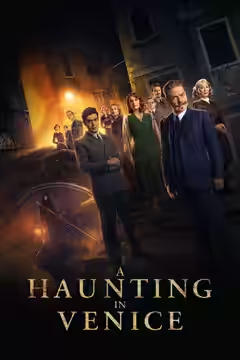
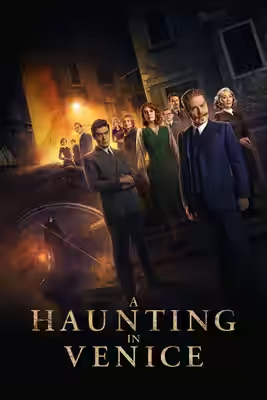
Branagh’s third Poirot is his best: one leaking palazzo, one stormy night, a camera that leans at everything. The mood holds for an hour; the mystery underneath it is thin, its clues obvious and its solution rushed through in a single room.
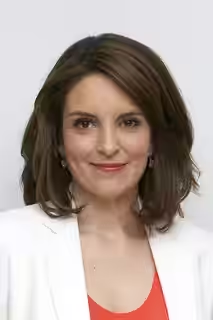
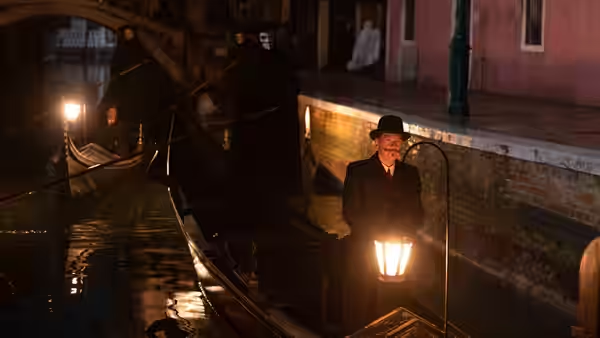
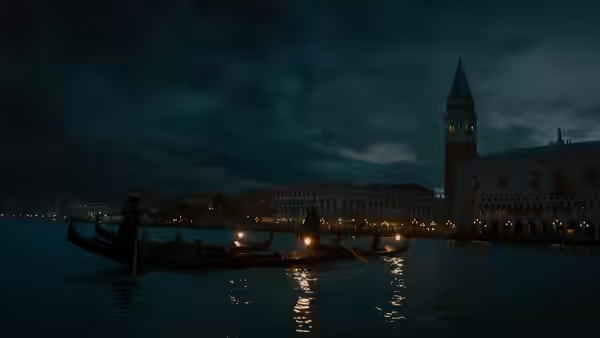
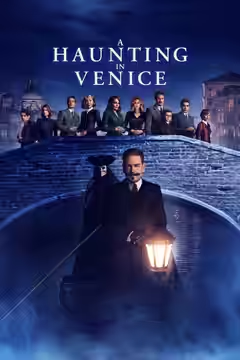
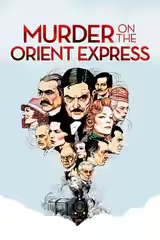
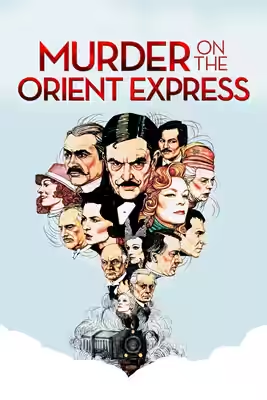
Kenneth Branagh’s third go at Hercule Poirot, after Murder on the Orient Express (2017) and Death on the Nile (2022), gets him off the trains and boats and shuts him in a house. Michael Green’s screenplay starts from Agatha Christie’s Hallowe’en Party, keeps a few names and the Halloween setting and moves the rest to Venice in 1947. Poirot has retired. Ariadne Oliver (Tina Fey), a crime novelist, talks him into attending a séance in a palazzo so that he can expose the medium, Joyce Reynolds (Michelle Yeoh). It is the best of the three films, and it is still not much of a mystery.
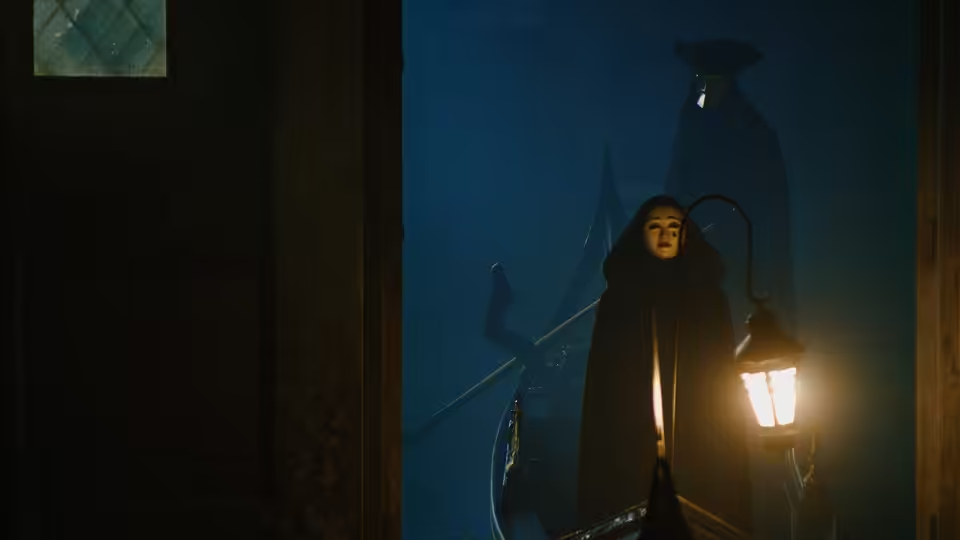
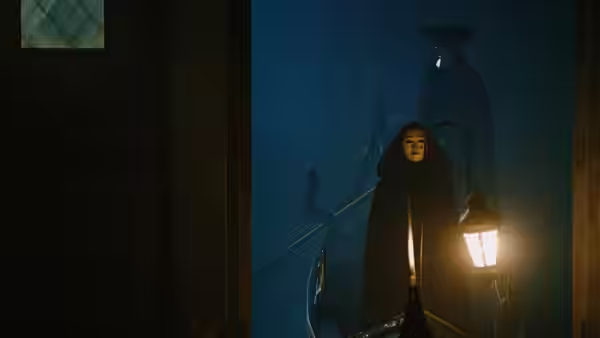
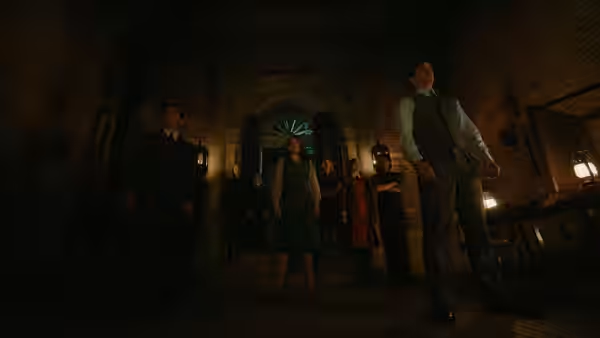
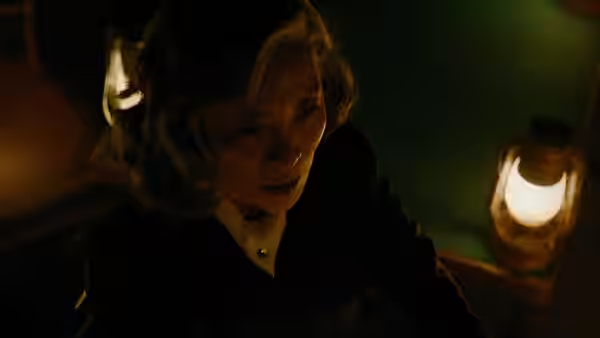
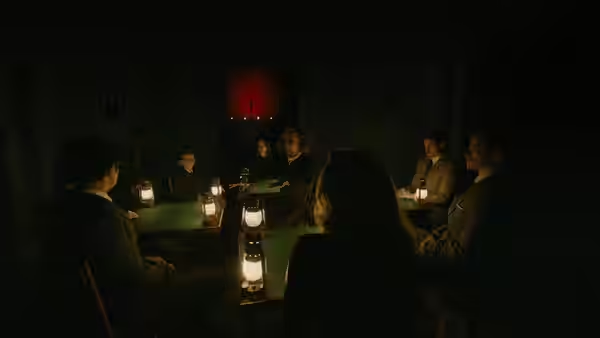
The house is the point, and the house works. John Paul Kelly’s palazzo has water at the front step and plaster coming off the walls in sheets, and Haris Zambarloukos shoots it as if he were slightly afraid of it. He puts wide lenses close to faces so the rooms bend at the edges, tilts the camera until the doorways lean, and shoots up from the floor so the ceilings crowd the frame. Hildur Guðnadóttir’s score is low strings held a long time and then dropped, so that rooms go silent at the wrong moment. Sammy Sheldon puts almost everyone in black and grey, so the candles are the only warm thing in shot. The séance is the film’s best ten minutes: Lucy Donaldson cuts it in short looks between faces, Yeoh keeps her voice low and her eyes level, and the storm outside does the rest. We jumped once, properly, and were not ashamed of it.
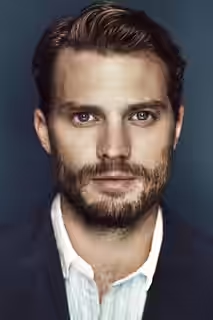
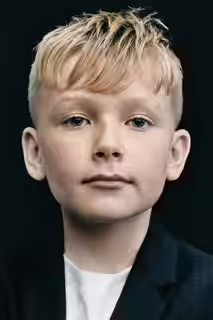
Fey is the one having fun, and the film needs her. She plays Oliver fast and dry, an American who says what everyone else is thinking. Branagh has trimmed the moustache and trimmed the performance with it; this Poirot is tired and quiet, and for once the accent is not the loudest thing in the film. Jude Hill, the boy from Belfast, plays Leopold Ferrier as a solemn child who has read too much and looks after his father, and he takes every scene he is in. Jamie Dornan is that father, a doctor who came back from the war with his nerves gone, and plays it small. Yeoh is the film’s best idea, and there is not enough of her.
Then the séance ends and the questioning begins, and the film has nothing else. Poirot takes each guest to a different room and asks what they saw, and Donaldson cuts every interview to the same rhythm, so that by the hour mark they had run together. The clues are set out where a child could find them. The scares, after the first, can be seen coming from the previous shot: a figure at the end of a corridor, a face where a face should not be. Somewhere around the seventh interview we realised we had stopped being frightened and had started admiring the plasterwork, and we were annoyed about it, because the house had earned better.
The solution is delivered at speed, in one room, and it puts the whole thing to bed in about five minutes. We will not say who did it. We will say that Christie’s plots run on the pleasure of watching the pieces fit, and Green’s script has the pieces but never lets us watch them fit. The film also hints at ghosts and then explains them, one after another, and a ghost story that keeps explaining itself does not frighten anyone.
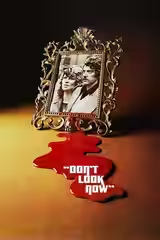
Against Branagh’s own series this is a clear step up. The two earlier films were long, crowded and lit like adverts; this one is 104 minutes, one building and a dozen people, and it is better for it. Don’t Look Now (1973) found real dread in the same canals without tilting anything.
Watch it at home, with the sound up; the leaning frames are less insistent on a small screen and Guðnadóttir’s silences carry better. It is a 12A and there is nothing in it to trouble anyone over ten, which is a recommendation if there are children on the sofa and a warning if there are not.