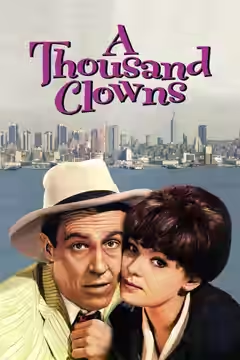
Fred Coe’s film of Herb Gardner’s play is funny, well acted and kinder than most comedies about a man who will not grow up. It is also a little in love with him, and it stops noticing when we have had enough.
Herb Gardner’s play about a man who has quit his job and would like to quit everything else comes to the screen with its author writing the script and Fred Coe directing. Murray (Jason Robards) has not worked in five months, lives in one room with his nephew, and is happy. Then two social workers arrive and tell him to become respectable or lose the boy. A Thousand Clowns is a good, talkative, humane comedy that runs 118 minutes and should have run a hundred.
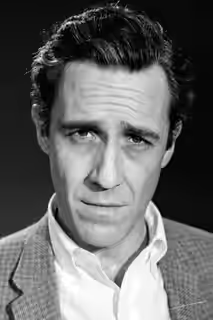
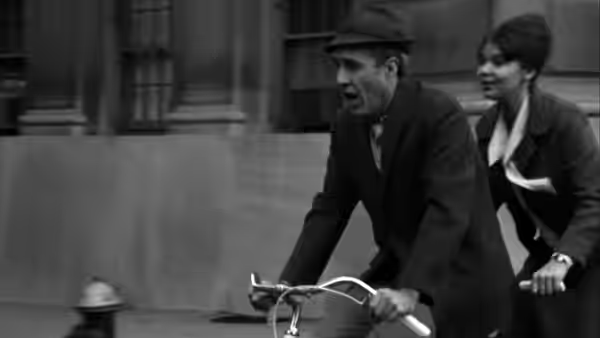
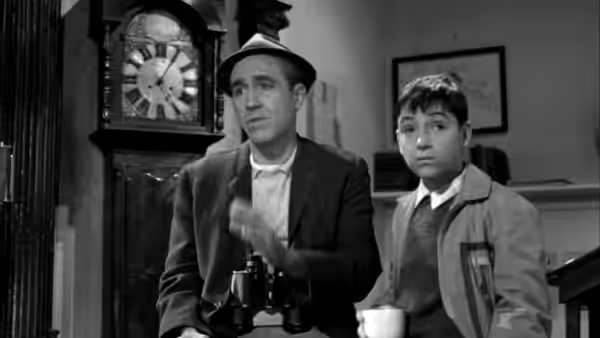
Robards is the reason to see it. He plays Murray as a man who has decided that every conversation is a performance and every stranger an audience, and for the first half hour we laughed a great deal. He leans out of the window at dawn to tell the block it has overslept. He plays a game with Nick in which the two of them are the only sane men on Earth, and Robards lets us see that Murray half believes it. The timing is a stage actor’s and the camera does not seem to bother him.
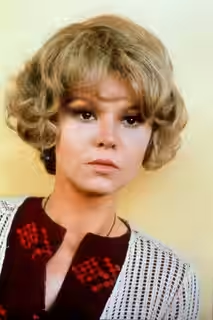
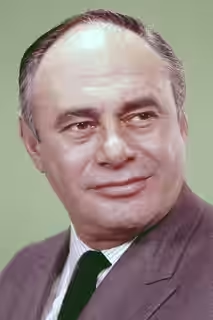
Barry Gordon’s Nick is twelve, cleverer than his uncle and quietly running the household, and Gordon plays him without a trace of the winsome. He feeds Murray his lines and then waits to see whether the adult will turn up. Barbara Harris, as Sandra, the board’s junior officer, comes apart within ten minutes, with a handbag, a handkerchief and a rising note in the voice, and we believed every second. William Daniels, as her stiff colleague Albert Amundsen, is the only person in the film who cannot be charmed. Martin Balsam’s Arnold, the brother who sold out and can live with it, has the one speech that answers Murray back, and Balsam delivers it plainly.
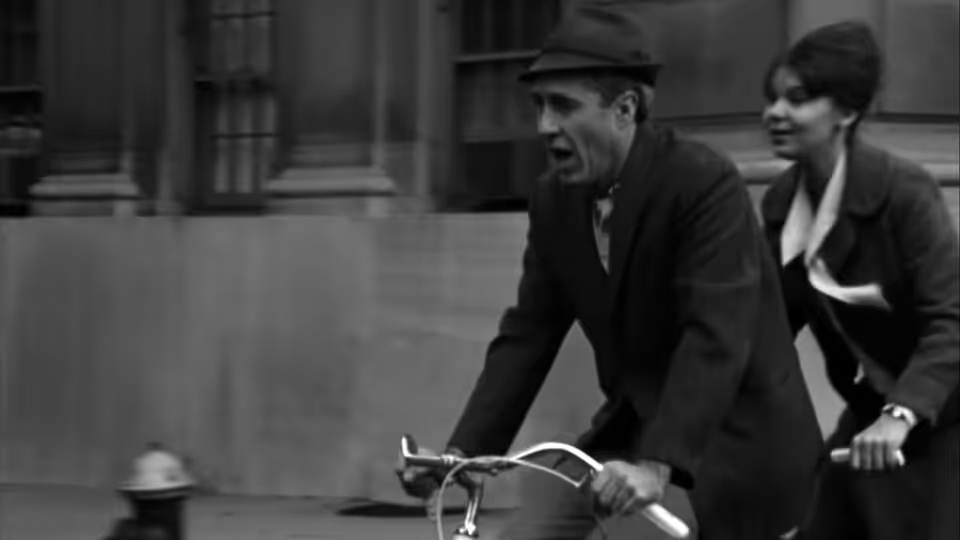
Coe knows he has filmed a play and tries to hide it. Ralph Rosenblum cuts in bursts of Manhattan, commuters marching across bridges and down avenues to a brass-band march, so that the city looks like a parade nobody enjoys. Arthur J. Ornitz shoots the streets in grainy, overcast black and white and the flat in something warmer, so going outside always looks like a mistake. The first two montages are funny. By the fourth we could feel the film stepping out to stretch its legs, and when it came back the actors were in the same positions, saying the next page. Ruth Morley keeps Murray in one crumpled shirt and puts Sandra in a suit that rumples as her day does.
The trouble is Murray. Gardner adores him, Coe adores him, and the film assumes we will too, for as long as it likes. Somewhere in the second hour we caught ourselves siding with the welfare board, which cannot have been the intention. Murray’s speeches about the deadness of ordinary life are witty and they are all the same speech, and a man who makes it four times to a twelve-year-old who would like a stable home starts to sound like a burden. The film knows this, because Arnold says it, and then goes back to enjoying him.
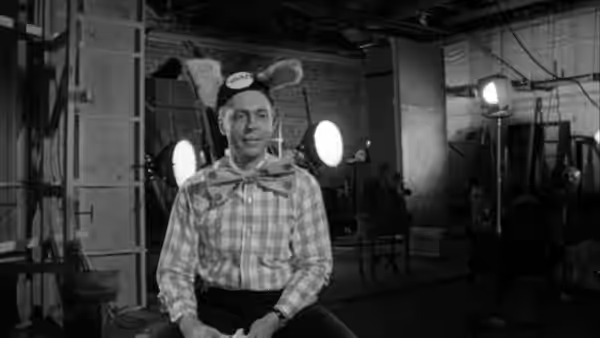
What saves the last stretch is Gene Saks. Leo, the man who plays the chipmunk on television, comes to the flat to offer Murray his old job, and Saks plays him as a wreck: sweating, desperate to be liked, cracking jokes at a child who will not laugh. We winced through the whole scene, and it is the best thing in the film, because for once Murray is not the funniest person present. Where the film goes from there we will leave alone.
Against the filmed stage comedies of its decade, this is one of the better ones: it has people in it rather than lines. It would be a better film with twenty minutes gone and a director less devoted to its hero. See it for Robards, Gordon and Harris, and for the Saks scene, and be ready to want Murray to shut up a little before the film does.