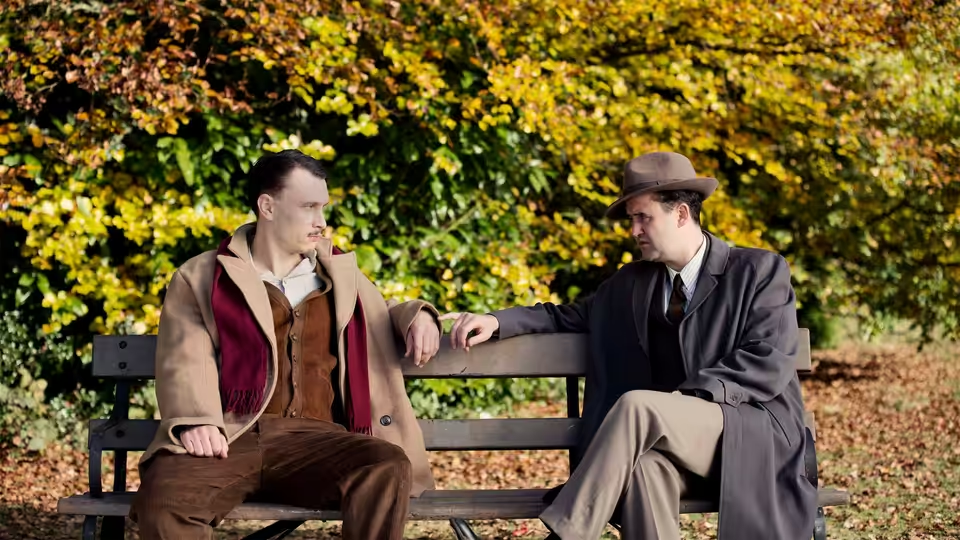
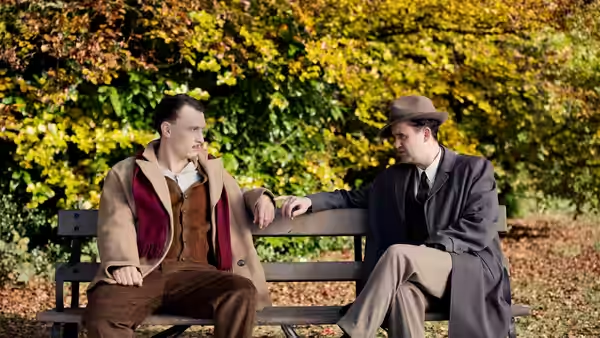
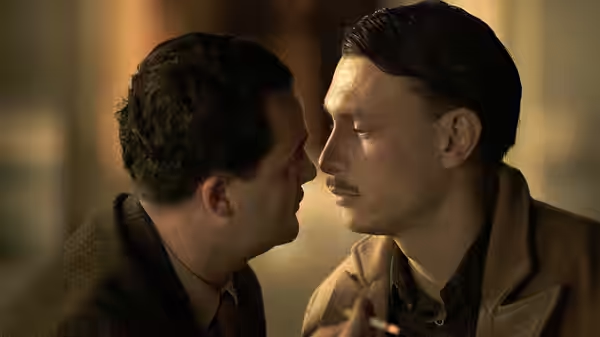
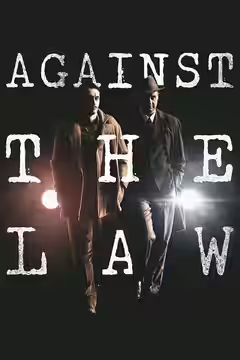
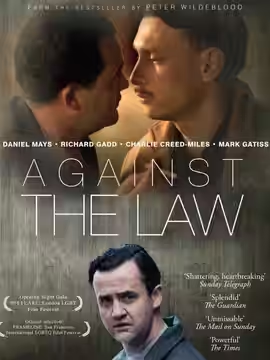
Fergus O’Brien’s combination of drama and documentary testimony is moving, though the witnesses sometimes make the dramatisation feel unnecessary. Daniel Mays gives Peter Wildeblood the restraint this material needs.
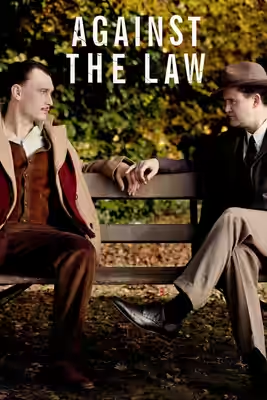
Against the Law is a moving account of persecution under anti-gay laws, and its strongest decision is to let men who experienced it speak alongside the dramatised story of Peter Wildeblood. Fergus O’Brien gives those accounts a place in the telling rather than leaving them as background research. We recommend it, with a reservation about how much the dramatisation adds. The testimony would be worth hearing without actors to accompany it.
Brian Fillis’s screenplay centres Wildeblood, while the documentary testimony gives other men room to describe their experiences. That arrangement suits a historical drama about laws whose effects cannot be understood merely by stating what they prohibited. There are individual lives to consider, and no reason to expect one account to represent them all. The film is persuasive when it allows those accounts to broaden our attention beyond the central character.
Daniel Mays is the strongest reason for retaining the acted scenes. His Wildeblood has a restraint that lets us attend to the character without constantly noticing the performance. That matters here, because playing distress insistently would feel particularly awkward beside people speaking about their own lives. Mays makes the dramatisation worth our time even when the testimony has made us question how much of it is necessary.
Joe Carey’s editing carries the difficult business of bringing these two kinds of material together. The combination works, though we occasionally wanted to stay with the men speaking for themselves rather than return to the actors. The contributions of cinematographer Johann Perry, production designer Matthew Button and composer Roger Goula Sarda matter less to our response than that editorial choice. We remember the people and their accounts, which is a reasonable measure of success for the craft here.
We were moved most by the men describing persecution they had experienced themselves. Hearing them makes it harder to treat the subject as a history lesson we have already learnt. The film’s concern with LGBTQ equality is plain, but its documentary testimony gives us particular people to listen to rather than a position we can simply agree with. Their presence also prevents admiration for Mays from becoming our only response to the suffering being described.
Historical dramas can become congratulatory, allowing us to feel pleased that we know better than the people who wrote the laws. These personal accounts make that comfortable response harder to sustain. Our reservation is that the dramatisation sometimes feels like additional explanation when the witnesses have already been clear. O’Brien’s approach is thoughtful enough to survive that unevenness, and Mays gives the acted material a substantial reason to remain.
At 83 minutes, the film asks for a modest amount of time and a more serious degree of attention. We recommend it for Mays, but would not treat the documentary passages as supporting material to be waited through. They deserve the same attention as the central performance. Choose it when there is time afterwards to talk about the people, rather than just the acting.