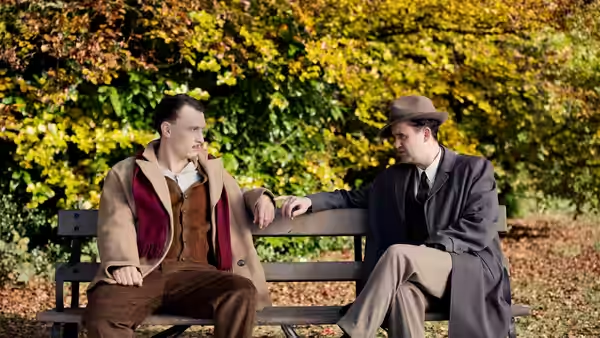
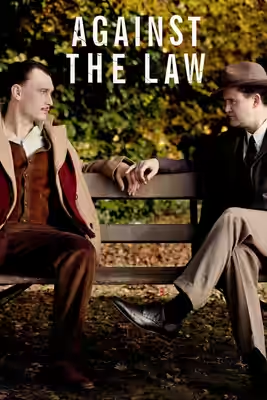
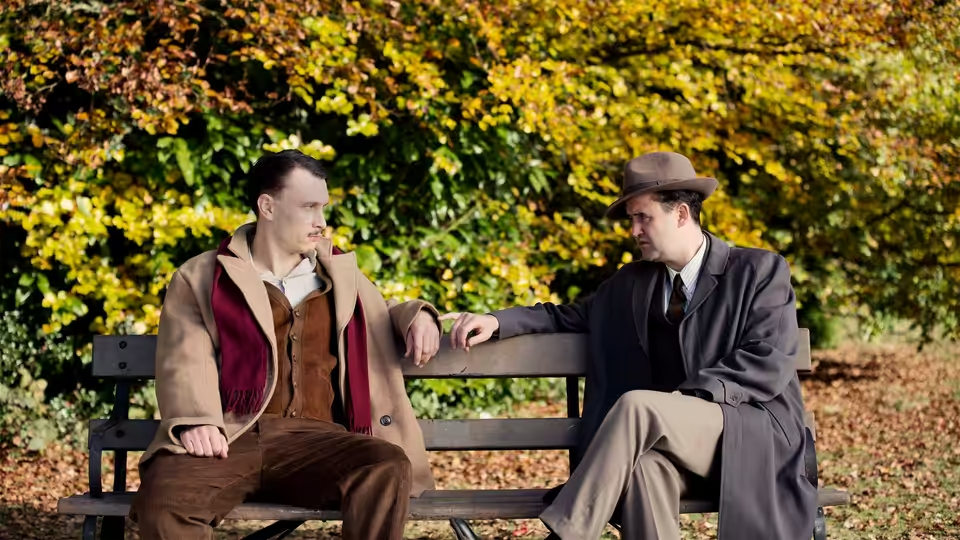
Two men sit talking on a park bench beneath autumn leaves
Film review

Against the Law

2017 · Directed by Fergus O'Brien · 1h 23m

In a sentenceDaniel Mays has the difficult job of holding our attention when the witnesses are this compelling

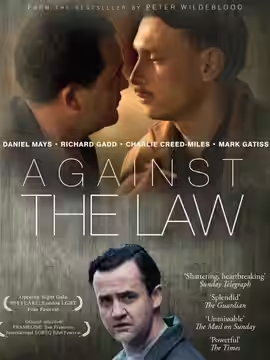
Peter Wildeblood (Daniel Mays) is at the centre of a dramatised account of persecution under anti-gay laws. Eddie McNally (Richard Gadd) and Dr. Landers (Mark Gatiss) also feature in his story. Alongside the actors, men who have experienced persecution give documentary testimony about their own lives. The film combines Wildeblood’s story with their accounts, examining the personal consequences of laws that target gay men and placing one man’s experiences within the wider history of the struggle for LGBTQ equality.

Plays from YouTube when you press play; nothing loads from them until then.

Fi1m review

Fergus O’Brien’s combination of drama and documentary testimony is moving, though the witnesses sometimes make the dramatisation feel unnecessary. Daniel Mays gives Peter Wildeblood the restraint this material needs.

Against the Law is a moving account of persecution under anti-gay laws, and its strongest decision is to let men who experienced it speak alongside the dramatised story of Peter Wildeblood. Fergus O’Brien gives those accounts a place in the telling rather than leaving them as background research. We recommend it, with a reservation about how much the dramatisation adds. The testimony would be worth hearing without actors to accompany it.

Brian Fillis’s screenplay centres Wildeblood, while the documentary testimony gives other men room to describe their experiences. That arrangement suits a historical drama about laws whose effects cannot be understood merely by stating what they prohibited. There are individual lives to consider, and no reason to expect one account to represent them all. The film is persuasive when it allows those accounts to broaden our attention beyond the central character.

Daniel Mays is the strongest reason for retaining the acted scenes. His Wildeblood has a restraint that lets us attend to the character without constantly noticing the performance. That matters here, because playing distress insistently would feel particularly awkward beside people speaking about their own lives. Mays makes the dramatisation worth our time even when the testimony has made us question how much of it is necessary.

Joe Carey’s editing carries the difficult business of bringing these two kinds of material together. The combination works, though we occasionally wanted to stay with the men speaking for themselves rather than return to the actors. The contributions of cinematographer Johann Perry, production designer Matthew Button and composer Roger Goula Sarda matter less to our response than that editorial choice. We remember the people and their accounts, which is a reasonable measure of success for the craft here.

We were moved most by the men describing persecution they had experienced themselves. Hearing them makes it harder to treat the subject as a history lesson we have already learnt. The film’s concern with LGBTQ equality is plain, but its documentary testimony gives us particular people to listen to rather than a position we can simply agree with. Their presence also prevents admiration for Mays from becoming our only response to the suffering being described.

Historical dramas can become congratulatory, allowing us to feel pleased that we know better than the people who wrote the laws. These personal accounts make that comfortable response harder to sustain. Our reservation is that the dramatisation sometimes feels like additional explanation when the witnesses have already been clear. O’Brien’s approach is thoughtful enough to survive that unevenness, and Mays gives the acted material a substantial reason to remain.

At 83 minutes, the film asks for a modest amount of time and a more serious degree of attention. We recommend it for Mays, but would not treat the documentary passages as supporting material to be waited through. They deserve the same attention as the central performance. Choose it when there is time afterwards to talk about the people, rather than just the acting.

Critical consensus AI synthesised

3 of 6
Positive
3
Mixed
0
Negative
0
The Guardian
27 July 2017 · Julia Raeside
95*

Raeside calls it a brilliant, important, must-see piece of television. She especially praises how seamlessly the drama and documentary testimonies come together.

Read the full review →
Den of Geek
26 July 2017 · Catherine Pearson
90*

Pearson calls the film deeply moving and an essential watch. She especially praises Daniel Mays’s subtle, heartbreaking performance as Peter Wildeblood.

Read the full review →
Digital Spy
26 July 2017 · Justin Harp
75*

The drama is presented as a powerful reminder of progress and the ongoing fight for LGBTQ equality. The article singles out its combination of Peter Wildeblood’s story and testimony from men persecuted under anti-gay laws.

Read the full review →

Straight answers AI written, from our review

Is Against the Law worth watching?
Against the Law is worth watching for its moving testimony about persecution under anti-gay laws and Daniel Mays’s restrained performance; we score it 81 out of 100. We recommend it to viewers interested in personal accounts of that history, with one reservation: the witnesses are so compelling that the dramatisation sometimes feels unnecessary.
How long is Against the Law, and what is it rated?
Against the Law runs 1h 23m. It is a drama and history film.
Where can I watch Against the Law in South Korea?
Against the Law is not on any streaming or rental service in South Korea at the moment. It is available in 3 other countries; change your country at the top of the page to see where. Availability is checked daily.
How does Against the Law compare to Pride?
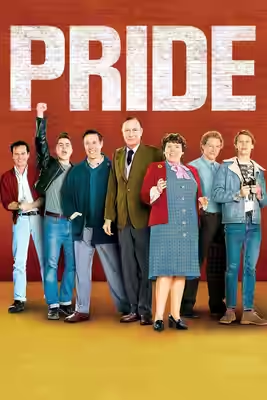
Against the Law is the more testimony-led choice beside Pride, combining Peter Wildeblood’s dramatised story with accounts from men who experienced persecution themselves. We recommend Pride for humour and the uplift of solidarity, despite its slightly tidy treatment of those difficulties; Against the Law suits a more sober evening, with witnesses whose accounts sometimes make the acted scenes feel unnecessary.

Cast

If you liked this, try…

  1. Victim (1961) · not reviewed yetAnother British drama about anti-gay laws, with a sharper thriller structure.

  2. Great Freedom (2021) · not reviewed yetA prison drama that gives state persecution an intimate, stubbornly human scale.

  3. The Celluloid Closet (1995) · not reviewed yetDocumentary testimony traces how cinema taught audiences to look at gay lives.

  4. A Special Day (1977) · not reviewed yetPolitical repression enters an ordinary home through two closely observed performances.

  5. Pride (2014, Fi1m 82)For solidarity and humour alongside the history of hostility towards gay men.

Free account

Know what to watch tonight

Two lists that know where things are streaming, collections you can share, your own score beside ours, and Discover that remembers what you have seen.

  • Want to see, sorted by what is streaming now
  • Seen, with your score out of ten
  • No adverts, ever