For an hour Richard Eyre’s version of Alan Bennett’s play is a gentle, well-acted ward comedy, with David Bradley and Bally Gill doing careful work. Then it swerves somewhere we will not describe and finishes with a speech, and neither survives the other.
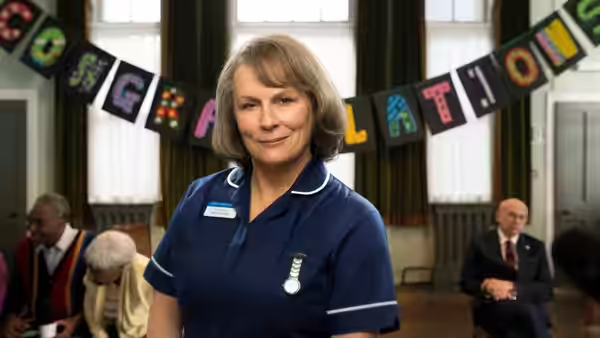
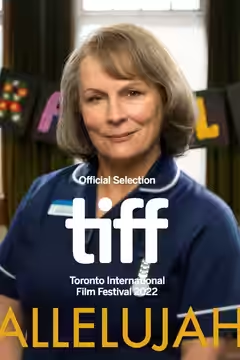
Richard Eyre’s Allelujah is Alan Bennett’s play about a hospital ward for the old, brought to the screen by Heidi Thomas at 99 minutes, and for most of that time it is what you would expect from those names: kind, funny, a little sad, and full of people who have been acting for longer than most of us have been alive. The hospital is one the government would rather not be paying for. Sister Gilpin (Jennifer Saunders) runs the ward. Dr Valentine (Bally Gill) does the actual doctoring. Joe Colman (David Bradley) is in one of the beds, and his son Colin (Russell Tovey) has come to see him. Our verdict is simple: a decent hour, then a turn that wrecks it, then a speech that tries to glue it back together. Neither the turn nor the speech should have been allowed near the other.
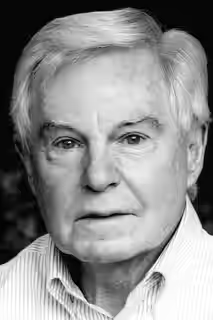
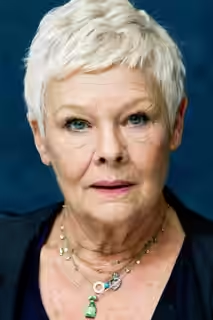
The acting is the reason to watch, and two performances in particular. Bradley plays Joe as a man who has decided that being difficult is the last freedom left to him, and he is funny without once asking for a laugh. Gill plays Valentine as the only person in the building who seems to like the patients, and does it with no trace of saintliness; he listens, he waits, he is tired. Judi Dench’s Mary watches everything and says little. Derek Jacobi’s Ambrose has a schoolmaster’s contempt for everybody else’s sentences. Saunders plays Gilpin with a tightness about the mouth that we did not think much about until later, which is to her credit and not entirely to the film’s.
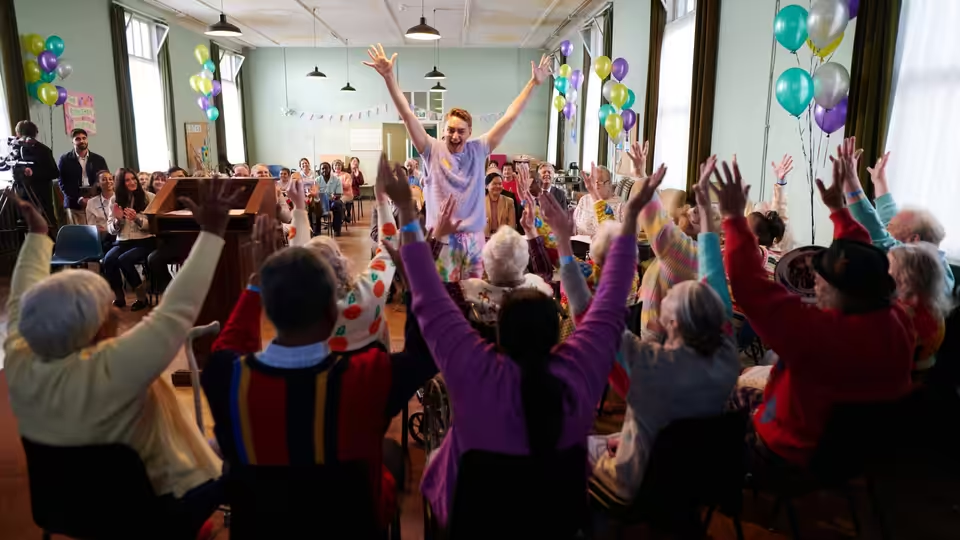
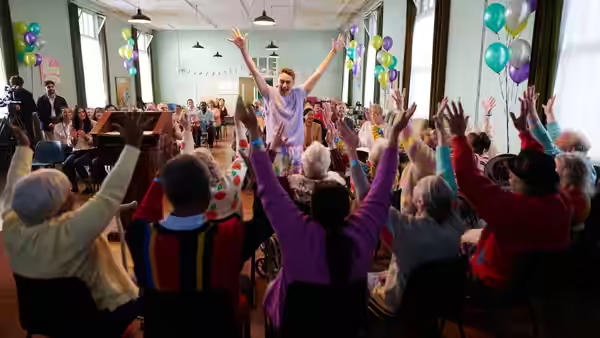
Donal Woods has built a ward that looks lived in rather than dressed: mismatched chairs, notices about hand washing curling at the corners, a day room nobody has repainted. Ben Smithard and Tony Sankey shoot it in flat daylight through big windows, so the patients look their age and the paint looks its age, and they do not prettify either. Jacqueline Durran puts everyone in cardigans and slippers and the odd unwise party frock for the singing, of which there is a good deal. George Fenton’s score is piano and strings and knows when to stop. John Wilson cuts the ward scenes at the pace of conversation, which is the right pace for Bennett.
We were moved, more than we expected, by Bradley and Tovey at Joe’s bedside, saying almost nothing to each other about forty years of not saying anything. Thomas gives them one conversation that is properly written, and Eyre has the sense to hold the shot and let the two men avoid each other’s eyes. It is the best scene in the film.
Then the film does something we will not describe. It is not that the turn is dark; Bennett has been dark before and it has suited him. It is that nothing in the preceding hour prepared the ground for it, and nothing after it knows what to do with it. The comedy stops dead. The patients, who have been the point, become furniture. Wilson’s cutting speeds up as though the film has remembered it is late for something. And then, with the debris still on the floor, Allelujah ends with a direct appeal on behalf of the health service, delivered with feeling by Gill and written as if the previous quarter of an hour had not happened. We sat there baffled, and then annoyed, because we agreed with every word of the speech and the film had just spent fifteen minutes undermining it.
Bennett’s best work for the screen has been small and exact: one van, one classroom, one woman talking to the wall. This one wants to be a state-of-the-nation piece, and the ward is not strong enough to carry the weight. Most critics have said much the same, and the reviews split, a few finding the swerve bracing and most finding it a wreck. We are with the majority, with the caveat that the first hour is better than our score suggests and the last twenty minutes a good deal worse.
Watch it for Bradley and Gill, and for the singing, and be ready to argue about the rest. The 12A is mild. At home you could stop at the hour mark and remember a nicer film than the one that was made, which is not a suggestion we make often.