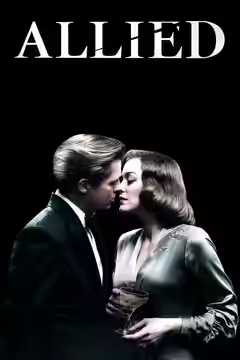
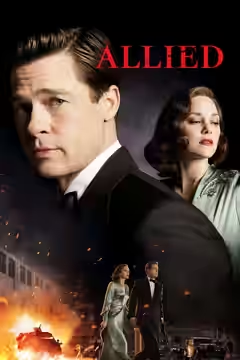
Robert Zemeckis builds a wartime romance with real care, and for an hour in Casablanca it works. Then it moves to London, the question arrives, and we spent the second half watching Marion Cotillard act around Brad Pitt.
Robert Zemeckis has made a wartime spy romance in the old manner: two agents thrown together in Casablanca in 1942, a pretend marriage that becomes a real one, and then a question about whether the woman was ever who she said. Steven Knight’s script lays it out cleanly and Zemeckis dresses it with care. For about an hour it is a pleasure. The rest is a well-made film about a man waiting for an answer, and we found the waiting dull.
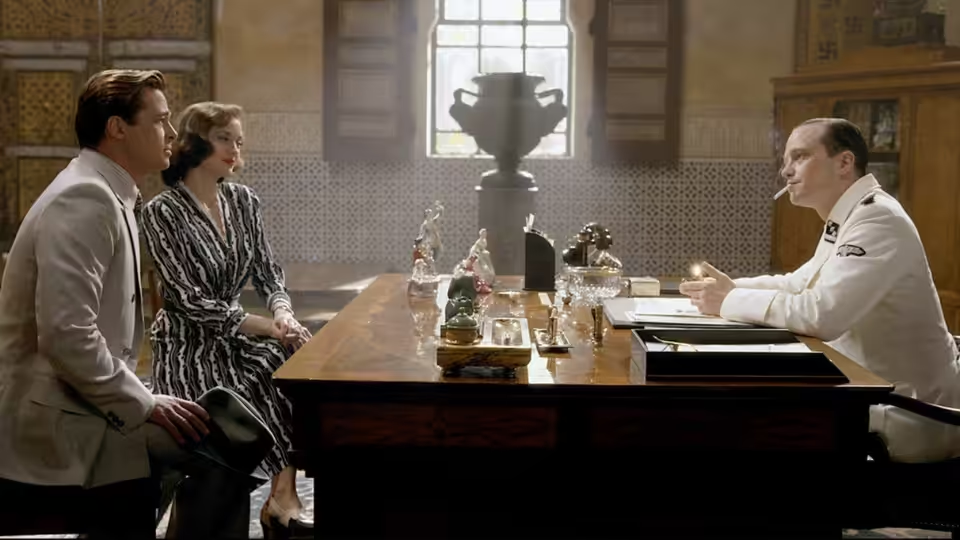
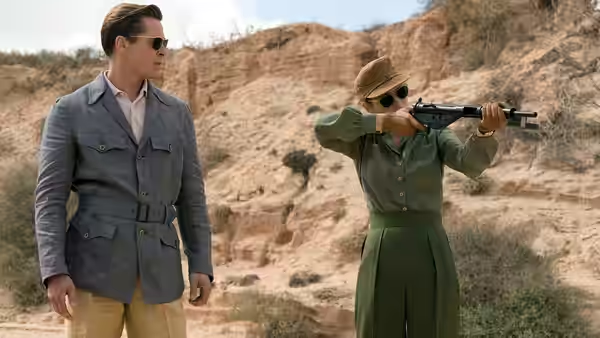
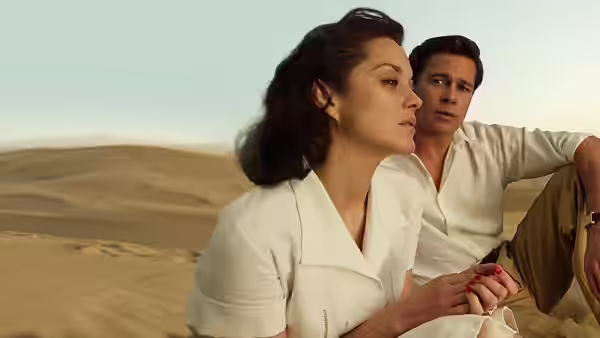
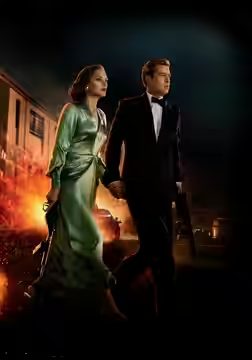
The Casablanca stretch is the good part. Max Vatan (Brad Pitt), a Canadian officer dropped into the desert, meets his pretend wife Marianne Beauséjour (Marion Cotillard) in a café full of the Germans she has spent weeks charming, and she corrects his Parisian French the first night. Gary Freeman builds a city of cream walls, ceiling fans and rooftop beds, and Joanna Johnston puts Cotillard in gowns cut so that most critics turn when she walks. Don Burgess keeps the camera moving, and in the shot the film has been built around it circles a parked car while a sandstorm wipes out the desert behind the glass. It is a show-off shot and it works, because the two people inside have stopped pretending at exactly the moment the world outside goes blank.
Cotillard is the reason to stay. Marianne is a woman whose job is to be believed, and Cotillard plays her so that we can see both the woman and the act she is putting on, and keeps us guessing which is which. At the ambassador’s party she laughs at a German joke a half-beat late and recovers. August Diehl has one scene as Hobar, an officer who tests Max’s French over a card table, and it is the tightest five minutes in the film.
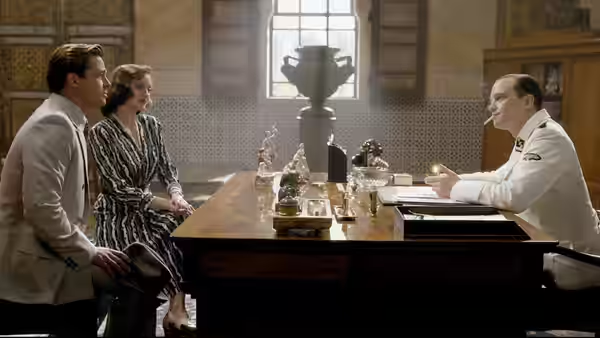
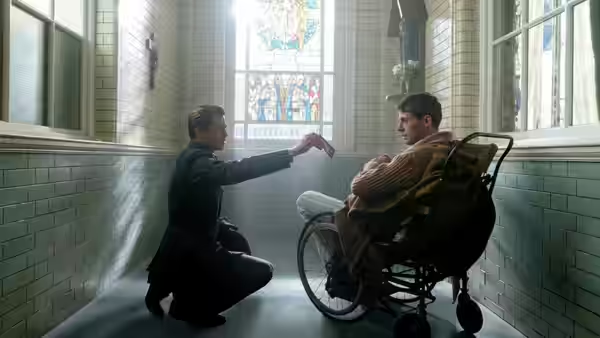
Pitt is harder to defend. Max is written as a man who keeps everything in. Pitt keeps everything in too, so there is nothing to watch. He is fine when the part asks him to be handsome in a good coat; when London arrives and the script asks him to be frightened for his marriage, his face barely moves and the film leans on Cotillard and the music to tell us what he feels. Jared Harris, as his commanding officer Frank Heslop, and Simon McBurney, as the S.O.E. man who puts the accusation to him in a windowless room, do more with a few lines each. Matthew Goode has a single scene as a burned pilot in a hospital bed, and it is the only moment in the London half where the war feels like something that happens to bodies.
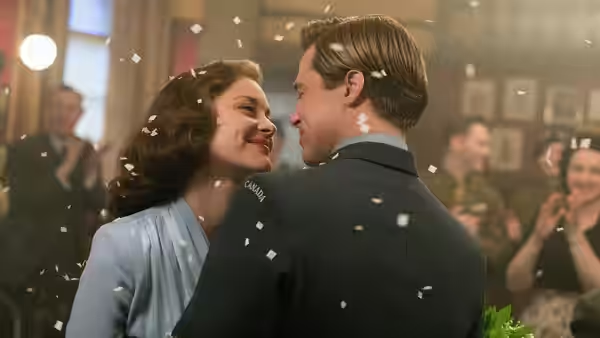
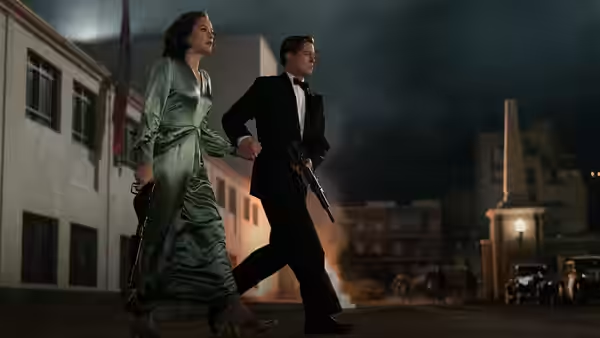
Here is what got us. The Hampstead party under the Blitz, and then the birth of their daughter in the open outside a hospital as the bombers go over and the sky lights up, moved us more than we expected; Burgess lifts the camera above the beds and the nurses, and for a minute the film’s size and its feeling are the same thing. Then the accusation came, and we noticed we were sitting calmly waiting for the result when we should have been dreading it.
The second half is where it goes wrong. Knight turns Marianne from a character into a puzzle, and Max into the man driving about solving it, and once that happens she has little to do except be watched for signs. Mick Audsley and Jeremiah O’Driscoll cut the Casablanca hour with patience and let scenes settle; the London hour is a list of errands, each shot handsomely and each ending where we expected. Alan Silvestri’s strings swoon in Morocco and tighten in England, but in the back half the score is telling us the stakes while the picture stands still.
Zemeckis has always been at his best when a clever camera is carrying a feeling: the clock tower in Back to the Future (1985), the raft in Cast Away (2000). Here the camera is as clever as ever and it is carrying less. We will not say how it ends. See it for the first hour, for Cotillard, for the sandstorm and the night of the bombs. At home Pitt’s stillness is easier to take, and the gowns lose nothing. It runs 124 minutes and carries a 15.