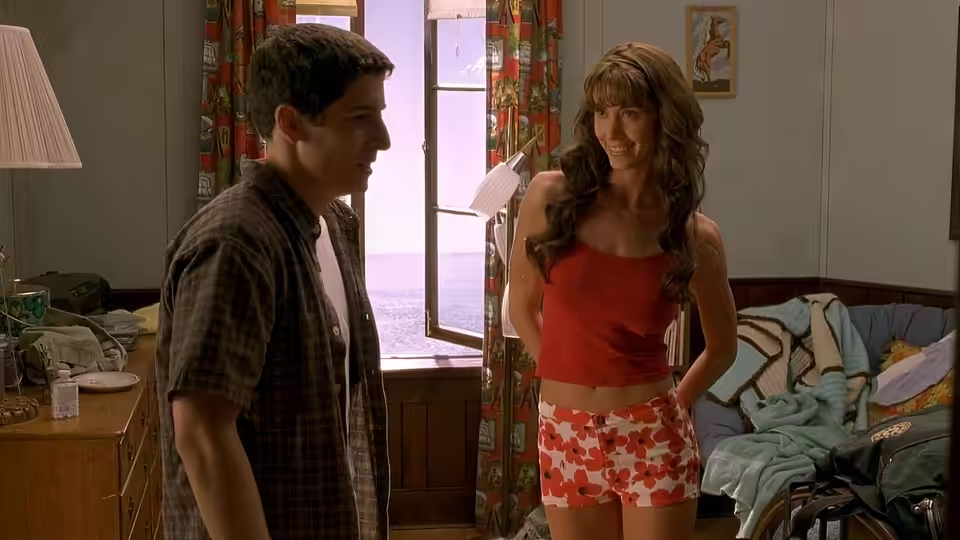
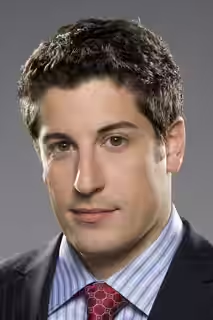
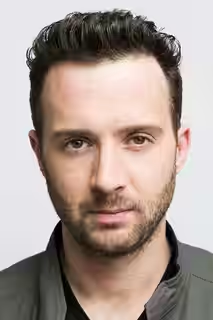
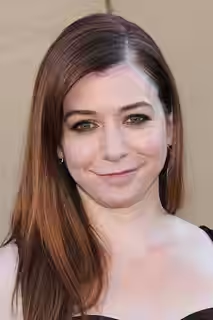
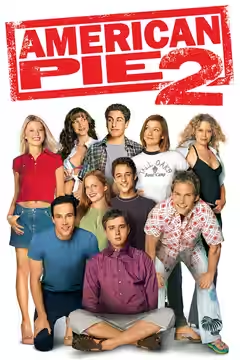
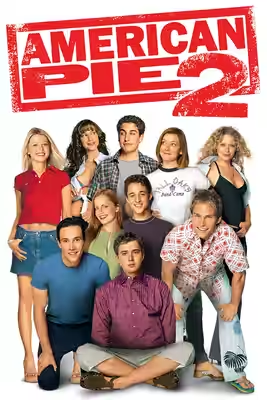
Jason Biggs, Alyson Hannigan and Eugene Levy supply enough warmth to make the repetition tolerable. But this uneven sequel leans too heavily on familiar embarrassment, with too little comic invention to justify another 111 minutes.
American Pie 2 has enough affection for its characters to remain tolerable, but too few fresh jokes to make their return worthwhile. Director J.B. Rogers and screenwriter Adam Herz understand that embarrassment needs somebody we care about at its centre. Their difficulty is finding something new to do with that understanding. The sequel keeps asking familiar personalities to compensate for familiar situations, and its cast can only do so much.
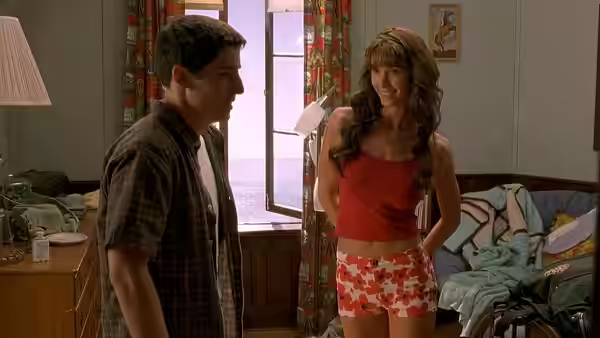
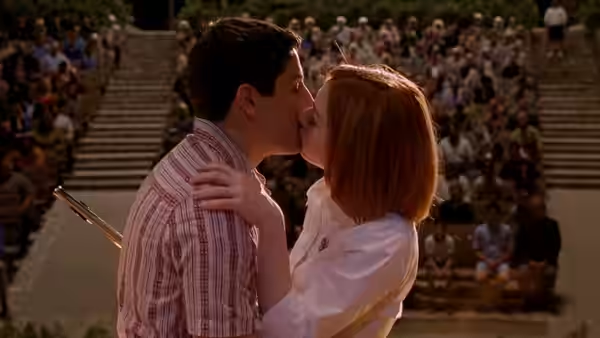
Jason Biggs remains a useful centre as Jim Levenstein because he makes sexual anxiety seem exhausting rather than merely foolish. His appeal depends on the suspicion that Jim would welcome a quiet conversation if he knew how to survive one. Alyson Hannigan brings a welcome directness to Michelle Flaherty, giving the comedy some relief from all that male uncertainty. Together, their contributions suggest how much more enjoyable this material becomes when the performers are allowed to establish a connection instead of prepare another humiliation.
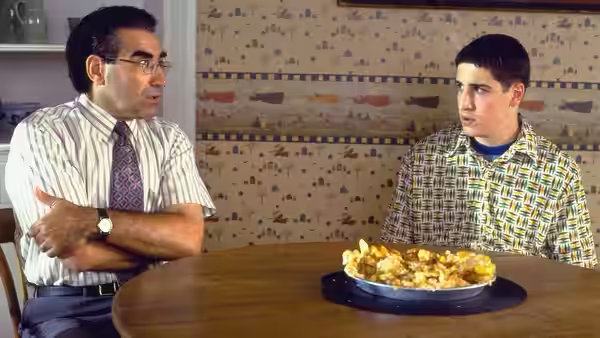
We laughed at Eugene Levy’s embarrassing father because his earnestness makes Jim’s discomfort worse without making the father seem cruel. Levy understands that the adult’s wish to help can be sufficient cause for the younger man’s agony. He gives the film a kindness that matters, particularly when the broader jokes begin to feel like obligations. These are the passages in which the awkwardness feels recognisably human, and Biggs has something more rewarding to respond to than the prospect of further disgrace.
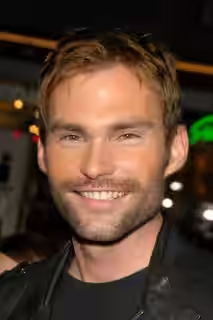
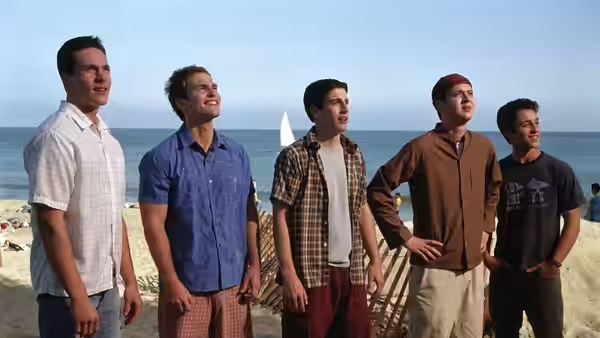
Seann William Scott is a more divisive pleasure as Steve Stifler. His forcefulness can give a slack passage some necessary energy, but the character becomes wearing when volume and insistence have to provide the whole joke. Chris Klein gets less rewarding material as Chris ‘Oz’ Ostreicher, and the ensemble’s uneven distribution of interest becomes difficult to ignore. Herz also relies too readily on the women being sensible while the men make fools of themselves, which limits how much surprise either group can offer.
Mark Irwin’s cinematography keeps the comedy easy to follow, though its straightforwardness seldom supplies an additional laugh. Richard Toyon’s production design is similarly unobtrusive; it supports the performers without giving the film much visual personality. David Nessim Lawrence’s music helps maintain the light tone, but cannot make a familiar predicament feel newly amusing. The craft is serviceable, and we would have welcomed more occasions when it did something beyond keeping the next exchange moving.
Editors Larry Madaras and Stuart H. Pappé face the larger problem of giving a loose collection of incidents some momentum. Individual passages can move briskly while the film itself seems to be making little progress. At 111 minutes, the repetition becomes a substantial drawback, especially when a joke’s preparation is more elaborate than its eventual reward. Rogers gets better results from the cast’s awkward rapport than from the effort to increase the indignities.
A sex comedy need not become respectable to deserve another instalment, and crude humour is not the objection here. Familiarity can be pleasurable too, provided the writing gives familiar people something worth returning for. This sequel offers intermittent warmth and a few laughs, but asks too much patience between them. Return for the cast if their company is enough; anyone hoping for renewed comic invention should look elsewhere.