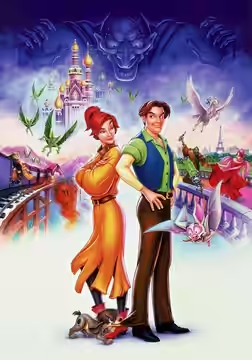
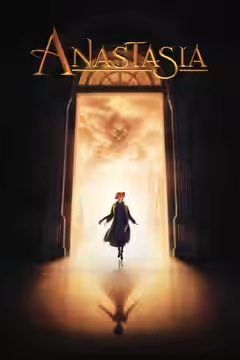
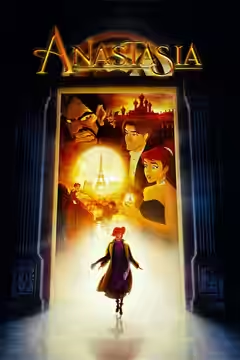
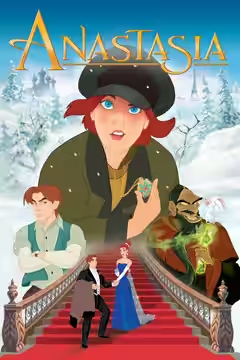
Don Bluth and Gary Goldman’s handsome fake-princess musical is at its best when it stops to waltz and at its worst whenever Rasputin turns up. Children will be fine; adults will enjoy the palaces and have to forgive the history.
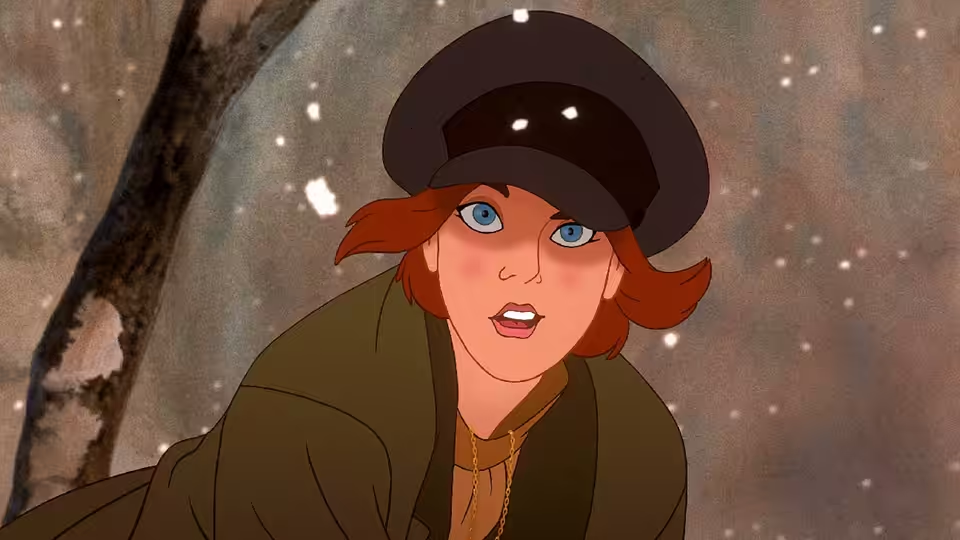
Don Bluth and Gary Goldman have taken the oldest rumour of the last century, that one Romanov daughter walked away from the revolution, and made a 94-minute musical out of it. Susan Gauthier, Bob Tzudiker, Bruce Graham and Noni White’s script gives the legend the shape of a con-artist picture: two chancers need a girl to pass off as the princess, and pick the one girl in Russia who might be her. It is a decent, good-looking film with one scene we will remember for a long time and a villain it did not need.
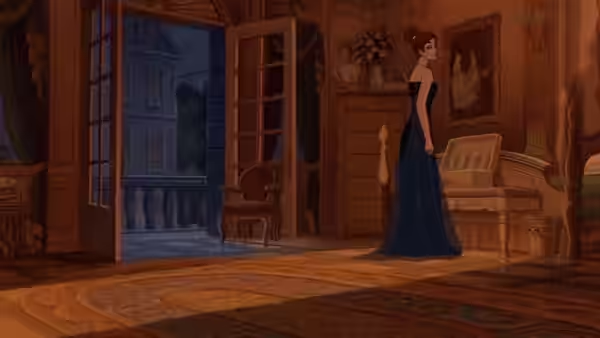
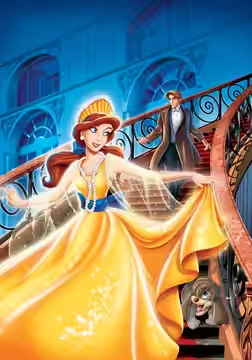
The look is the best of it. Michael Peraza’s production design gives us the palace twice: first lit by candles for the ball, all gilt and mirror and red carpet, then ten years on with the windows boarded, the chandeliers under sheets and snow drifting across the ballroom floor. St Petersburg is drawn in grey and blue, Paris in cream and gold, and the film uses its wide frame to keep whole streets in view. The set pieces are helped by computer animation, a runaway train on a collapsing bridge most of all, and the carriages have weight.
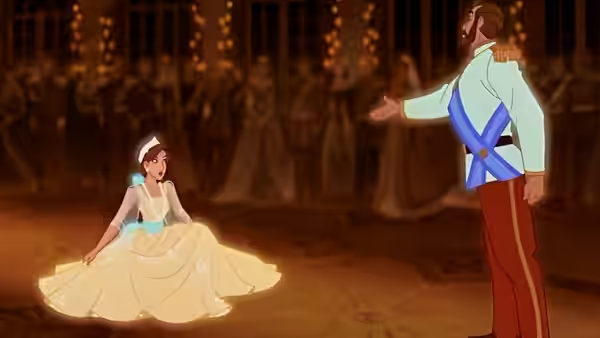
We were moved, more than we expected to be by a film with a talking bat in it, when Anya wanders into the ruined ballroom and sings to herself. The figures in the paintings step down and dance with her, the candles relight as her memory fills the hall, and the last couple to fade are her parents. Bob Bender and Fiona Trayler cut the sequence to the waltz rather than the other way round, and David Newman’s score carries the tune into the rest of the film, so that it keeps turning up under the chase scenes as a reminder of what she is looking for. Nothing else here is that good.
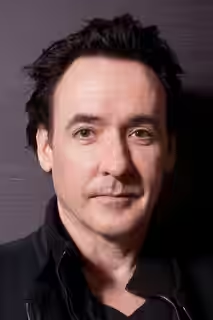
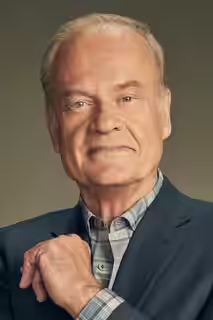
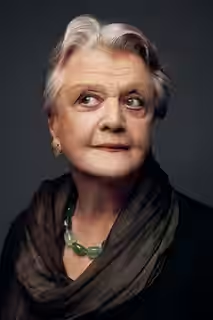
The voices are well chosen. Meg Ryan plays Anya as a brisk, modern American with no patience for being rescued, and John Cusack’s Dimitri is a mumbler who does his best work when he is losing an argument. Kelsey Grammer gives Vladimir a fond, weary decency, and Bernadette Peters turns up late as a cousin in Paris and enjoys herself. Angela Lansbury, as the Dowager Empress, is the one actor who sounds as if she knows what the story is about: a woman who has had too many girls brought to her door and has stopped hoping.
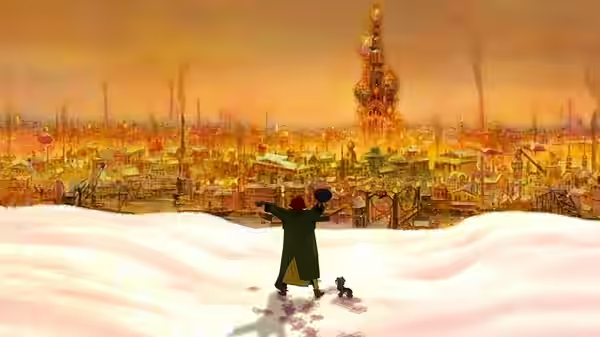
The songs are a mixed bag. The waltz is lovely, and Anya’s number on the road out of the orphanage, sung to a landscape of snow and telegraph poles, earns its size. Others stop the film dead, and a comic number about Paris is the sort of thing you use to put the kettle on.
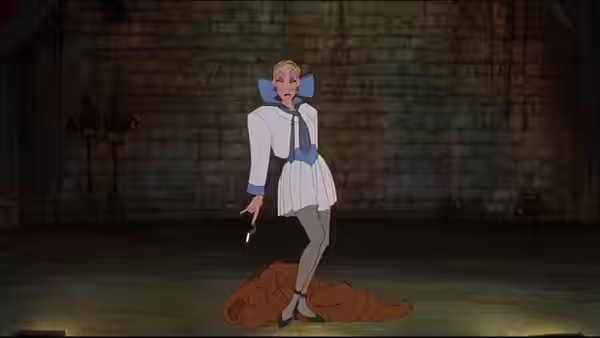
Then there is Rasputin. The writers have decided the revolution needs a cause and hand it to Christopher Lloyd’s holy man, a corpse in limbo whose hands and eyeballs keep dropping off, with Hank Azaria’s Bartok the bat for company. Lloyd has a good time and the green sprites in his big number are handsomely drawn. But every time the film cuts to him, the story with people in it stops, and we found ourselves waiting to be let back on the train. Worse is what he stands in for. The real Anastasia was shot with her family in 1918. The film turns that into a curse and a fall through the ice, but it has taken a massacre and used it as a fairytale prologue, and grown-ups will notice.
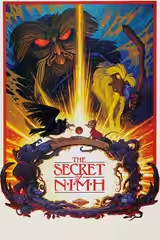
Against Bluth’s own record it is his most polished film and his least personal. The Secret of NIMH (1982) and An American Tail (1986) frightened children on purpose and were the better for it; here the darkness is confined to Rasputin’s cellar and the rest could have come from any studio in the late nineties. Most critics found it pleasant and forgettable, and we are only a little warmer than that. The U certificate is fair, though the decomposing villain may bother the very small. Watch it for the ballroom and the bridge, and do not feel bad about talking through the bat.