Joe Wright’s theatrical staging and Keira Knightley’s performance make this worth a look, but the romance is uneven. The weak link is Aaron Taylor-Johnson’s unpersuasive Vronsky.
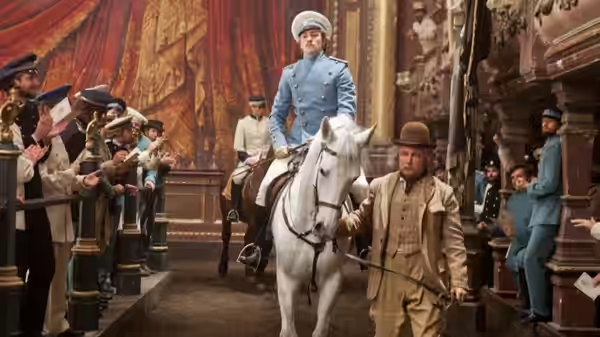
Joe Wright’s Anna Karenina is worth seeing for its staging and Keira Knightley, though the central romance never quite earns the trouble taken over it. Adapting Leo Tolstoy’s novel from a screenplay by Tom Stoppard, Wright makes theatrical performance part of the characters’ daily lives. These people seem conscious of being watched, and the staging asks us to notice that consciousness as closely as the courtship. It is a workable idea, and for a while the pleasure of seeing a scene take shape is enough.
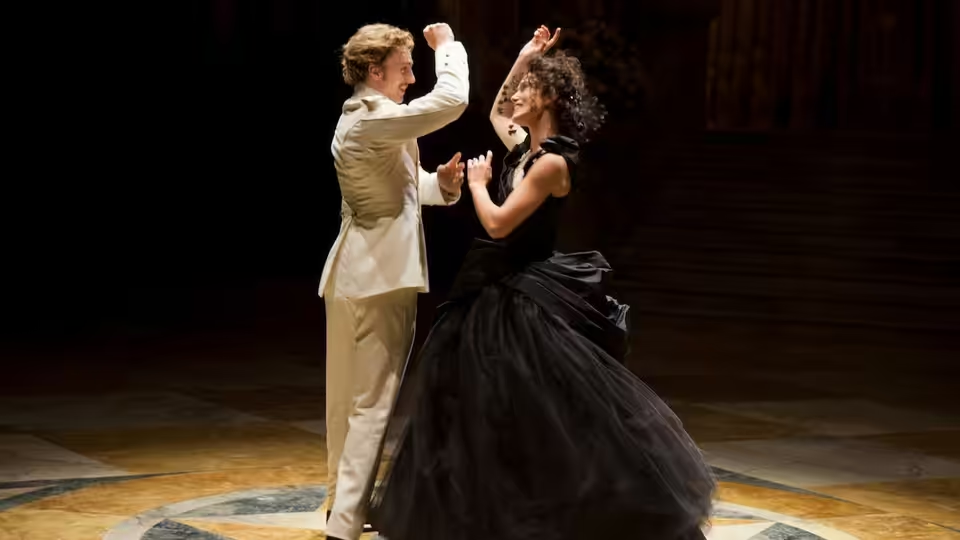
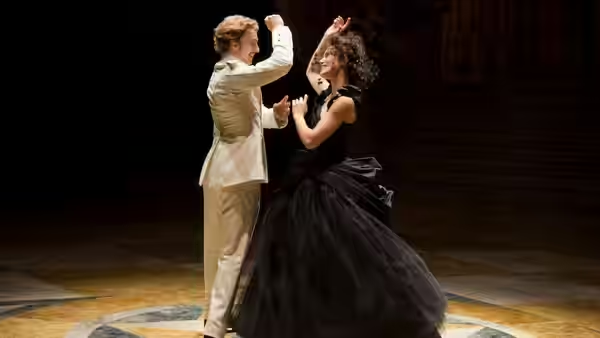
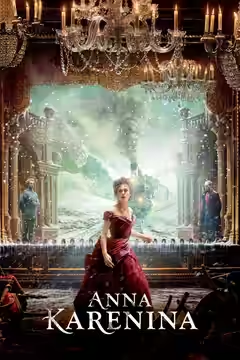
Sarah Greenwood’s production design makes the changes of scene a pleasure in themselves, letting one theatrical setting give way to another without disguising the artifice. Seamus McGarvey’s photography gives the ballroom enough clarity for us to follow Anna and Vronsky’s waltz without losing them in the surrounding display. We were swept up by that dance. Their movement together makes the attraction easy to believe, and the elaborate staging helps us feel it.
Melanie Oliver’s editing gives the transitions a rhythm, although it cannot make every switch between theatrical and conventional presentation feel necessary. The changes sometimes draw so much attention to themselves that we stop thinking about the people involved. Dario Marianelli’s music gives the ballroom a romantic urgency that the lovers struggle to sustain elsewhere. Once the dancing stops, Wright too often has to work up feeling again through another conspicuous piece of staging.
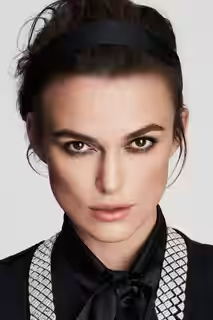
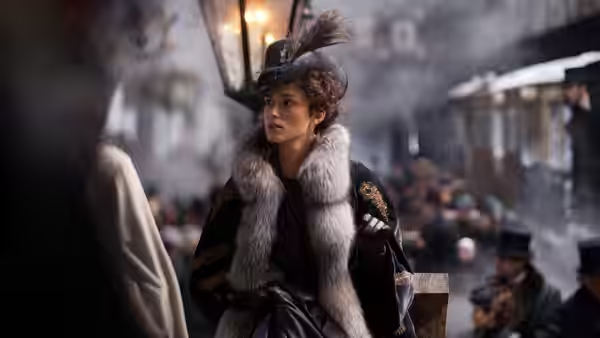
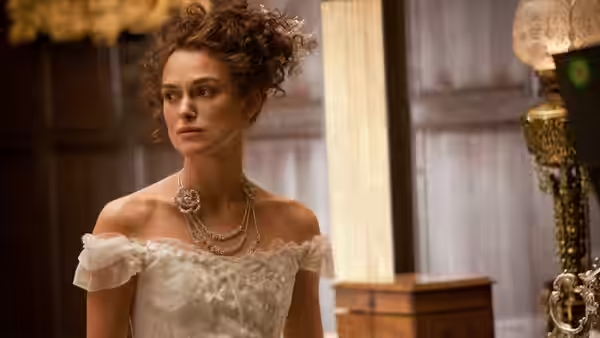
Knightley gives Anna enough uncertainty to survive all this attention to presentation. Her passion feels impatient and her distress less orderly than the staging around her, which is useful in a film so carefully arranged. Jacqueline Durran’s costumes support that performance by making Anna’s changing feelings part of how she presents herself; the clothes never seem irrelevant to the person wearing them. Knightley makes us care about what Anna wants even when we remain unconvinced by the man she wants it from.
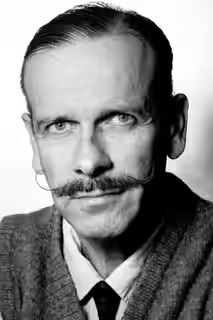
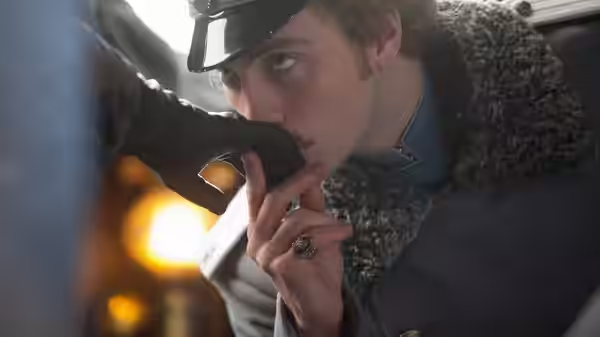
Aaron Taylor-Johnson’s Vronsky is the serious limitation. There is too little in his delivery to explain the force of the attraction, and Knightley is left supplying much of the feeling between them. Jude Law gives Karenin a restraint that makes him more interesting to watch: he allows us to wonder what is being held back. Tom Stoppard’s adaptation needs the central relationship to carry considerable emotional weight, and the casting leaves it struggling to do so.
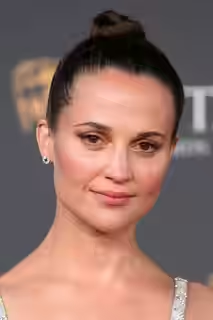
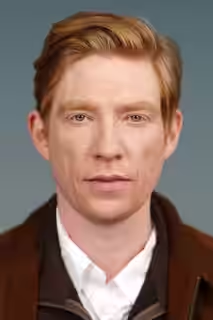
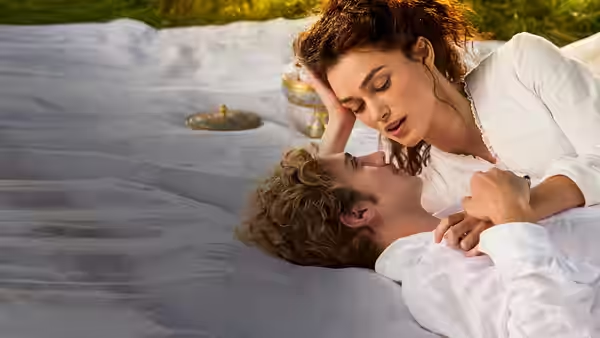
Domhnall Gleeson’s Levin and Alicia Vikander’s Kitty offer a welcome change of company. Their romance is touching, particularly outdoors, where the film gives us a rest from admiring the scenery and lets us concentrate on the people. Vikander brings a spontaneity that makes the surrounding formality easier to notice, without making Kitty seem to belong in a different film. These scenes suggest how much feeling Wright can find when the arrangement of a scene stops demanding quite so much of our attention.
As a costume romance, Anna Karenina takes an appealing risk in asking us to accept such conspicuous artifice. The ballroom shows precisely how well it can work, which makes the unevenness elsewhere more frustrating. We do not need every literary adaptation to behave respectfully, but a romance does need to convince us that these particular people want each other. Choose it for the staging and Knightley, provided an unconvincing Vronsky is not a disqualification.