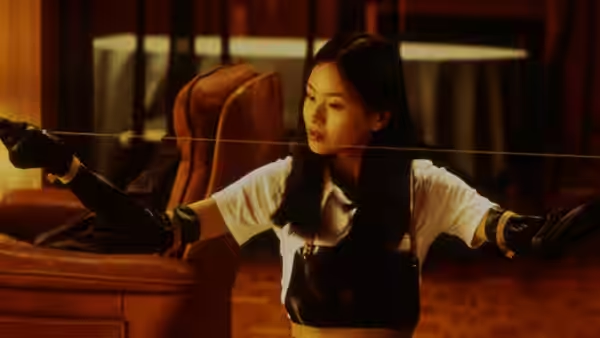
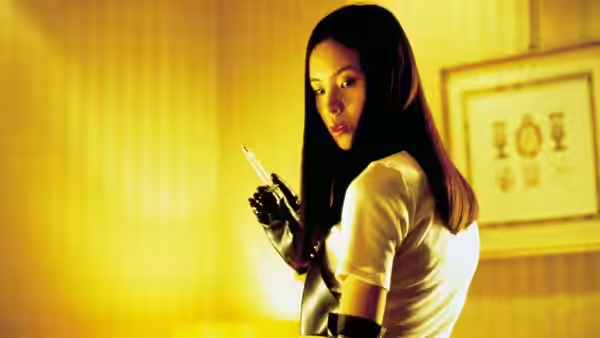
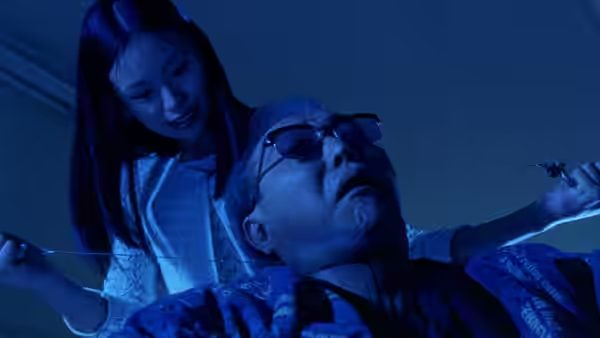
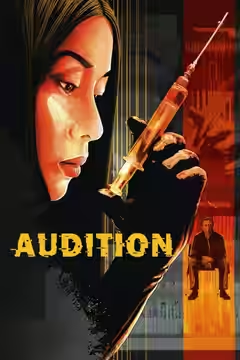
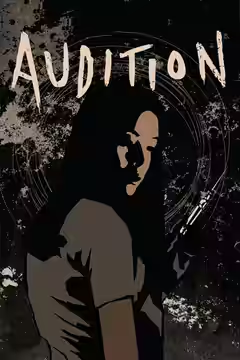
Takashi Miike makes the apparent romance in Audition disquieting through patience and Eihi Shiina’s performance. We recommend it with two cautions: the violence is distressing, and its treatment of women is less assured than its control of tension.
Takashi Miike’s Audition is a patient, deeply unsettling horror film, though its treatment of women is harder to defend than its control of tension. It begins sufficiently like a romance to make us attend to the people before we start anticipating danger. That early investment matters, and Miike is prepared to spend time securing it. Daisuke Tengan’s screenplay, adapted from a novel by Ryū Murakami, allows the opening drama to occupy a substantial stretch of the film without continually promising that something dreadful is coming.
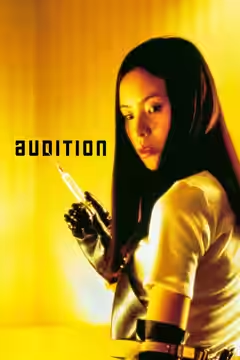
Ryo Ishibashi’s Shigeharu Aoyama gives that apparent romance a credible human centre, which is essential if the patient beginning is going to hold. Eihi Shiina’s Asami Yamazaki makes it difficult to settle into watching it. We were unnerved by the difficulty of reading her, even while the film was inviting us to consider its romantic possibilities. Shiina sustains that uncertainty without making the performance feel like a succession of clues, and Miike gives us time to keep trying to understand her.
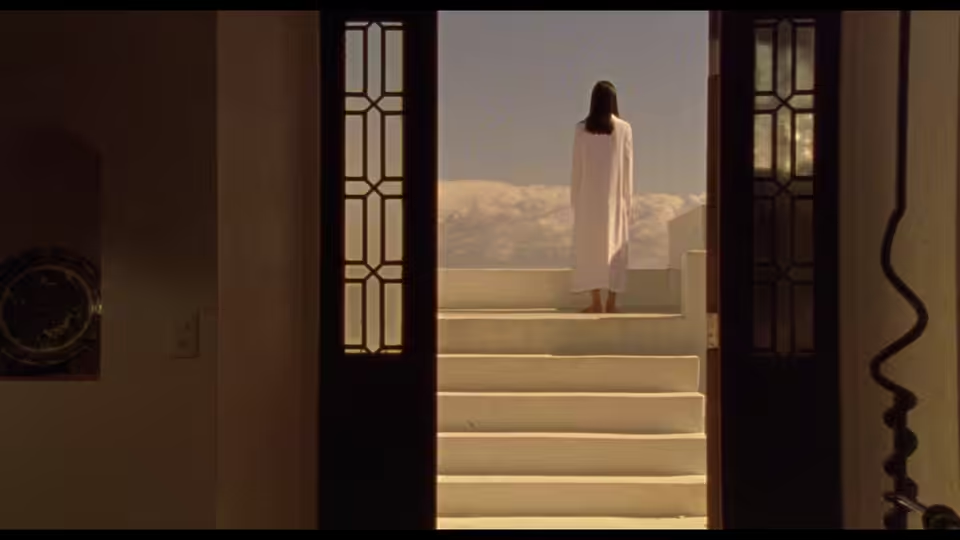
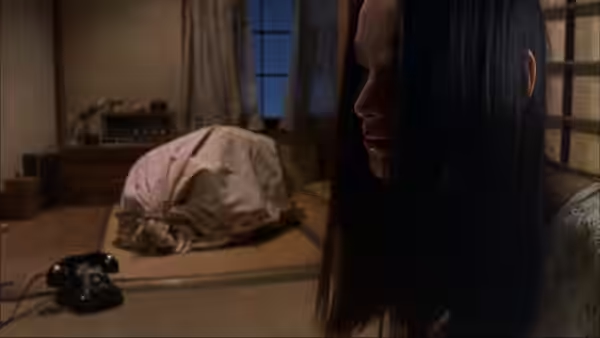
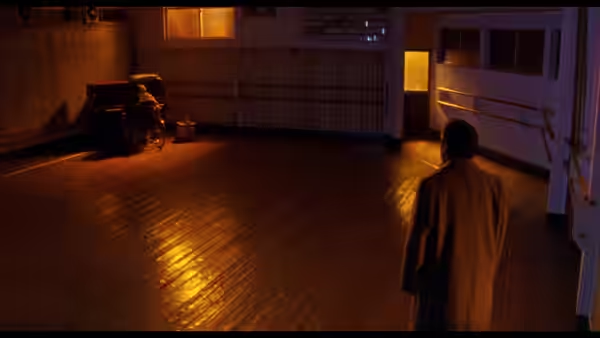
Hideo Yamamoto’s cinematography makes the drama attractive enough to sustain that attention without reassuring us. The beauty of the images helps explain why the waiting works: there is something worth looking at before there is anything to recoil from. Tatsuo Ozeki’s production design is effective in a quieter way, giving the people surroundings that do not compete with them for attention. Our interest keeps returning to the performers, particularly Shiina, rather than wandering off to admire the setting.
Yasushi Shimamura’s editing does more conspicuous work, making the handling of time contribute to our uncertainty about what we are watching. Its effectiveness depends on discoveries we will leave alone. Kōji Endō’s music contributes less to our unease than the duration of a scene or the difficulty of reading a performance; the score is not what we remember afterwards. At 115 minutes, this is horror that asks for sustained attention, and its long preparation usually earns it.
Usually, rather than always. There are stretches where the deliberate pace starts to feel too protective of its surprises, and understanding why Miike wants us to wait does not make every wait equally involving. The opening has to work as drama, independently of whatever a viewer has heard about the horror. It largely does, but anyone arriving solely for shocks may spend too much of it checking how far there is to go.
The sexual politics are the more substantial reservation. Miike’s examination of male arrogance has bite, particularly in its suspicion of possessiveness passing for love. We are less convinced that the film’s treatment of women consistently escapes the attitudes it appears to question. Its ambiguity is disturbing, but we hesitate to credit every troubling implication as evidence of psychological insight; some of the discomfort comes from uncertainty about how carefully those implications have been considered.
Within horror, the commitment to an apparently romantic beginning is what makes Audition distinctive. Miike risks allowing the early drama to disappoint expectations that the genre itself encourages, and the actors give that decision substance. The reservation about its sexual politics remains worth discussing rather than explaining away because the film frightened us. We recommend it to horror viewers prepared to give the early drama their full attention, and prepared for distressing violence.