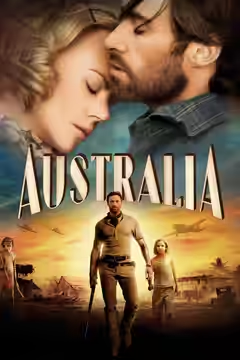
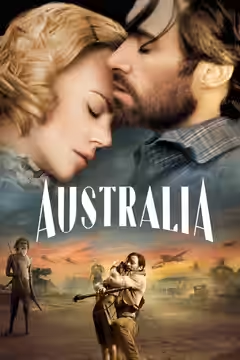
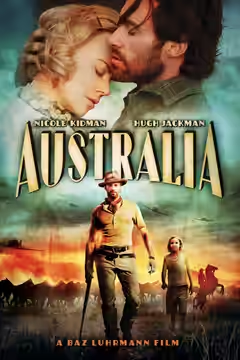
Baz Luhrmann’s Australia has enough beauty and romantic warmth to make its muddle frustrating. The stars can hold our attention, but 165 minutes of uneven storytelling exhaust the goodwill they earn.
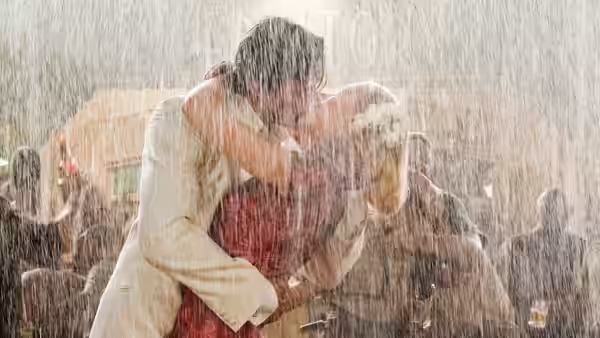
Baz Luhrmann wants Australia to provide a whole evening’s entertainment: adventure, romance, handsome stars and a great deal of scenery. There is pleasure in that ambition, and enough on screen to make the disappointment matter. But the film keeps interrupting its own attractions, and its 165 minutes ask for more patience than the story earns. It is hard to settle into a romance when the storytelling keeps getting restless.
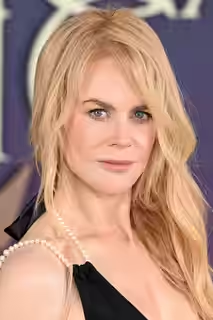
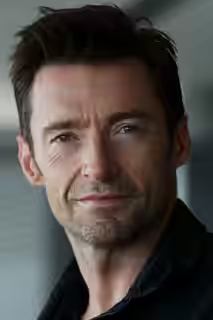
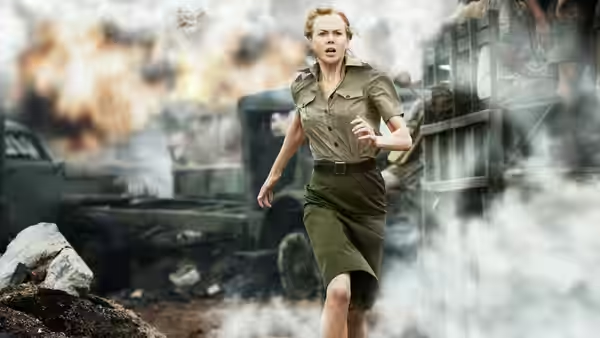
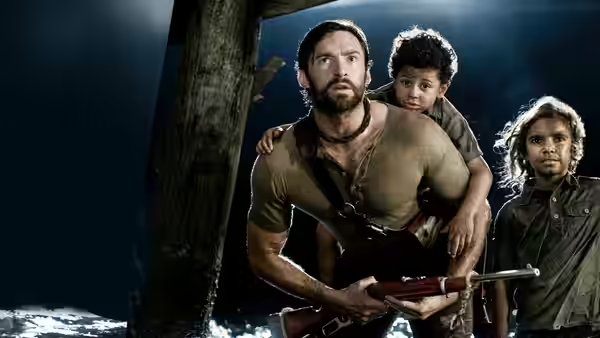
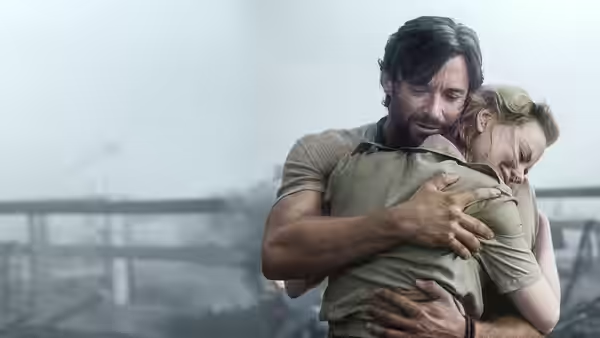
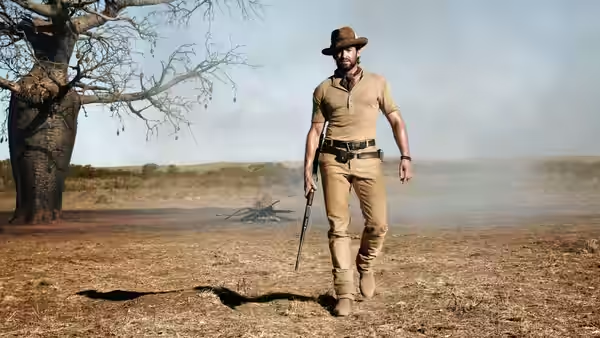
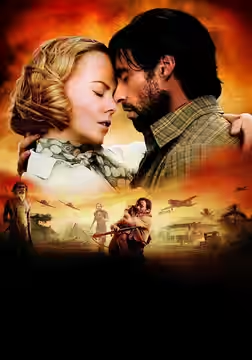
Nicole Kidman, as Lady Sarah Ashley, and Hugh Jackman, as The Drover, give us the most reliable reason to keep watching. Jackman’s sincerity is particularly useful in a film so prone to overstatement. We were touched by his romantic playing, because he lets the affection seem simple rather than making every moment another occasion for display. Kidman and Jackman are persuasive together, though the story does not always give their attraction time to develop.
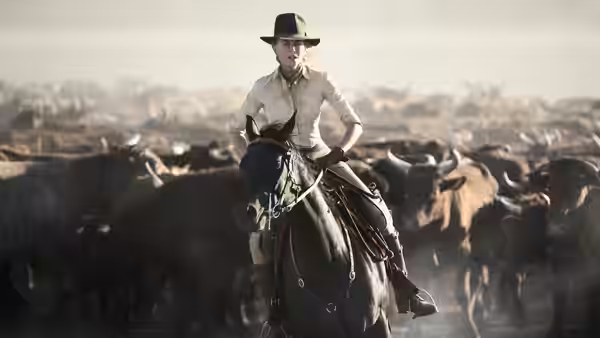
Mandy Walker’s cinematography makes the Outback a substantial part of the appeal, giving the scenery a grandeur the storytelling cannot consistently match. The cattle drive supplies the excitement promised by all that scale. We can follow a clear physical task and enjoy the movement, which is a relief after the fussier passages. Some unconvincing visual effects intrude on that pleasure, occasionally making the image look less solid just when the action needs weight.
Catherine Martin’s production and costume design suit Luhrmann’s appetite for display: the clothes and surroundings are there to be enjoyed at length. That richness is a legitimate pleasure in an adventure romance, even when it encourages the film to linger. David Hirschfelder’s score is less helpful, adding emphasis to emotions that the actors could carry without so much assistance. The music leaves too little space around their performances.
The editing by Michael McCusker and Dody Dorn never quite settles the changes of pace. Individual stretches have energy, but their arrangement keeps breaking the feeling that one event follows naturally from another. The film can hurry through something that needs attention and then spend too long insisting on something we have already understood. This is where the length becomes wearing: there is ample time for the story, yet surprisingly little sense of which parts deserve it.
That weakness also belongs to the screenplay, credited to Stuart Beattie, Baz Luhrmann, Richard Flanagan and Ronald Harwood. Its determination to provide more incident makes the later stretches feel increasingly contrived, without giving the central relationship much more depth. We do not need realism from this sort of melodrama, but we do need to believe in the importance of each new complication. Too often, we are simply waiting for Kidman and Jackman to have the screen to themselves again.
We can accept coincidence, excess and people looking improbably good under pressure in an adventure romance. Luhrmann understands the appeal, and the cattle drive shows he can deliver it with conviction. But occasional excitement is not enough to make the whole journey worth recommending, especially when the romance is repeatedly crowded out. At 165 minutes, we would want to be considerably fonder of it.