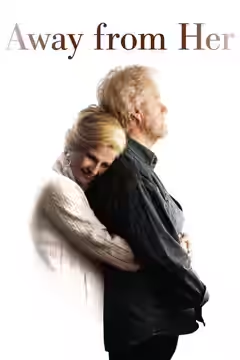
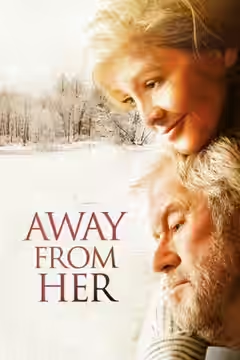
Sarah Polley’s first film as director takes Alice Munro’s story about a wife with Alzheimer’s and a husband left watching and plays it straight, without a swell of music or a speech. Julie Christie is remarkable; the structure fidgets more than it needs to.
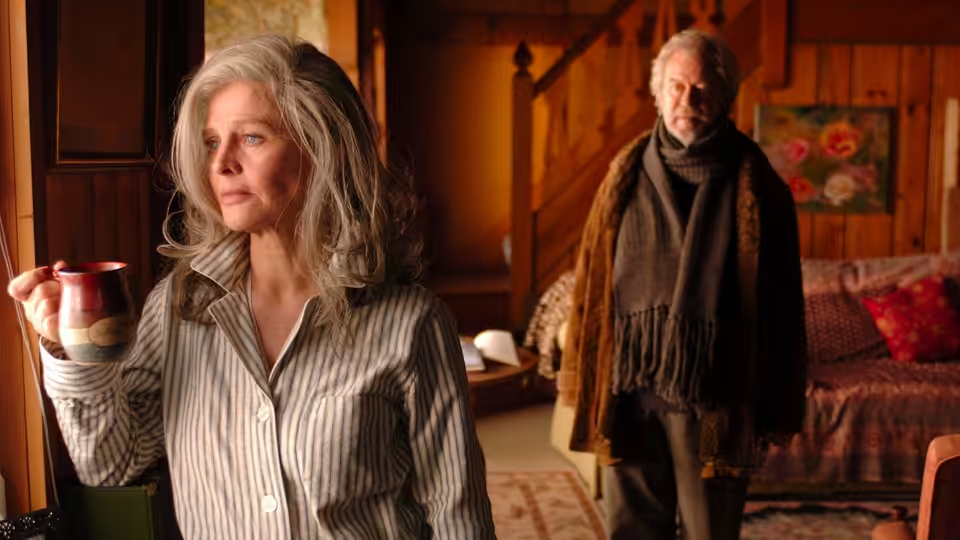
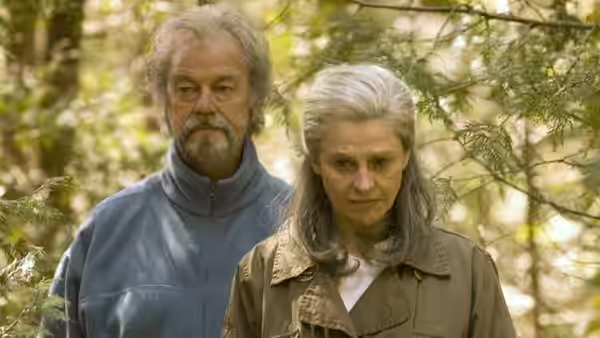
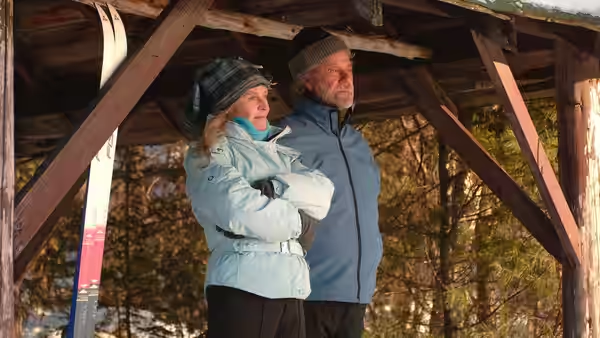
Grant (Gordon Pinsent) and Fiona (Julie Christie) have been married a long time, and the first thing Sarah Polley shows us is the two of them out in the snow, small against it and in step. Not long after, Fiona washes up after dinner and starts putting things away in the wrong places. Polley, adapting Alice Munro’s short story The Bear Came Over the Mountain, has made a film about Alzheimer’s that is really about a marriage, and about what a husband is owed by a wife who no longer knows him. It is good, and it is quiet about being good. We would put it in front of anyone who has sat in a care home car park working up to going in.
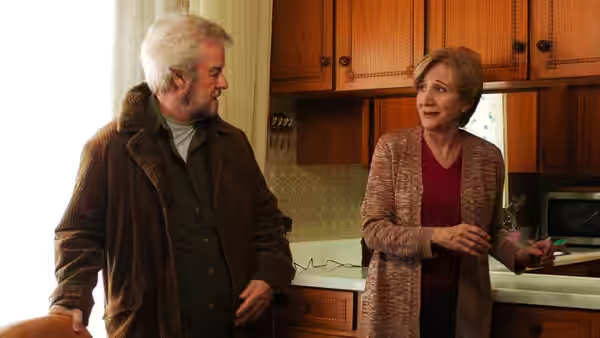
Christie is the reason most critics give for seeing it, and they are right. Fiona is nobody’s object of pity. She reads the pamphlets with a scientist’s interest, chooses Meadowlake herself, and tells Grant in the car that she would like to leave with some dignity. Christie plays her bright, amused and about half a second behind, so that in every conversation we watch her catch up and pretend she was never behind at all. We were moved more than we had braced for by one small scene in the kitchen. Fiona tells Grant she thinks she is beginning to disappear, and she smiles as she says it, as though reporting an interesting fact about someone else. Christie keeps her eyes dry. That is what did it.
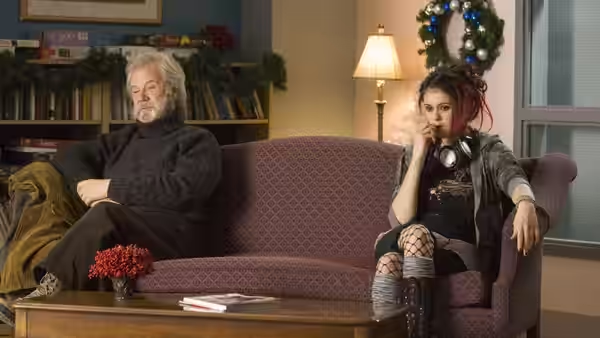
Grant is the film’s actual subject, and Gordon Pinsent plays him with almost nothing moving above the collar. The film lets him remember their marriage in pieces while he sits in a lounge chair watching his wife fetch a cardigan for Aubrey (Michael Murphy), a resident who cannot speak. Pinsent does not ask us to feel sorry for Grant. He lets us watch a man wondering what he has earned and deciding to keep turning up regardless. It is the kind of performance that gets overlooked next to a brighter one, and it should not be.
Luc Montpellier lights the house in lamplight the colour of weak tea and the world outside it in the hard blue-white of deep winter, and he does not let Meadowlake have either. Kathleen Climie’s production design gives the home wide corridors, pastel walls and a big window onto the snow; it is pleasant, which is worse than grim would have been. Debra Hanson dresses Christie in white and cream, a long pale coat under a silver bob, so that outdoors she is nearly part of the snow and indoors she is the brightest thing in the corridor. Jonathan Goldsmith’s score is a few piano notes and long silences, and it has the manners to stay out of the visiting hours.
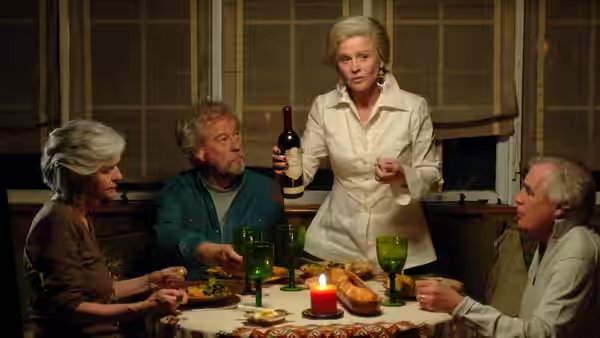
The home is populated with care. Wendy Crewson’s Madeleine, who runs it, gives Grant the tour and explains that they like to keep things upbeat, and Crewson lets us hear exactly how much practice that line has had. Kristen Thomson’s Kristy, a nurse, is the best-written small part: she tells Grant what she sees, no more, and is the only person in the film who talks to him as if he were still a husband. Michael Murphy says nothing for the whole film and is never once a prop. Olympia Dukakis arrives later as Aubrey’s wife Marian and brings a harder, more practical kind of grief into a story that needed it.
The structure is where we part company with the film. Polley opens somewhere near the end, loops back and cuts between months with a confidence the story does not need, and David Wharnsby’s editing has to keep reminding us where we are. A plain chronology would have hurt more. Fiona’s pointed asides about the past arrive often enough that the film seems anxious we might miss its point about a long marriage and what it has cost. We had not. And Kristy, for all Thomson’s plainness, is handed a line or two that sound like the writer. At 110 minutes it is not long, but the middle hour sits still, and some critics have found it glacial; we were content to sit with it.
Watch it at home, on a quiet night, with someone you have known a long time. It will start a conversation you may not have planned on having. Have it anyway.