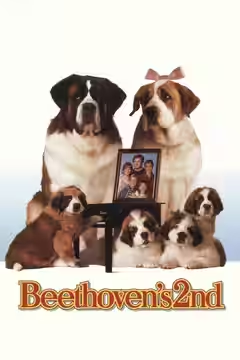
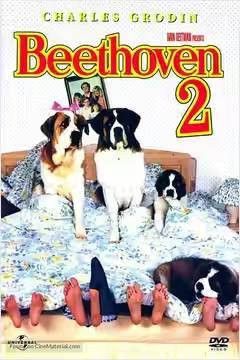
A sequel that knows what sold the first film and orders four more of it. The puppies are hard to resist and Charles Grodin’s long-suffering face still earns a laugh, but the script is a pretext, the gags repeat and the mountain finale belongs to a different film.
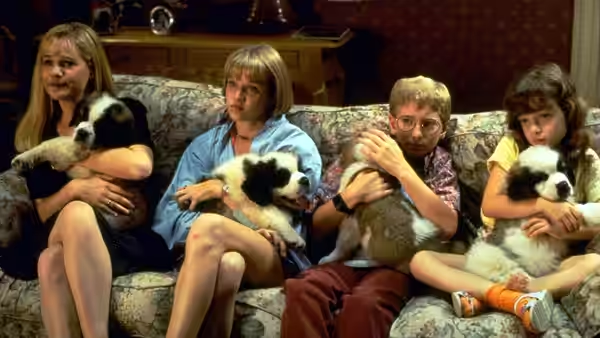
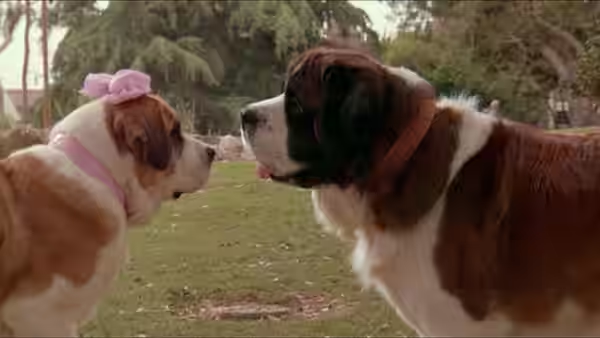
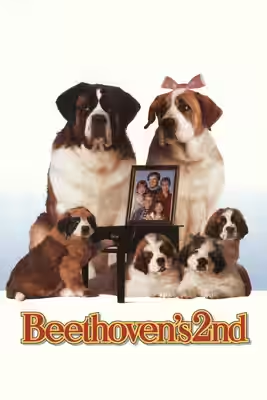
The first Beethoven (1992) made its money by putting a St Bernard in a tidy house and letting him ruin it. Rod Daniel’s sequel, which reached UK cinemas on 24 March 1994, has one idea about how to follow that, and it is the oldest in the business: more dogs. Beethoven meets Missy in the park, four puppies follow, the Newton children hide them in the basement, and George Newton (Charles Grodin), who lost the argument about one dog last time, now has five to lose to. It is slight and amiable, and at 89 minutes it still feels padded.
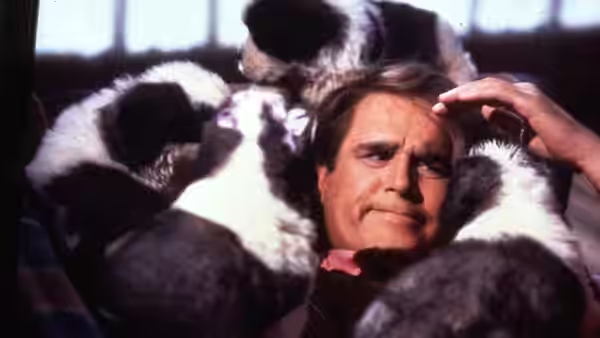
The puppies are the point and they deliver. Daniel and his editors, Sheldon Kahn and William D. Gordean, have worked out that a St Bernard puppy falling off a step needs no setup and no punchline, only a cut to a child’s face, and they get a good half-dozen laughs that way without visible effort. Grodin plays George as a man who knows he has already lost and is negotiating the terms. His best work is silent: a long look at something chewed, a pause before opening a door. We laughed out loud twice, both times at Grodin’s face rather than at anything a dog did, and both times with the faint suspicion that he was the only person on the set working.
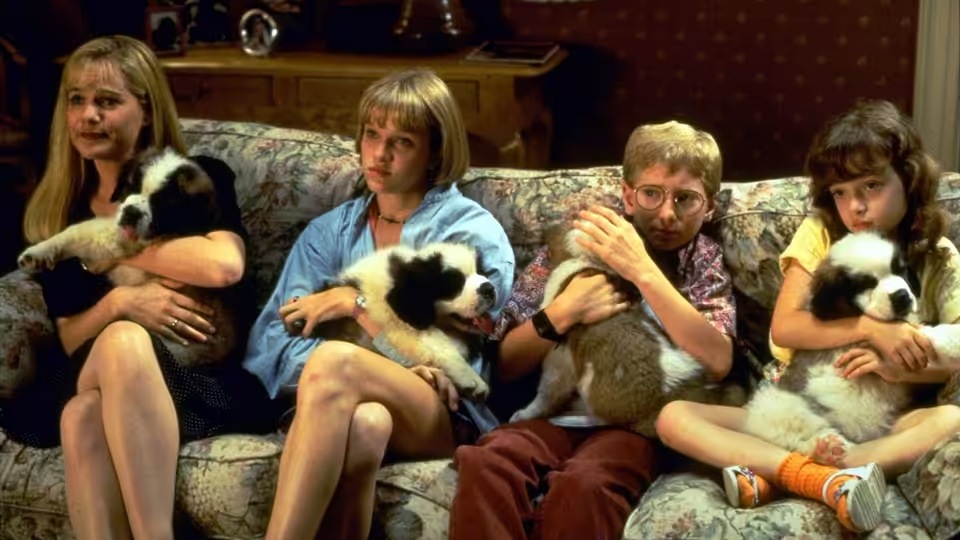
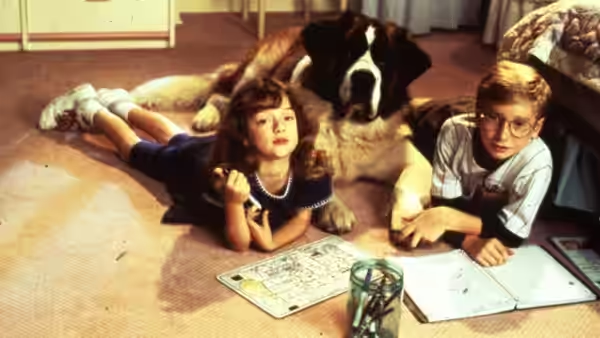
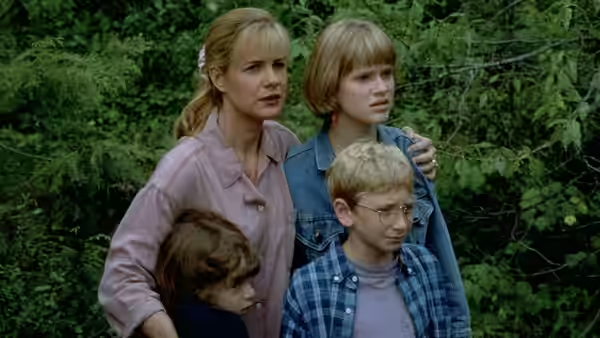
Bonnie Hunt’s Alice is given little to do and does it with the ease Hunt has always had, so that a reaction shot looks like a decision. Nicholle Tom’s Ryce gets the only subplot about a person rather than a dog, a crush on an older boy, Taylor (Ashley Hamilton), which Len Blum’s script treats mostly as a chance to issue a warning about older boys. It is handled flatly. Ted (Christopher Castile) and Emily (Sarah Rose Karr) exist to carry puppies up and down stairs and look alarmed when the stairs creak.
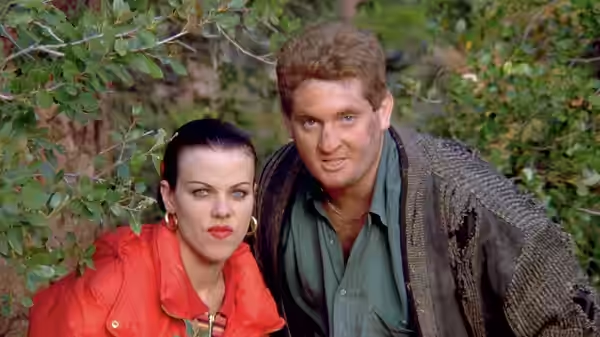
Debi Mazar’s Regina is the villain, Missy’s owner, a woman who wants the dog only for what she will fetch, and Mazar plays her hard-mouthed and bored, as someone who thinks the suburbs are beneath her and says so with every look. April Ferry dresses her in clothes too tight and too loud for daytime, so we know what she is before she speaks. It is a broad performance and it is the right size for the film. Chris Penn, as her boyfriend Floyd, is there to be knocked over, and is. The trouble is the material around them. Blum’s script goes back, as the first film did, to the puppies’ bowels and bladders whenever it needs a laugh, and by the third such joke we had stopped laughing and started counting.
Bill Butler, who photographed Jaws (1975), shoots all of this in bright, even, shadowless light, lawns and kitchens and a basement better lit than most sitting rooms. It is television lighting, competent and anonymous, and it suits a film that has no secrets. Lawrence Miller’s Newton house is pale wood and gingham, built to be sat on by something heavy. Randy Edelman’s score is the film’s most tireless performer, a jaunty strings-and-woodwind figure that arrives a beat before every joke to say one is coming, and swells to full orchestra whenever two dogs look at each other. It is doing the work the script left undone, and it does it at volume.
For its last stretch the film moves the family and the dogs to the mountains for a holiday, and stops being a comedy about a household to become a children’s adventure, with a chase and a set piece we will not describe. The join shows. We felt the gear change, and we also felt the time: this is a short film and we still looked at our watch in its last twenty minutes, which is not where a comedy wants you looking. The holiday is there because the script needed somewhere for a climax to happen, and it never pretends otherwise.
Daniel made K-9 (1989), so he knows a dog can carry a scene if the camera simply holds on it; here he trusts that about half the time and trusts the score the other half. Against the 1992 film this is about level: a little more plot, a few fewer good jokes, four more dogs. Children under eight will be delighted and will want the puppies back before the credits have finished. Adults will be content in the way one is content when a car journey ends sooner than feared. It carries a U certificate and earns it; nothing here will frighten anyone, the villains included.