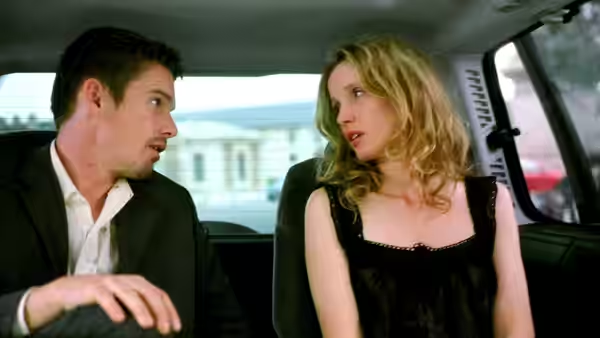
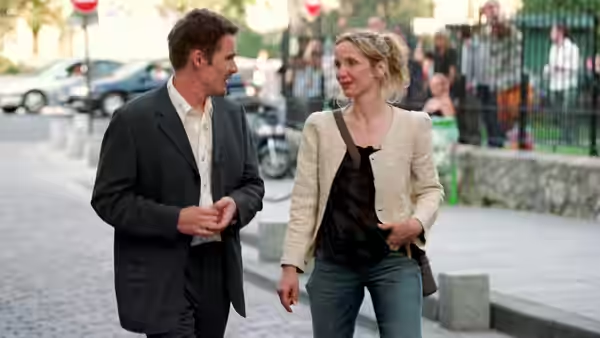
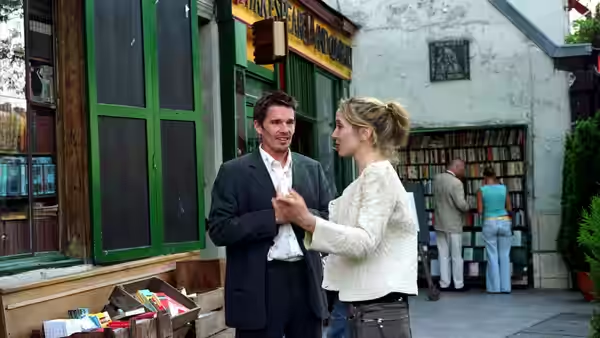
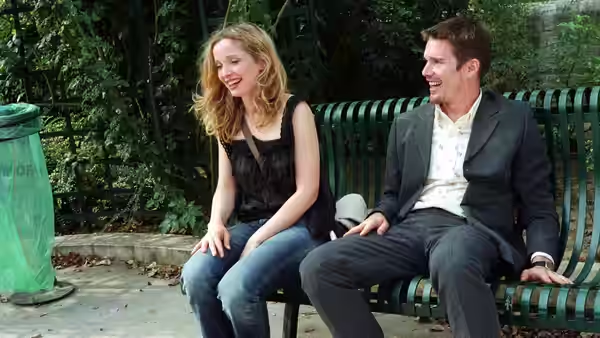
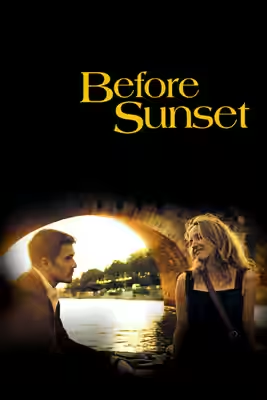
Jesse (Ethan Hawke) and Céline (Julie Delpy) sitting close on a green bench
Film review

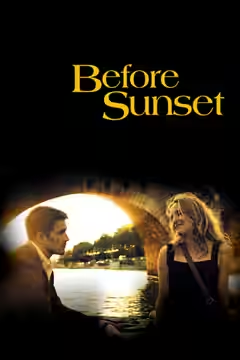
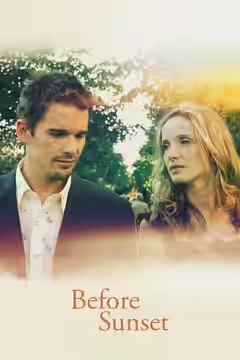
Before Sunset

2004 · Directed by Richard Linklater · 1h 20m

In a sentenceAll that Parisian scenery, and we spend the film inspecting two faces for signs of encouragement

Jesse (Ethan Hawke) and Céline (Julie Delpy) meet again in Paris, nine years after their earlier romance. As they walk through the city, they talk about the lives they have led apart and return to the connection they once shared. Familiarity makes conversation possible, but it does not make candour easy. Recollections, opinions and jokes offer ways to approach subjects each has reasons to avoid, as both decide how much they are prepared to tell the other. Richard Linklater follows their reunion in real time, with the conversation moving between catching up and reconsidering the past.

Plays from YouTube when you press play; nothing loads from them until then.

Fi1m review

Richard Linklater’s Before Sunset is a romance we would recommend to almost anyone. Ethan Hawke and Julie Delpy make its long conversations gripping, even when the dialogue sounds a little too carefully prepared.

Richard Linklater asks us to spend 80 minutes listening closely to two people, and gives us ample reason to do it. In Before Sunset, Jesse and Céline meet again in Paris nine years after their earlier romance, with enough familiarity to talk freely and enough uncertainty to make that freedom risky. We would recommend it even to those who normally grow impatient with talkative romances. Every change of subject raises the possibility that they are about to say something they cannot take back.

Ethan Hawke’s Jesse and Julie Delpy’s Céline have the conversational ease of people who remember enjoying each other’s company. The actors also make us notice how much effort goes into sounding casual. Hawke lets Jesse’s wish to impress remain visible; Delpy gives Céline’s candour an edge that makes easy reassurance difficult. We felt unexpectedly anxious when their banter gave way to talk of disappointment: they sounded like people who could still hurt each other. The affection is convincing enough for an ill-judged remark to matter.

The screenplay is credited to Linklater, Hawke and Delpy, and the actors sound comfortable pursuing a thought beyond the point where most scripts would change the subject. They allow their characters to be funny, repetitive and occasionally irritating. A remark can be offered as an opinion, then start to sound like a question about the person hearing it. We recognise the habit of discussing life in general when asking a personal question would make the speaker feel too exposed.

Lee Daniel’s cinematography keeps pace with the pair in long, warmly lit tracking shots, allowing their talk to find its rhythm. Paris is attractive without requiring a separate pause for admiration. Baptiste Glaymann’s production design is similarly unobtrusive, leaving the surroundings secondary to the conversation. The city remains present as they walk, but Daniel gives us time to watch the actors listening as well as speaking.

Sandra Adair’s editing preserves the sense of a conversation unfolding in real time, without making its continuity feel like an exercise. The long takes earn their length because the balance between the two people keeps changing. At 80 minutes, there is little opportunity to forget an awkward remark before its implications become apparent. Linklater trusts us to remember what has been said, and to notice when the subject has been changed a little too quickly.

There are exchanges where that conversational fluency becomes too polished. Linklater, Hawke and Delpy sometimes give their characters observations that sound prepared for an appreciative audience, and the pair’s self-absorption can become tiring. We wanted a little less ready-made wisdom in those passages. The performances keep them tolerable: neither actor insists on being charming, and their occasional vanity feels plausible in people hoping to make a good impression on someone whose opinion still matters.

As a romance, it gives unusual weight to the work of catching up: deciding what to disclose, judging a response, trying again. The pleasure comes from seeing two articulate people discover that being able to talk does not settle what they need to say. Linklater lets regret complicate their pleasure in meeting, and takes their disappointments seriously enough to make us care about what they risk by speaking frankly. Watch it with someone who will want to talk afterwards.

Critical consensus AI synthesised

84
Positive
12
Mixed
1
Negative
0

Most critics respond warmly to Before Sunset, with praise clustering around Hawke and Delpy’s chemistry, the natural dialogue and the emotional weight of the reunion. The reviews repeatedly credit the real-time structure and long takes with allowing casual conversation to disclose regret, disappointment and lingering desire without forcing the drama. Several regard it as a deeper, more mature continuation of the first film, finding that its romanticism survives the characters’ greater experience of unhappiness.

The spread is largely positive, and reservations are limited rather than widely shared. Empire notes concerns about the short runtime and abrupt ending, though other reviews praise the ending as a particular strength. Eye for Film supplies the sole mixed assessment: it admires the conversational rhythm and filmmaking but finds the characters self-involved and their observations platitudinous, marking the clearest disagreement over the people whose company most critics find compelling.

Los Angeles Times
2 July 2004 · Manohla Dargis
90*

The critic calls it a rapturous return and a triumphant breakthrough for Linklater, celebrating how it takes love seriously in every sense. It singles out the collaborative screenplay and the matured talent on display in the actors' performances.

Read the full review →
Sight and Sound
1 August 2004 · Nick James
90*

The sequel surpasses the original as a sophisticated, mature 'romance for realists' with naturalistic dialogue largely developed by the actors. It excels in its real-time structure, emotional unravelling, and the performances of Hawke and Delpy, capturing regret and reconnection with rare depth.

Read the full review →
The Hollywood Reporter
11 February 2004 · Kirk Honeycutt
90*

The critic calls it one of the most wildly romantic movies in ages and a hugely successful experiment in captivating an audience with real-time conversation between two people. They single out the excellent chemistry between the leads and the accomplished guerrilla filmmaking style.

Read the full review →
The New York Times
2 July 2004 · A. O. Scott
90*

The critic praises the film as prickly and enchanting, noting how it reunites the characters in real time as they catch up and relive their past connection. It singles out the deceptive languor of the real-time unfolding and the way it supports and undermines ideas about time.

Read the full review →
Slant Magazine
11 June 2004 · Nick Schager
85*

The critic highlights the film's unparalleled ability to capture the rhythm of everyday dialogue and its shift to a somber wistfulness reflecting the characters' maturation. They single out Linklater's optimistic belief in conversation as a unifying force amid the protagonists' regrets and barriers.

Read the full review →
The AV Club
29 June 2004 · Scott Tobias
85*

The critic praises the film as a meaningful continuation that deepens the original story and evokes strong emotion through its reunion and revelations. They single out the effortless long-take conversation that moves from banter to matters of the heart and the strong ending.

Read the full review →

Straight answers AI written, from our review

Is Before Sunset worth watching?
Before Sunset is worth watching for almost anyone, and we scored it 91. Ethan Hawke and Julie Delpy make 80 minutes of walking and talking through Paris gripping, because every change of subject risks something one of them cannot take back. Our one reservation is that the dialogue sometimes sounds too carefully prepared, and the pair's self-absorption can tire.
How long is Before Sunset, and what is it rated?
Before Sunset runs 1h 20m. It is a drama and romance film.
Where can I watch Before Sunset in Italy?
Before Sunset is available to rent from Amazon Prime Video and Apple TV from €3.99. Availability is checked daily; the links above go straight to each service.
How violent or frightening is Before Sunset, and is it suitable for children?
Before Sunset contains no violence and nothing frightening; it is a 15 certificate in the UK and rated R in the US for adult language and frank talk about relationships. It is two people in conversation for 80 minutes, so it is unsuitable for children only in the sense that they would be bored. Teenagers who like talkative romances will manage it.
How does Before Sunset compare to Before Sunrise?
Before Sunset is the graver of the two films, with Jesse and Céline meeting again nine years after the night of Before Sunrise and talking around lives that have disappointed them. The earlier film offers the fresher, more innocent intimacy; this one gives the conversation more at stake, and we think it the richer. Both share the habit of dialogue that occasionally sounds pleased with itself.
What should I watch after Before Sunset?
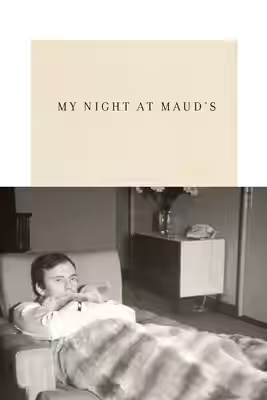
After Before Sunset, try Before Sunrise (1995, Fi1m 89): For more conversational intimacy, with fewer years of disappointment to talk around. Then Brief Encounter (1945, Fi1m 90): For the quiet distress of wanting something that cannot fit your existing life; and My Night at Maud's (1969, Fi1m 81): For arguments about belief and attraction that become a surprisingly personal evening.

Members

1 review · Fi1m gave it 91
@joe1026 September 2026

The purest romance ever captured on celluloid.

Members' reviews are checked before they appear and are signed with a handle. Ours is above; theirs are theirs. Seen it? Add yours.

Cast

Awards

Academy Awards, 2005

Nominated
Best Writing, Adapted Screenplay

If you liked this, try…

  1. Before Sunrise (1995, Fi1m 89)For more conversational intimacy, with fewer years of disappointment to talk around.

  2. Brief Encounter (1945, Fi1m 90)For the quiet distress of wanting something that cannot fit your existing life.

  3. My Night at Maud's (1969, Fi1m 81)For arguments about belief and attraction that become a surprisingly personal evening.

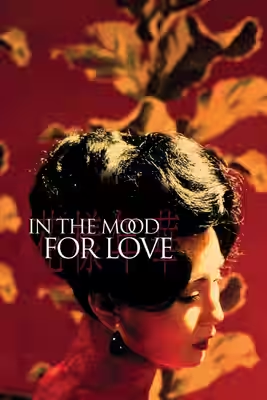
  4. In the Mood for Love (2000, Fi1m 91)For another romance in which restraint makes every small exchange more painful.

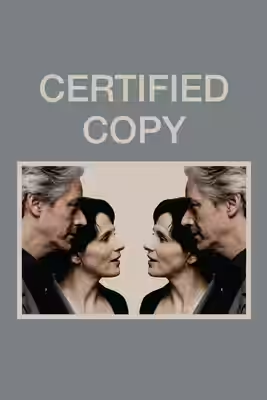
  5. Certified Copy (2010, Fi1m 84)For a talkative couple whose shared history becomes increasingly difficult to pin down.

Free account

Know what to watch tonight

Two lists that know where things are streaming, collections you can share, your own score beside ours, and Discover that remembers what you have seen.

  • Want to see, sorted by what is streaming now
  • Seen, with your score out of ten
  • No adverts, ever