Nicole Kidman makes Lucille Ball’s perfectionism worth watching, but Aaron Sorkin keeps explaining what her performance already tells us. Being the Ricardos is an uneven backstage drama, most engaging when it attends to the work.
Aaron Sorkin is interested in the labour behind I Love Lucy: the decisions that make a physical gag work and the stubbornness of the person making them. Being the Ricardos is a decent drama about that labour, repeatedly interrupted by a less persuasive account of a marriage. Nicole Kidman gives it a reason to keep watching. Too often, though, the writing insists on explaining what she has already made clear.
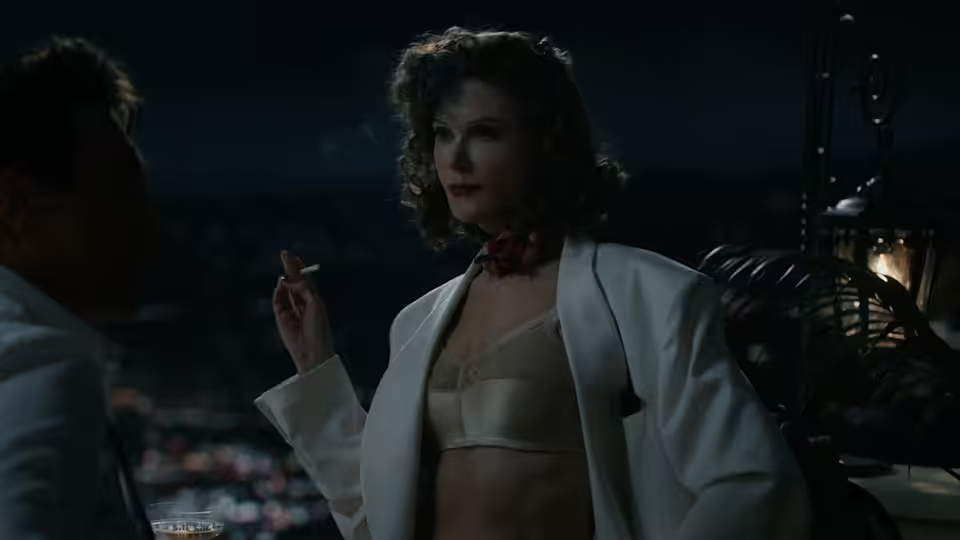
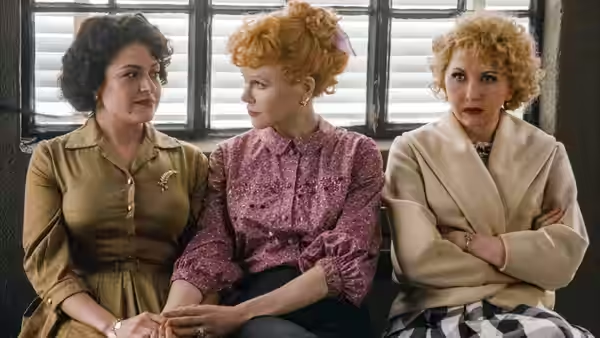
As Lucille Ball, she is most convincing when she is thinking about comedy. Her precision can look severe, which is useful in a film about someone who cannot stop examining how a joke works. We laughed at the grape-stomping recreation, and were grateful for the chance; her physical timing supplies the pleasure missing from so much of the talk. These passages let us appreciate the skill without another speech about how much it matters.
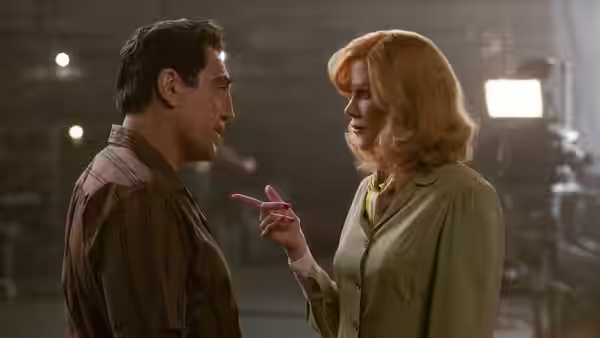
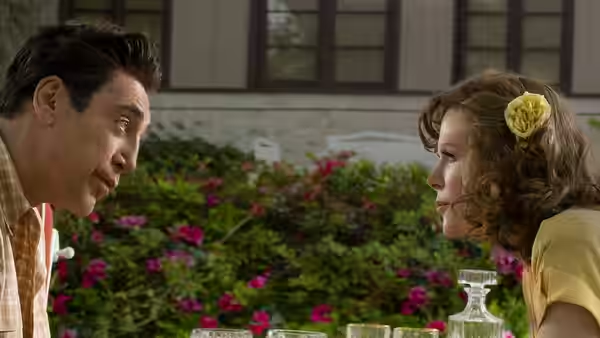
Javier Bardem gives Desi Arnaz enough charm to make the partnership plausible, even when the screenplay makes it hard to feel close to either of them. He brings some welcome looseness to a film full of people determined to finish their points. Nicole Kidman is sharper and more guarded beside him. Their performances suggest private habits and grievances that the dialogue too readily turns into arguments for our benefit.
Nina Arianda’s Vivian Vance has a presence of her own, without needing the film to keep telling us why she matters. J.K. Simmons makes William Frawley’s grouchiness welcome company. Together they make the production feel populated by colleagues, with interests extending beyond the troubles of its central couple. We would have liked more room for these performers to interrupt the solemnity.
The competing crises are the larger problem. Aaron Sorkin crowds the screenplay, while Alan Baumgarten’s editing has to negotiate shifts that do not bring us much closer to the couple. The flash-forwards are particularly disruptive, taking us away from the performers when we have begun to care about what they are doing. A backstage drama can accommodate private unhappiness and professional conflict, but this one keeps returning to explanation when it needs to let a scene develop.
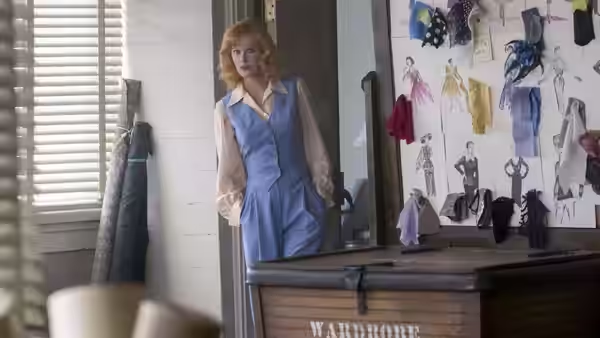
Jeff Cronenweth’s cinematography is too murky for our taste, adding a heaviness the dialogue hardly needs. Jon Hutman’s production design offers visual polish, but the surroundings feel too arranged to persuade us that work routinely happens here. Daniel Pemberton’s music does little to soften that stiffness, though the dialogue leaves it little room to help. The actors supply most of the warmth.
We do not need a film about a comedian to be constantly funny, and taking her work seriously is the right instinct. The difficulty is how seldom the film allows that work to tell us enough on its own. At 132 minutes, the repeated emphasis becomes tiring. Consider it for Nicole Kidman and the business of making television, provided a substantial amount of explanation will not spoil the evening.