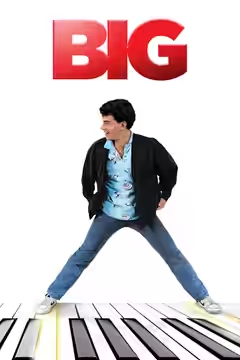
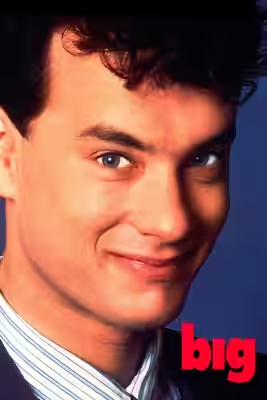
Josh (Tom Hanks) standing with legs apart on a giant piano keyboard
Film review

Big

1988 · Directed by Penny Marshall · 1h 44m

In a sentenceTom Hanks makes a giant piano look like a more sensible use of adulthood than a promotion

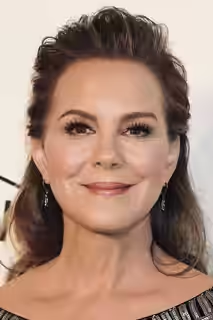
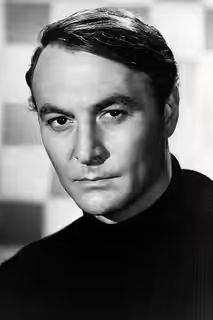
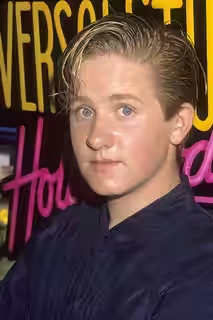
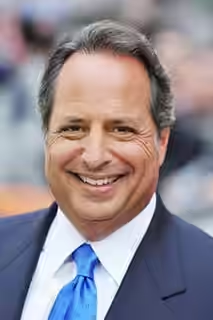
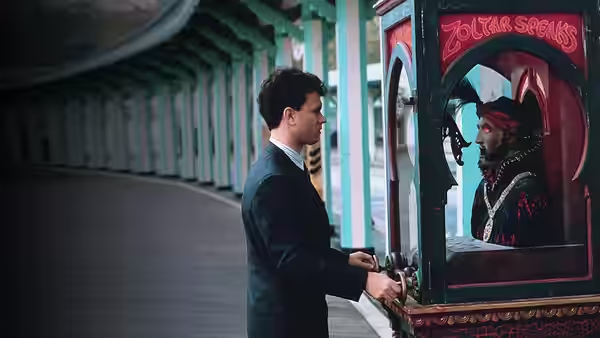
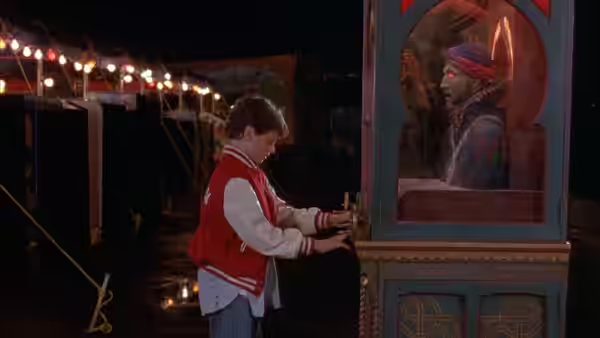
Josh (David Moscow) is a boy who wakes up in an adult body, now played by Tom Hanks. He has to find his way through grown-up life while still thinking and feeling like a child. The pleasures of toys and play follow him into a world more concerned with corporate success, where his innocence unsettles adult habits and expectations. Jared Rushton plays Billy, Elizabeth Perkins is Susan and Robert Loggia is MacMillan, among the people around Josh as he tries to live at an age he has not yet reached.

Plays from YouTube when you press play; nothing loads from them until then.

Fi1m review

Big is a warm, funny fantasy built around Tom Hanks’s convincing sense of a child’s uncertainty. Penny Marshall keeps the comedy gentle, though the sweetness sometimes makes adult life look too easily dismissed.

Big succeeds because Penny Marshall takes a child’s discomfort in an adult body seriously enough to make the comedy matter. The premise could sustain a procession of jokes about grown-up privileges, but the film keeps returning to the simpler question of how a boy is supposed to manage all this. It is warm, funny and occasionally too sweet for its own good. We recommend it chiefly for Tom Hanks, whose Josh remains recognisably a child even when the surrounding fantasy starts making life convenient for him.

Hanks’s physical acting is the main reason to believe in that impossible situation: Josh seems to be learning what to do with the body he has been given. There is pleasure in his freedom, but also uncertainty about what adults expect him to know already. Hanks allows fear into the performance without making Josh pitiable, which gives the comedy something to lose. Marshall does not press every sign of childishness into service as a punchline, and the restraint makes him easier to care about.

The giant piano scene earns its reputation by giving that performance something worth getting excited about. We laughed because Hanks makes play seem like the obvious thing to do, with no need to announce how charming he is being. Cinematographer Barry Sonnenfeld makes the scale of the instrument part of the joke. Editor Barry Malkin lets the physical performance supply the rhythm. The scene has enough patience to let the sight of a grown man absorbed in play be funny.

Production designer Santo Loquasto’s work helps make toys look worth an adult’s attention, which matters when so much of the film depends on their appeal. The giant piano is an especially good fit for a child suddenly occupying more space. Howard Shore’s music is less necessary when it encourages tenderness that Hanks has already supplied. It suits Marshall’s gentle tone, but there are moments when the film could do with less help being sweet.

The weakness is in how readily the screenplay by Anne Spielberg and Gary Ross favours childhood over the alternatives. Adult life can look like a fairly dreary misunderstanding, curable by remembering how to enjoy a toy. That is a pleasing thought for a comedy, and it gives Josh’s innocence a purpose beyond keeping the plot moving. It also makes the film predictable: once play has been granted so much wisdom, the grown-ups have rather little chance of putting a convincing case.

Among body-swap comedies, Big stands out for Marshall’s patience with the boy. She gives the central performance room to be funny without leaning on crude innuendo, and the affection for Josh survives the script’s tidier assumptions. At 104 minutes, there is enough of Hanks’s uncertain, eager boy to make the familiar machinery worth accepting. Watch it for that performance, with a little tolerance for a film that remembers childhood more fondly than we do.

Critical consensus AI synthesised

75
Positive
9
Mixed
0
Negative
1

Most critics like Big a good deal, and the praise gathers almost entirely around Tom Hanks. Review after review dwells on how he plays a thirteen-year-old in a grown man’s body without tipping into caricature, the slapstick balanced against fear and vulnerability. Penny Marshall’s direction earns the next share of credit, chiefly for keeping the comedy small and unforced and for steering the awkward business of a boy in an adult romance clear of crassness. Several reviews rank it above the other late-80s body-swap comedies, and the giant piano scene is named more than once.

The reservations are mild and cluster around the script rather than the performance. Time Out finds the plot predictable and the ending saccharine, and a few warm notices stop short of enthusiasm. The one real dissent is The New Yorker, where Pauline Kael sees a formula fantasy, tactfully made but tepid, selling childhood back to adults. Nobody else shares her coolness; the spread is otherwise narrow.

Empire
1 January 2000 · Ian Nathan
90*

The film is the best of the late-80s body-swap comedies and showcases Tom Hanks' physical acting as a boy in an adult body. Penny Marshall directs with subtlety, delivering joyful set pieces like the giant piano scene while avoiding crassness in its trickier elements.

Read the full review →
Los Angeles Times
3 June 1988 · Kevin Thomas
90*

The critic calls 'Big' the best of the body-swap comedies, praising it as funny, warm, sophisticated, and imaginative throughout. Direction by Penny Marshall is highlighted for its verve and judgment, along with Tom Hanks' charming performance and a satisfying ending that avoids confusing childlike with childish.

Read the full review →
Slant Magazine
7 June 2007
90*

The critic hails Marshall’s film as gold and a consummate ’80s film about kid-dom and growing old too fast, singling out Hanks’ sanguine performance and the inventive handling of the boy-as-man premise, especially the iconic piano scene.

Read the full review →
The Telegraph
80*

Nicely directed by Penny Marshall with Tom Hanks marvellously child-like as the boy who wakes up big; succeeds by showing how adult life can become boring while celebrating the joy of toys and play.

Read the full review →
Time Out
10 September 2012 · GA
75*

The film is genuinely funny thanks to Tom Hanks' engaging performance and a script that avoids gross innuendo, with Josh's innocent perspective revitalising those around him. It is somewhat predictable with a saccharine ending.

Read the full review →
The Guardian
70*

Best of the late-80s body-swap films thanks to Tom Hanks's career-making turn as the boy in a man's body. Still charming and funny.

Read the full review →

Straight answers AI written, from our review

Is Big worth watching?
Big is worth watching, chiefly for Tom Hanks, and we scored it 81. Penny Marshall takes a boy's discomfort in an adult body seriously enough to make the comedy matter, and the giant piano scene earns its reputation. The film is sometimes too sweet, and it dismisses adult life rather too easily, but the performance carries it.
How long is Big, and what is it rated?
Big runs 1h 44m. It is a fantasy and drama film.
Where can I watch Big in Israel?
Big is not on any streaming or rental service in Israel at the moment. It is available in 34 other countries; change your country at the top of the page to see where. Availability is checked daily.
How violent or frightening is Big, and is it suitable for children?
Big is a gentle fantasy comedy with a UK 12 certificate, and there is no violence or anything frightening in it. The certificate reflects a boy living an adult life, including a romance with Elizabeth Perkins's Susan, rather than anything alarming. It suits older children and teenagers; younger ones may find the corporate scenes slow.
How does Big compare to The Kid?
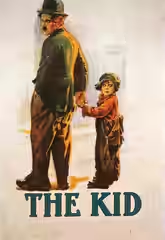
Big and The Kid are both comedies that make room for a child's fear and dependence, but Chaplin's silent film is the sharper and less indulgent of the two. Big is warmer and funnier for a modern audience, carried by Hanks's physical performance. Both give in to sentiment; The Kid does so with rather more discipline.
What should I watch after Big?
After Big, try The Kid (1921, Fi1m 84): For physical comedy that makes room for a child’s fear and dependence. Then Local Hero (1983, Fi1m 86): Another gentle comedy about discovering that corporate success might not be quite enough; and 13 Going on 30 (2004, Fi1m 67): Another child reaches adulthood early and has to work out what was missed.

Cast

Awards

Saturn Awards, 1990

Won
Best Writing

Academy Awards, 1989

Nominated
Best Actor
Nominated
Best Writing, Original Screenplay

If you liked this, try…

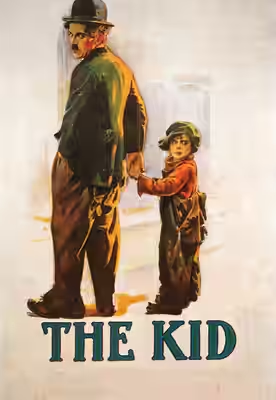
  1. The Kid (1921, Fi1m 84)For physical comedy that makes room for a child’s fear and dependence.

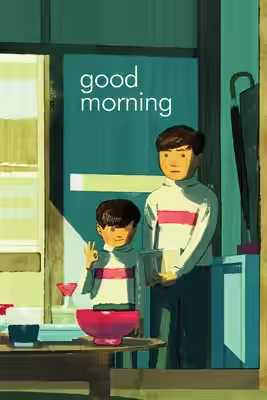
  2. Good Morning (1959) · not reviewed yetChildren question the rules while the adults struggle to explain their own behaviour.

  3. Local Hero (1983, Fi1m 86)Another gentle comedy about discovering that corporate success might not be quite enough.

  4. 13 Going on 30 (2004, Fi1m 67)Another child reaches adulthood early and has to work out what was missed.

  5. Petite maman (2021, Fi1m 88)A quieter childhood fantasy, with equal care for what children and adults cannot explain.

Free account

Know what to watch tonight

Two lists that know where things are streaming, collections you can share, your own score beside ours, and Discover that remembers what you have seen.

  • Want to see, sorted by what is streaming now
  • Seen, with your score out of ten
  • No adverts, ever