Nicholas Ray’s family drama is frightening and well worth the discomfort. James Mason and Barbara Rush make the household’s distress persuasive, though the film sometimes presses its warnings harder than their performances need.
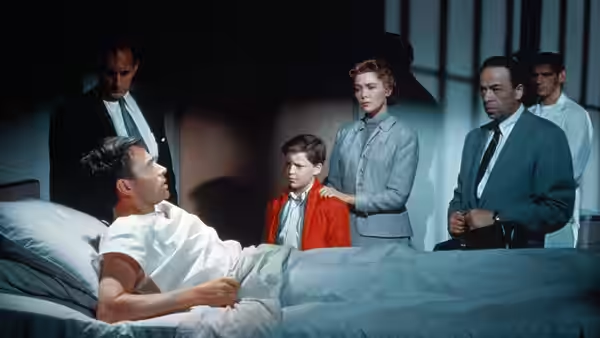
Bigger Than Life is a frightening family drama, and we recommend it with a warning about how hard it sometimes underlines its point. Nicholas Ray takes a teacher’s illness and treatment with cortisone as the beginning of a household crisis. The film asks what happens when a respectable man’s anger becomes impossible for his family to manage. Its force comes from how recognisable the household remains even as his behaviour grows alarming.
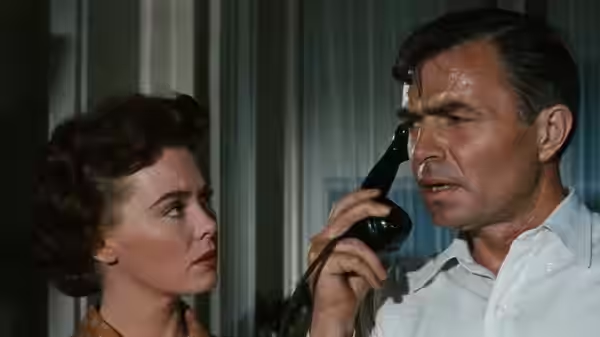
James Mason makes Ed Avery’s change unsettling because he allows us to recognise the mild man inside the increasingly furious one. The performance gives the anger a cold certainty, as though everybody else has failed to understand something obvious. We were frightened by that certainty: there is so little room left for another person’s feelings. James Mason does not need us to admire the difficulty of the part; he makes us worry about being near this man.
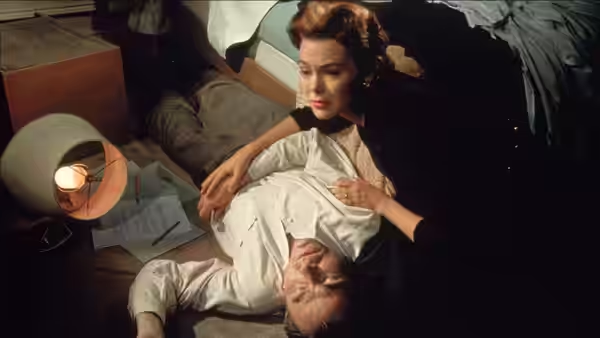
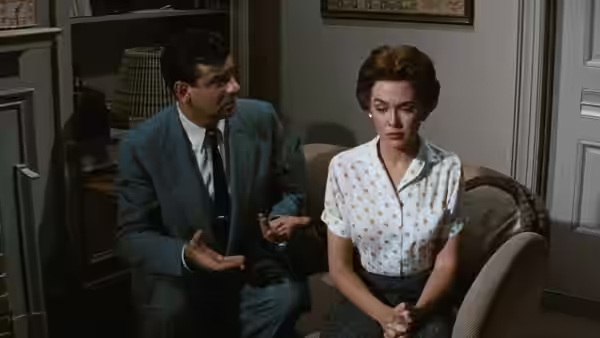
Barbara Rush gives Lou Avery enough steadiness to prevent her becoming merely an audience for Ed’s deterioration. Her restraint makes the pressure on the marriage felt without competing with James Mason for the most alarming moment. We believe in her concern, which matters because the film could easily become an exhibition of its leading actor’s range. The domestic distress is persuasive before we start thinking about what it says about the neighbourhood.
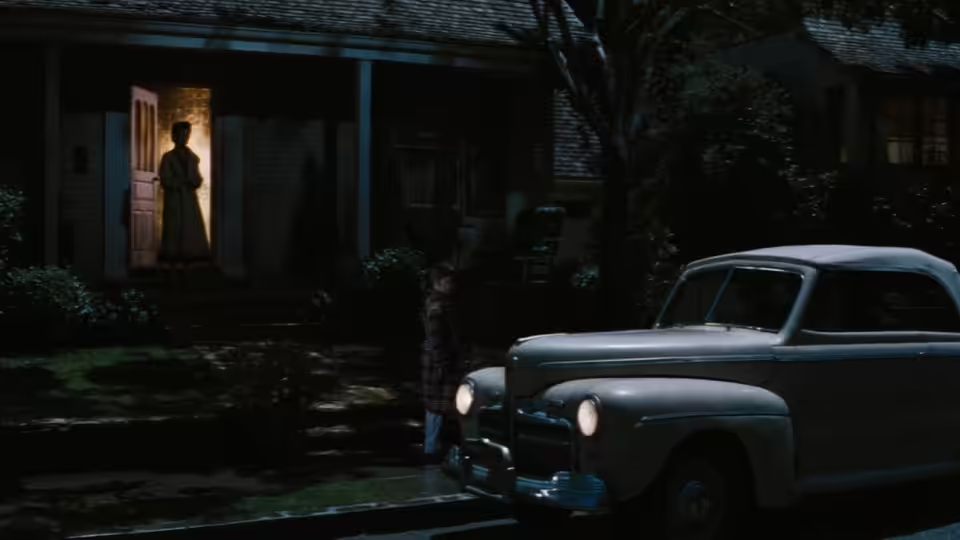
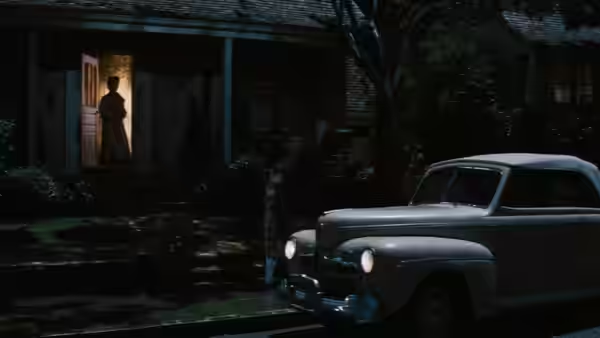
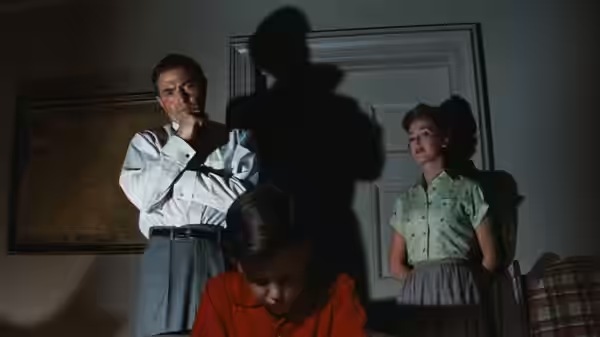
Joseph MacDonald’s cinematography and Nicholas Ray’s use of the wide frame give that distress somewhere to spread. The home feels increasingly oppressive, with the people inside it unable to make the space comfortable. Household objects suggest ambitions that have not been satisfied, so the possessions are worth watching as closely as the faces. The heightened lighting pushes the familiar rooms towards horror without requiring us to forget that people have to live in them.
Louis R. Loeffler’s editing keeps the increasing strain easy to follow, and the 95-minute running time suits a story that depends on sustained discomfort. There is little relief in simply waiting for the film to move on. David Raksin’s music is less persuasive when it seems to insist on alarm already supplied by the performances. The more emphatic passages occasionally make us wish for the plainness that Barbara Rush brings to her scenes.
The screenplay by Cyril Hume and Richard Maibaum is sometimes too insistent about the disappointments beneath middle-class respectability. Giving the family’s troubles a medical cause also risks making them seem like an exceptional case, when the performances suggest tensions that belong to ordinary married life. These reservations matter, but they do not undo the fear the film creates. Its less subtle moments are carried by actors who keep giving the distress a human scale.
The film’s excesses make sense within melodrama, where unhappiness is allowed to become loud and unreasonable. Its particular strength is the familiarity of Ed’s authority, which makes the family drama feel close to horror. Nicholas Ray and James Mason are most convincing when that authority needs no explanation. See it for James Mason and Barbara Rush, provided a frightening evening at home is what you had in mind.